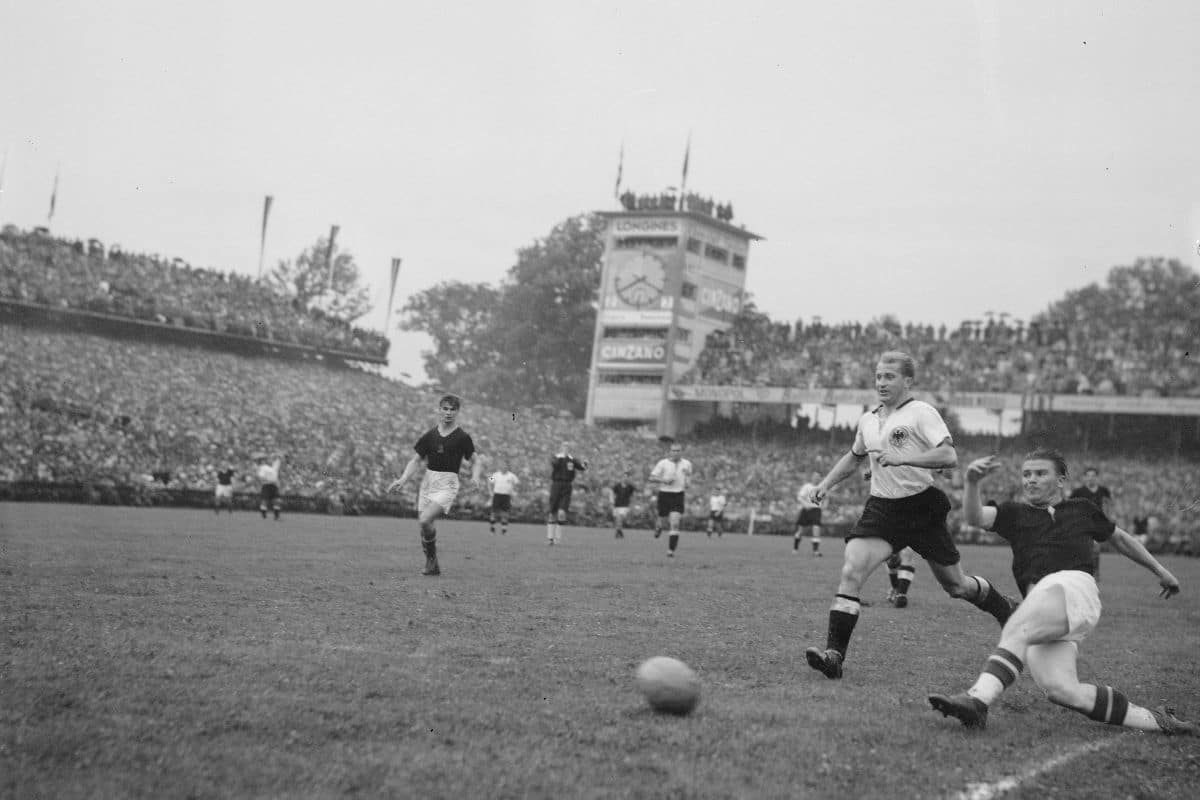
The Swiss Spring of 1954. The continent was slowly recovering from the ashes of World War II. West Germany had been accepted back into FIFA barely four years earlier, with just 18 international games of experience since then.
Hungary dominated European football like never before or since. And everyone knew who will be the champion.
But no one was right.
The Jabuka.tv portal brings you a series about world championships in football throughout history.
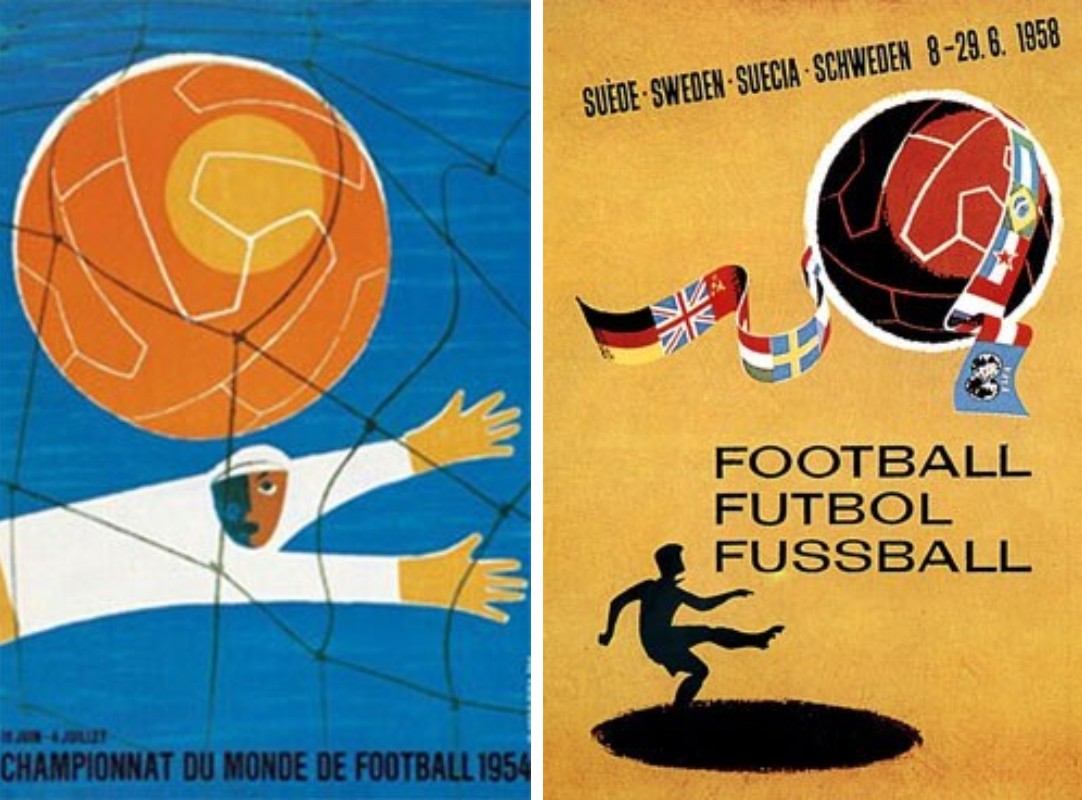
Posters: Switzerland 1954 (left), Sweden 1958 (right). Photo: Footballhistory.org
The country that was not supposed to host
The fifth World Championship was held in Switzerland from June 16 to July 4, 1954.
The atmosphere was completely different than four years earlier in Brazil. It was a strong contrast to a passionate audience which filled the vast Maracanã.
It might seem strange for such a small country as Switzerland to host the world’s biggest football tournament, but it was one of the few European nations that it was not particularly affected by the recent war.
Unlike Uruguay in 1930. or Brazil 1950., this was not a tournament of emotions and national myths.
It was a tournament of goals, violence and one of the biggest surprises in the history of sports.
A format that no one liked
The format envisaged the first stage with four groups of four teams, two of which would progress to the final knockout stage. Each team played only two group games and did not face all the other teams in the group.
The newly elected president of FIFA has stated that he will this group format be abandoned at future world championships.
The criticisms were not unjustified. The two groups ended with equal points and demanded barrage.
In both cases non-carriers – Switzerland and Western Germany – they repeated the earlier victory over the holders, Italy and Turkish.
Thanks to this, West Germany is without having to deal with South Korea bypassed the most difficult group.
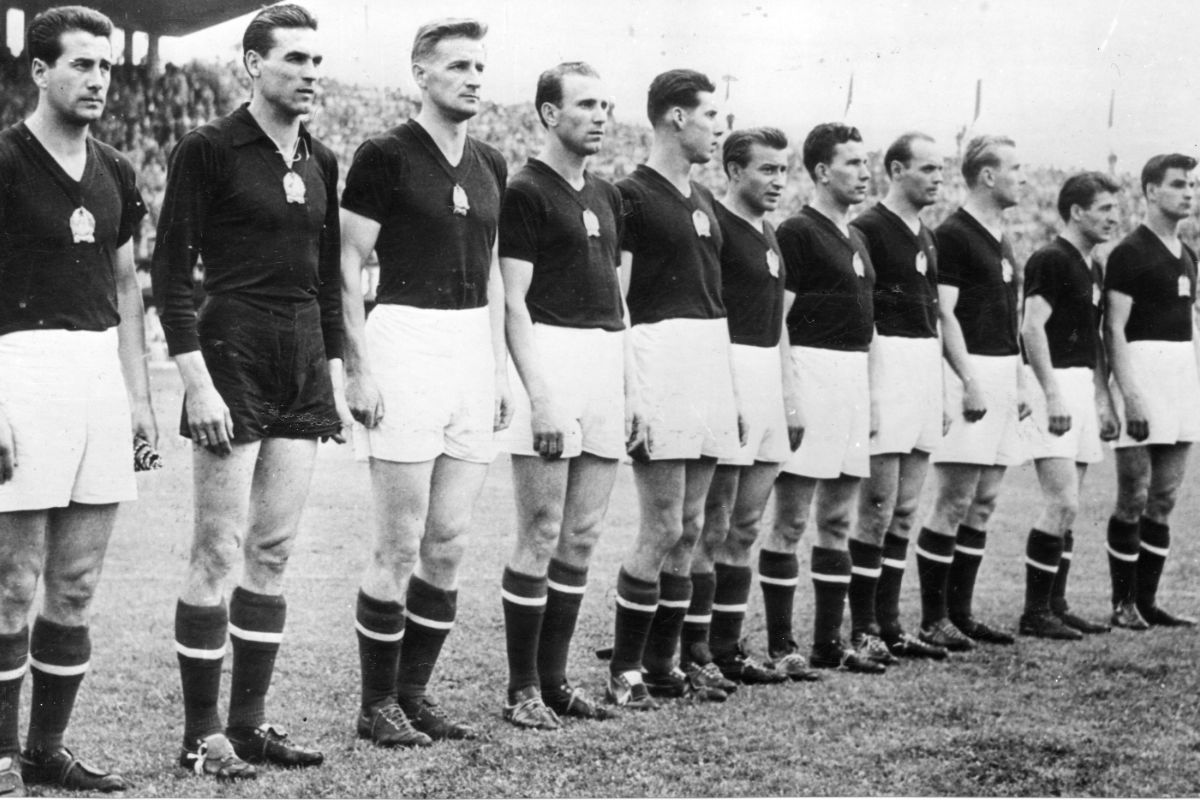
The Hungarian team before the semi-final of the World Cup against Uruguay (4:2), Lausanne, June 30, 1954. In the photo (from left): Bozsik, Grosics, Lóránt, Hidegkuti, Palotás, Budai II., Zakariás, Buzánszky, Lantos, Czibor, Kocsis. Source: PHOTO: Fortepan / Magyar Hírek Folyóirat
The Hungarian Golden Team and Sepp Herberger’s cube
Hungary was coming as an absolute favorite. Her captain Ferenc Puskás he was considered the best player in the world at the time. The team was undefeated in 32 consecutive games.
West German selector Sept Herberger he played risky. He didn’t want his the first line-up suffers a defeat against a strong opponent while trying to take the first, anyway insignificant, place in the group, so gambled by taking the easy way through the barrage and set up a reserve squad which lost 8:3 in Basel.
An additional advantage was that the Hungarians they did not meet the best German players – in case both teams meet again.
Which is what happened in the final.
It’s Puskása injured West German defender Werner Liebrich and had to miss Hungary’s next two matches. Despite this, he performed in the final, albeit in questionable condition.
The Battle of Berne and a record that continues to this day
The quarterfinals brought violence on a level the tournament had never seen before or since. Hungary is in one of the the most violent matches in the history of football won by Brazil 4:2and the duel remained infamous as “The Battle of Berne“.
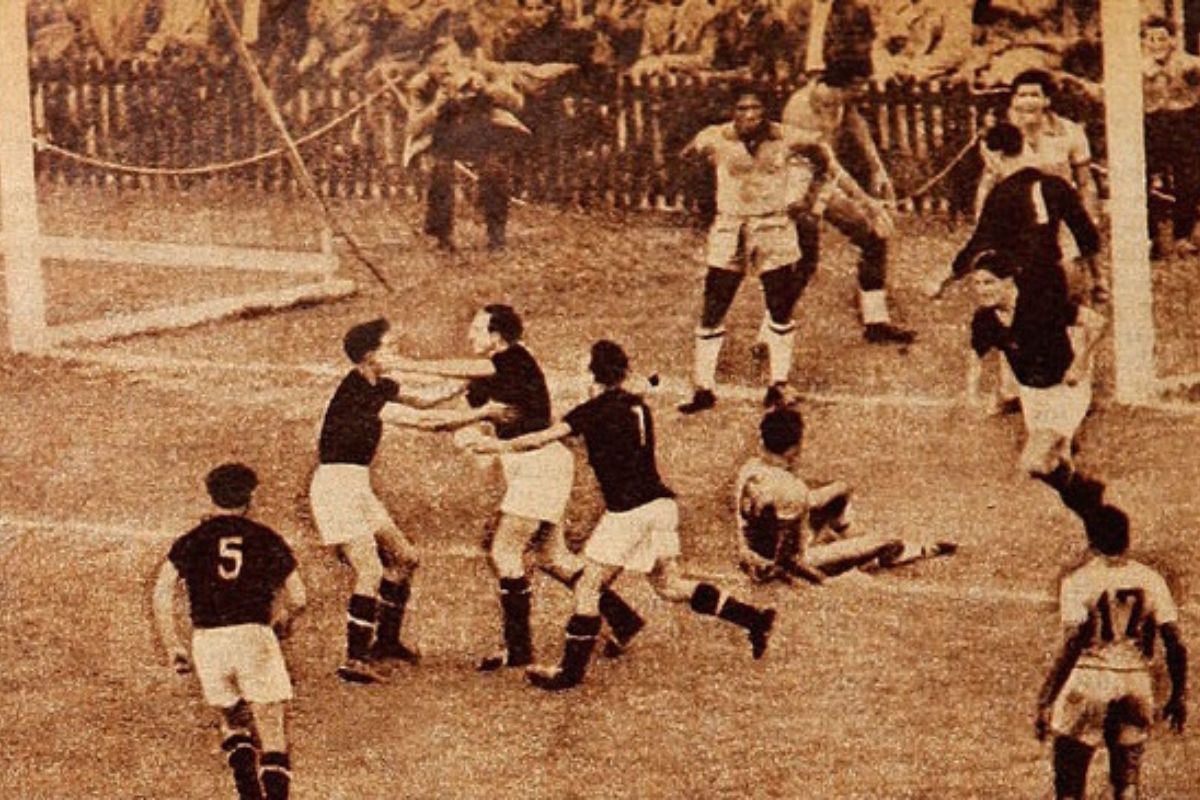
A scene from the 1954 World Cup quarter-final between Hungary and Brazil – a match remembered as the “Battle of Bern”, 27 June 1954. Source: Estadio (Santiago: Zig-Zag), no. 584, 24 July 1954 / Public Domain
In the meantime, they are defending champions from Uruguay eliminated England, also 4:2.
But the real record fell in the second quarter-final. The most goals scored in a Men’s World Cup match came in the quarter-finals in between Austria and host Switzerland: Austria won 7:5.
Those 12 goals it has never been surpassed at the men’s world championships.
West Germany conquered Yugoslavia 2:0and then convincingly defeated in the semi-finals Austria 6:1.
The miracle in Bern
The Wankdorf Stadium in Bern received 60.000 viewers at the final between Western Germany and of Hungary – replays of the group match in which Hungary demolished the German reserves 8:3.
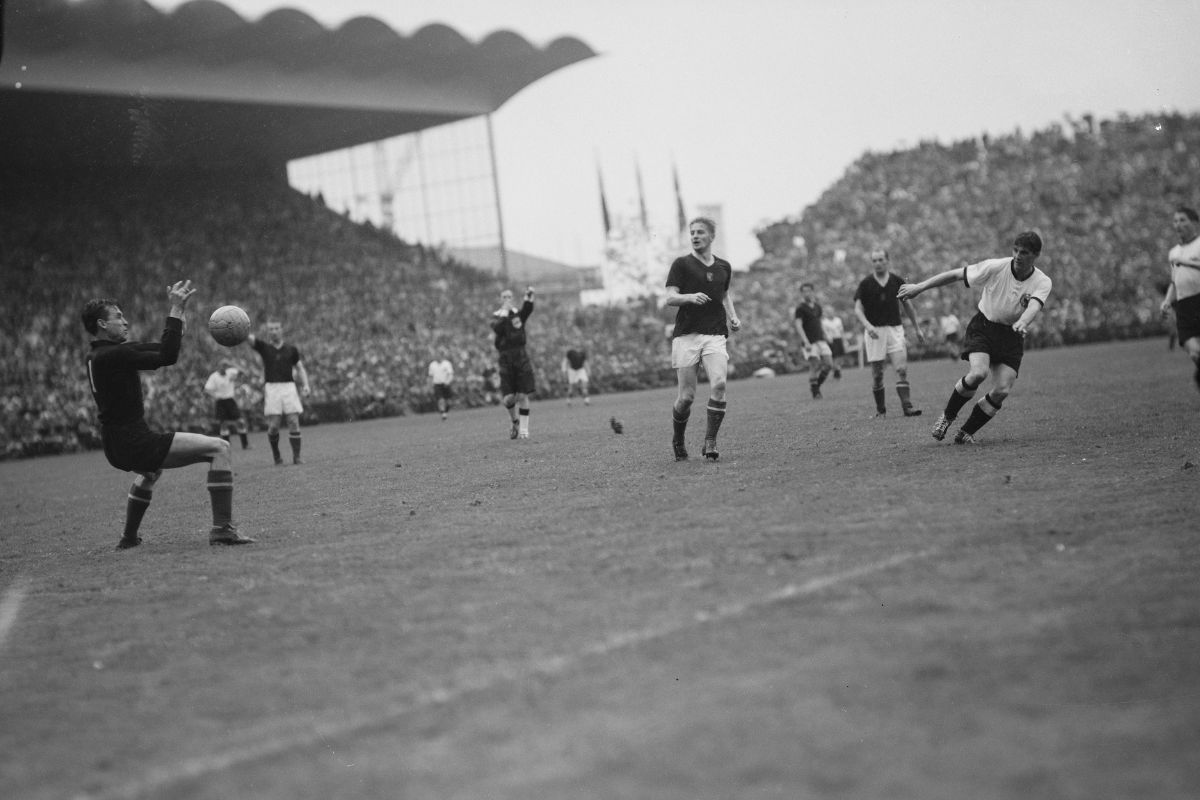
1954 World Cup Final 77th minute of second half: Hans Schäfer’s goal is disallowed by referee Ling (England) for offside. In the photo from left: Grosics (Hungary), Lantos (Hungary), Judge Ling, Lóránt (Hungary), Bozsik (Hungary), Buzánszky (Hungary), Hans Schäfer (West Germany), Helmut Rahn (West Germany). Source: ETH-Bibliothek Zürich, Bildarchiv / Comet Photo AG (Zürich) / Com_M03-0108-005-0003 / CC BY-SA 4.0
On match day it started to rain – in Germany they called it “Fritz-Walter-Wetter” because he is the captain of West Germany Fritz Walter allegedly played best in rainy weather, which is attributed to malaria which he overcame during the war.
Adi Dassler from Adidas he equipped the West German team with a new type of football boots with replaceable plugs that are replaced at half time.
Puskás put Hungary in the lead in the final in the sixth minute, and Zoltán Czibor he added a second two minutes later – it looked like the pre-tournament favorites would take the title.
No Max Morlock he reduced in the tenth minute, and Helmut Rahn equalized in the nineteenth.
In the second half, Hungary missed opportunities. Only six minutes before the end the popular German radio commentator Herbert Zimmermann he recommended Rahnu to shoot from a distance – which he did.
Rahn’s second goal put West Germany ahead on the 3rd:2. Puskás then hit the net, but the line judge signaled the hinterland. After a one-minute consultation, Judge William Ling he canceled the hit.
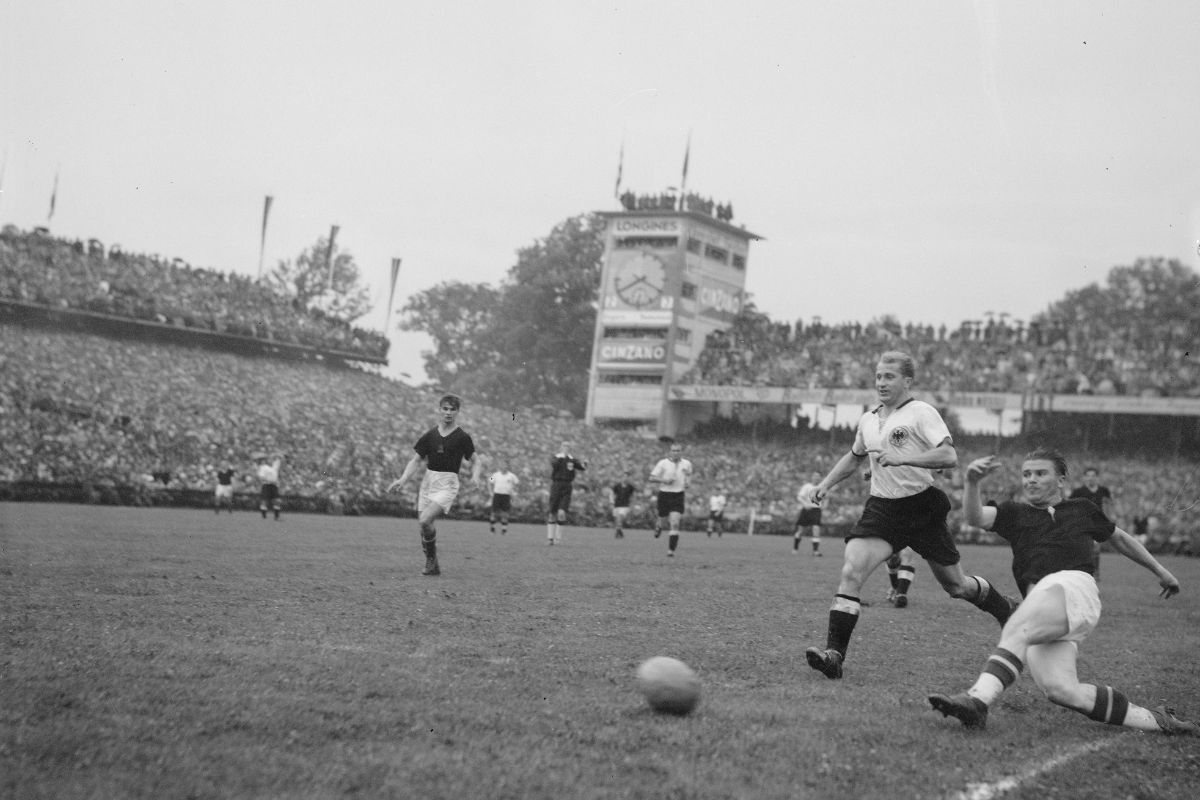
1954 World Cup Final, 86th minute of the second half: Puskas scores a last-ditch effort to make it 3:3, but referee Ling disallows it for offside at the signal of linesman Griffiths. In the photo from left: Kocsis (Hungary), Judge Ling, Jupp Posipal (West Germany), Werner Liebrich (West Germany), Puskas (Hungary). Source: ETH-Bibliothek Zürich, Bildarchiv / Comet Photo AG (Zürich) / Com_M03-0108-005-0010 / CC BY-SA 4.0
In Germany, that day was forever remembered as “Das Wunder von Bern” – Miracle in Bern.
It was a defeat for the Hungarians a disaster and he stayed controversial due to alleged refereeing errors and accusations of doping.
Puskás accused the Germans of using doping, but he did FIFA forced to drop charges.
Fifty years later one witness confirmed that he found injection needles in the German dressing room after the final.
Study Universities in Leipzig from 2010 made the claim that the West German players received injections of methamphetamine.
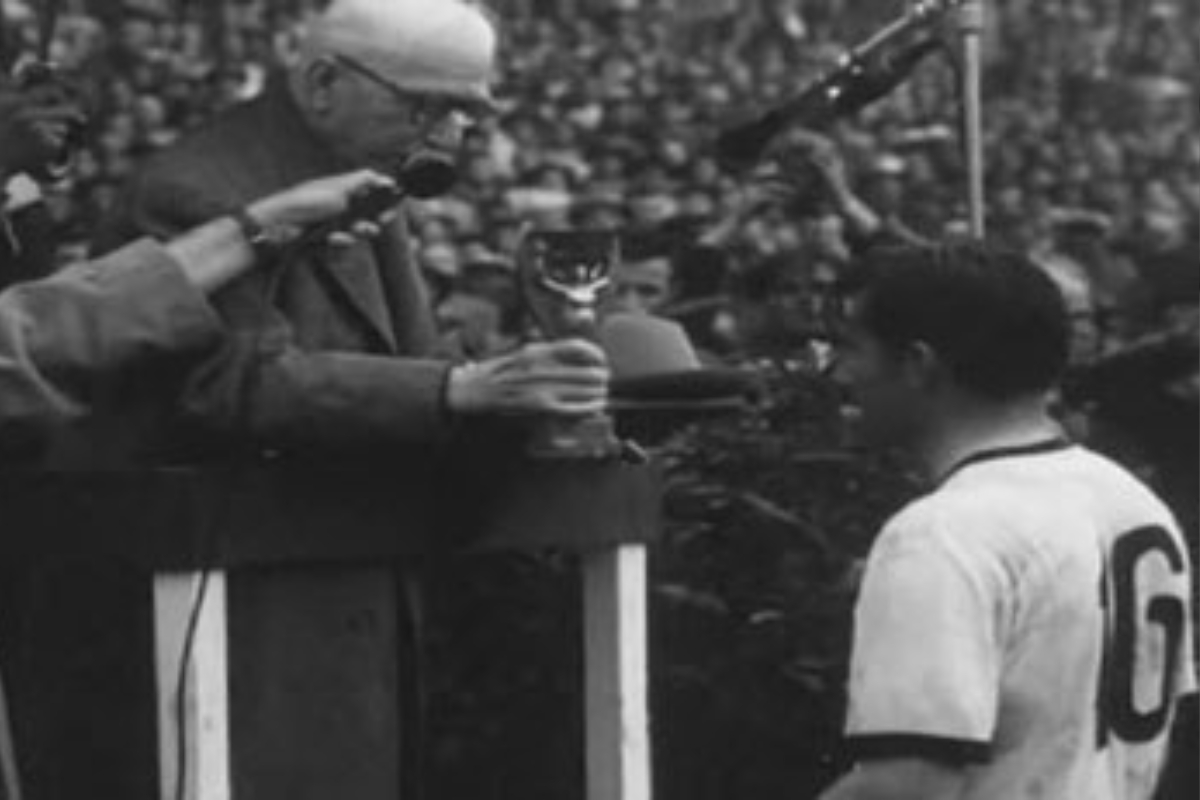
Awarding of the cup in 1954. Photo: Footballhistory.org
Tournament of records
The tournament is set several eternal recordsincluding the highest average number of goals per game. WC 1954 included 26 games with even 140 goals – incredible 5,38 per game. That record has never been broken.
The best scorer was a Hungarian Sandor Kocsis with 11 goalsbreaking the previous record by three hits.
Sweden 1958: a new continent in power
Four years later, football is back to Scandinavia. And he came back with one to a seventeen-year-old that changed everything.
The sixth World Cup was played in Sweden from June 8 to 29, 1958. It is the only World Cup hosted by one Nordic country.
On the 1958 edition. all countries in the football world were involved in the qualifications leading to the final tournament. For the first time in the history of the World Cup all four British nations they were at the tournament.
The Hungarian Revolution and the Fall of an Era
Between 1954 and 1958, Hungary experienced a revolution. Hungary has become a spent power. She lost her best players two years earlier when they escaped in the waves failed rebellions against the communist regime.
Golden team that fascinated Europe fell apart – not on the field, but on the streets of Budapest.
Of the team from 1954, they are only goalkeepers Gyula Grosicsdefender József Bozsik and attacker Nándor Hidegkuti others in the composition.
The 13 goal man
As Hungary fell, France had a man who wrote history himself. Just Fontaine he achieved 13 goals in one tournament – a record that has not been broken to this day.
Fontaine scored six goals in the group. Two more in the quarterfinals. In the semi-finals, one more but France lost to Brazil who took advantage of the injury Robert Jonqueta.
France’s most experienced defender broke his leg in a collision with Vavão and France played with ten until the end.
Brazil dominated the rest of the match, and Pelé’s hat-trick brought victory on the 5th:2.
In the match for third place Fontaine scored four more goals in France’s victory over West Germany 6:3. A total of 13 goals in one tournament is a record that still stands today.
Pelé and the volley that paralyzed the crowd
Brazil arrived in Sweden with one surprise: Pele and Garrincha they didn’t feature until Brazil’s last group game against Soviet of the Alliance.
The Elector kept them. But when they entered— tournament has changed.
After a lukewarm draw in the premiere with England, the two new players were given space in the next game. Brazil has reached the very end, and 17-year-old Pelé was the youngest player in the World Cup final.
In the final against Sweden, Pelé scored one of the most memorable goals in the history of the competition.
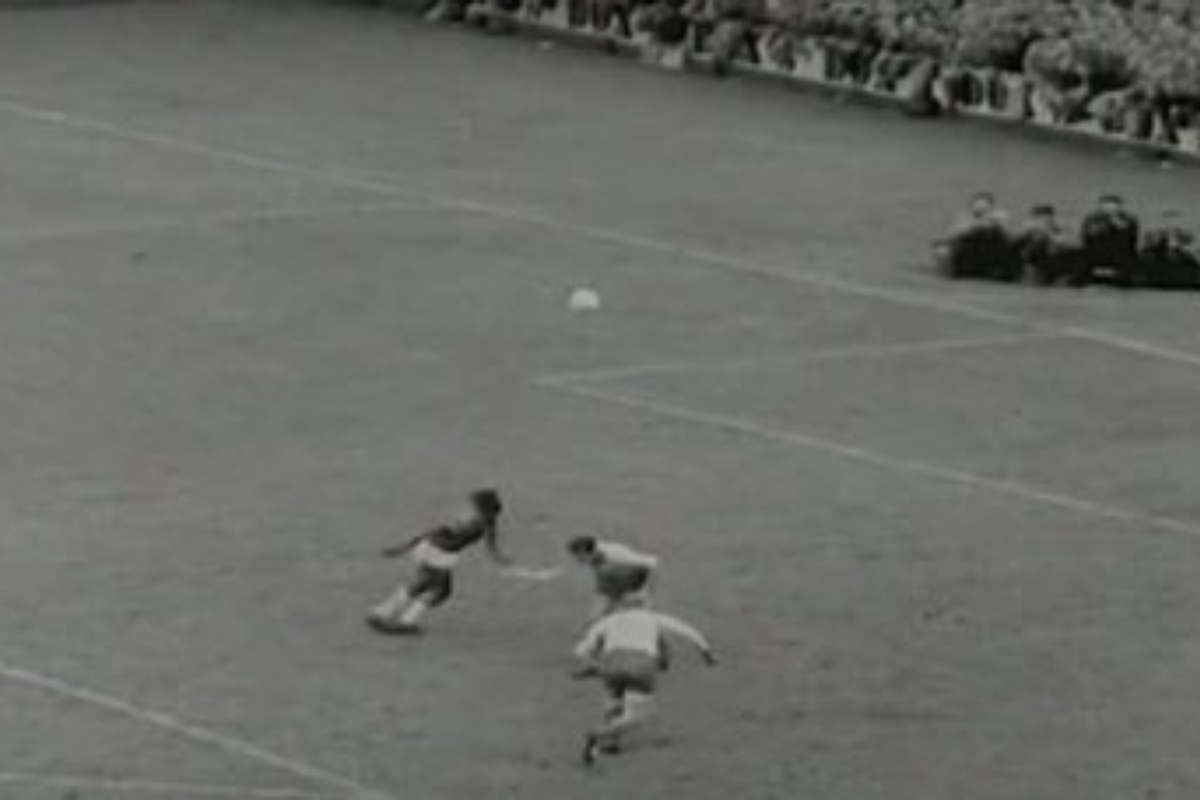
The moment before Pelé’s volley in 1958. Photo: Footballhistory.org
High ball into the penalty area, Pele jumps and stops it with his chest in front of the defender, then skips the next defender with his lob and volleys the ball into the net.
At the age of 17, Pelé simultaneously became the youngest player to play, score a goal and won the World Cup final.
On the other hand, Nils Liedholm he became the oldest goalscorer in a World Cup final at the age of 35 years and 263 days.
Final in Stockholm
The final was played in Solna, at the Råsunda stadium, before 50.000 viewers. Brazil conceded a goal in the fourth minute. However, Wow quickly equalized and then turned the score around by halftime.
The final brought the victory of Brazil over the host Sweden in the final with a score of 5:2which was the record for the number of goals scored by a winner in a World Cup final.
Brazil flew home with a trophy and a name that will be synonymous with football for the next two decades – Pele.
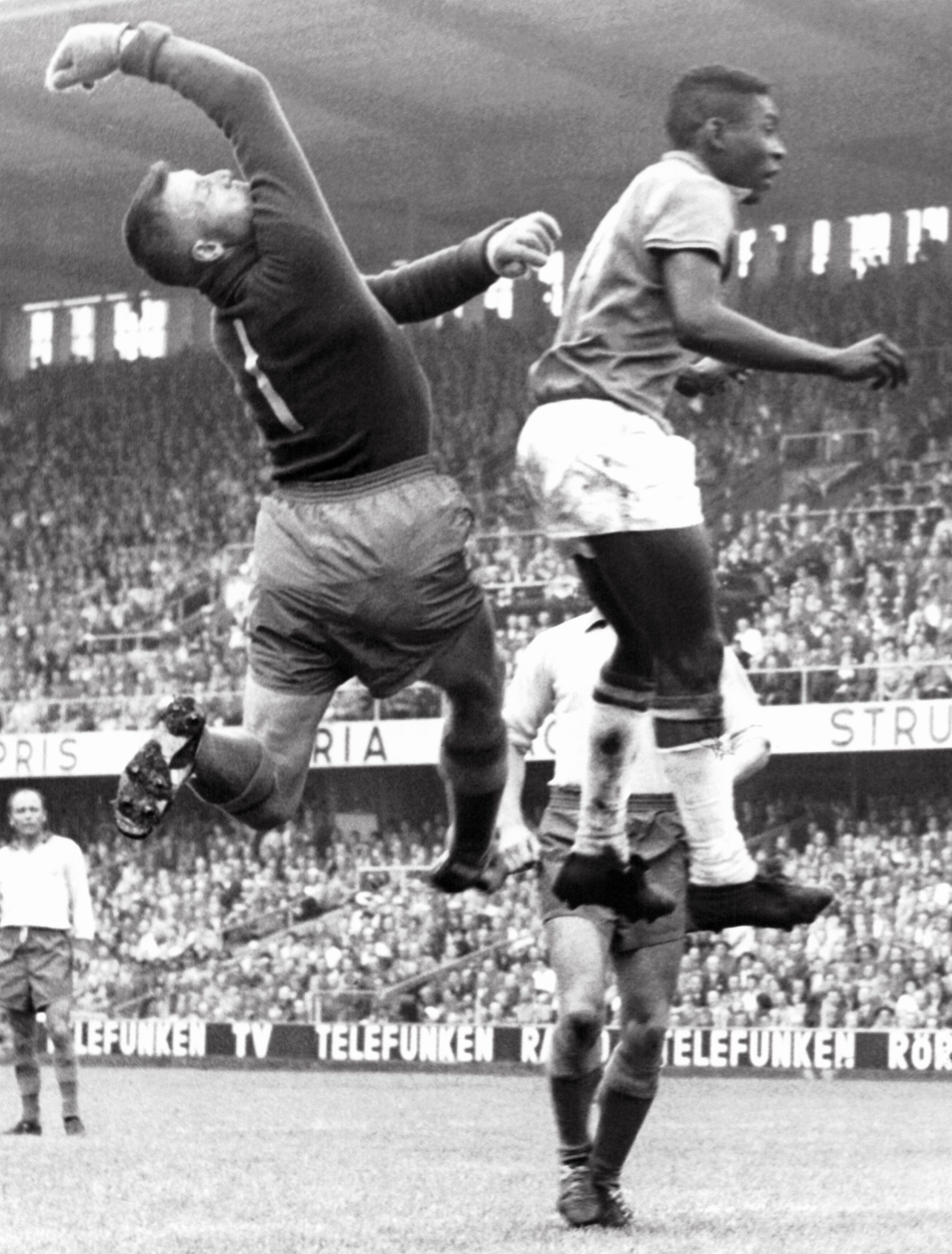
Pelé in a duel with Swedish goalkeeper Kalle Svensson in the 1958 World Cup final, Stockholm, June 29, 1958. Source: Scanpix / SVT / Public Domain
The tournament also marked the first case that the European host country was not the winneras well as the first time that teams from different continents met in the final.
In four years Chile will be hosted where of young Pelé a terrible fate awaits.
Find out more about the history of world football championships
(www.jabuka.tv)