
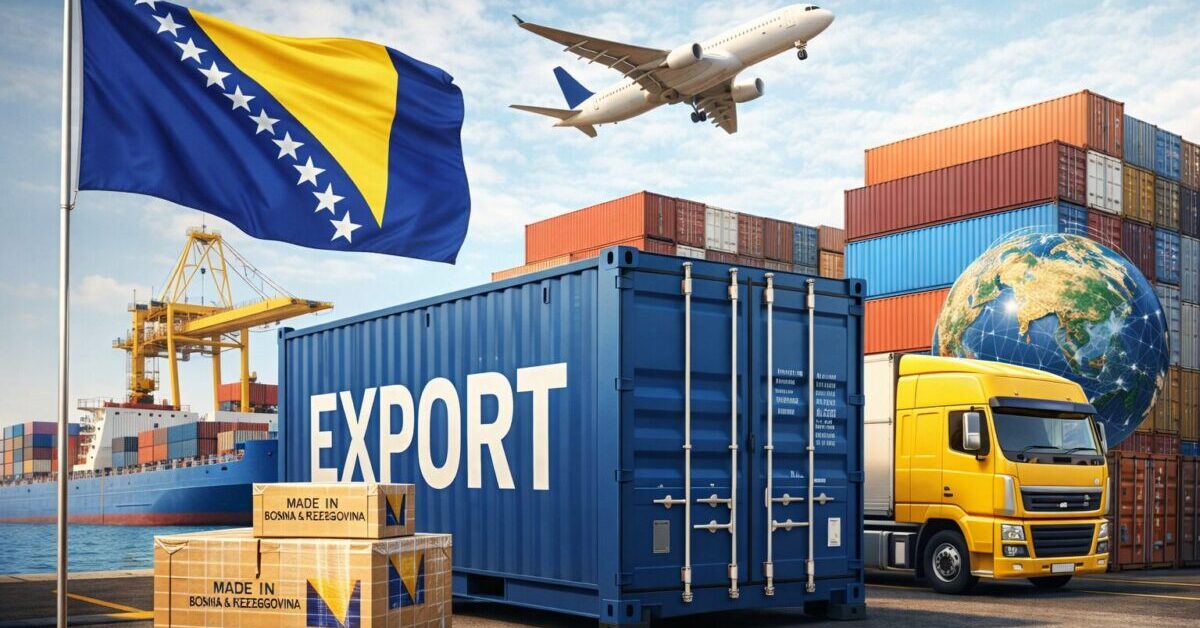
The foreign trade exchange of Bosnia and Herzegovina in 2025 shows a positive trend, with the value of exports in 2025 of 17.42 billion KM (8.91 billion euros), which represents an increase of 882 million KM (451 million euros) compared to the same period of the previous year, reports Anadolu.
Most exports were made to Croatia, while growth was also recorded on the Turkish market, while the European Union remains the main partner, comprising more than 70 percent of total exports, said the president of the Foreign Trade Chamber of Bosnia and Herzegovina (VTK BiH) Ahmet Egrlić.
He assessed that last year, when it comes to foreign trade, ended with a dose of optimism, as a slight increase in the coverage of imports by exports was recorded, while most economic branches recorded positive trends.
According to him, the best results were achieved by dedicated industry and the wood sector, which have been ahead of other areas for years.
The European Union remains the most important foreign trade partner of BiH, with a share of more than 70 percent of total exports, said Egrlić, while on Wednesday he presented the basic indicators of the country’s foreign trade exchange with the world in 2025 with the representatives of the Macroeconomic System Sector, Belma Alihodžić and Amila Močević.
He stated that the largest exchange was with Croatia, while the best coverage of imports and exports was recorded in trade with Austria and Germany.
The European Union still remains the number one market for Bosnia and Herzegovina – he pointed out, adding that after the EU, the most important region is CEFTA, where Serbia leads as the largest partner, with export growth.
He emphasized that exports to Croatia increased by about 18 percent, while in third markets, the growth of exports was recorded only to Turkey, and the growth of imports when it comes to China.
In 2025, the total volume of BiH’s foreign trade exchange with the world increased by 2.12 billion KM (1.08 billion euros), which confirms the greater intensity of international trade, as well as the growth of economic activities and integration with foreign markets – said Belma Alihodžić, stating that “the value of exports in 2025 was 17.42 billion KM, which represents an increase of 882 million KM compared to the same period of the previous year”.
She said that the value of imports amounted to 30.43 billion KM (15.56 billion euros), which is 1.21 billion KM more than the previous year.
The trade deficit increased by 359 million KM (183.57 million euros) and amounted to 13 billion (6.65 billion euros) – she added.
Močević said that the increase in exports and imports is evident in almost all sectors, which directly resulted in a greater volume of total exchange, and the structure of export growth shows that Bosnia and Herzegovina is progressing the fastest in the energy, electronics and automotive sectors.
The overall growth of BiH exports in 2025 is largely the result of a 30 percent increase in electricity exports. The sector of parts for the automotive industry (by 13 percent) and insulated wires (by seven percent) also contributed to the growth. Metal constructions recorded a growth of five percent, while the export of furniture fell slightly, by two percent.
The most important import product remains petroleum and petroleum oils, worth 2.24 billion KM (1.15 billion euros), with a decrease of seven percent.
Imports of cars increased by nine percent, and medicines by eight percent. There was a particularly marked increase in the import of electricity by 101 percent, to 628.96 million KM (321.61 million euros), which indicates a pronounced energy imbalance caused by a decline in domestic production and limited capacities for stable supply – she said.
She added that the increased import of electricity further burdens the trade balance and points to the structural weaknesses of the energy sector, which require systemic reform measures and investments in the modernization and diversification of energy sources, she writes. Hayat TV.