
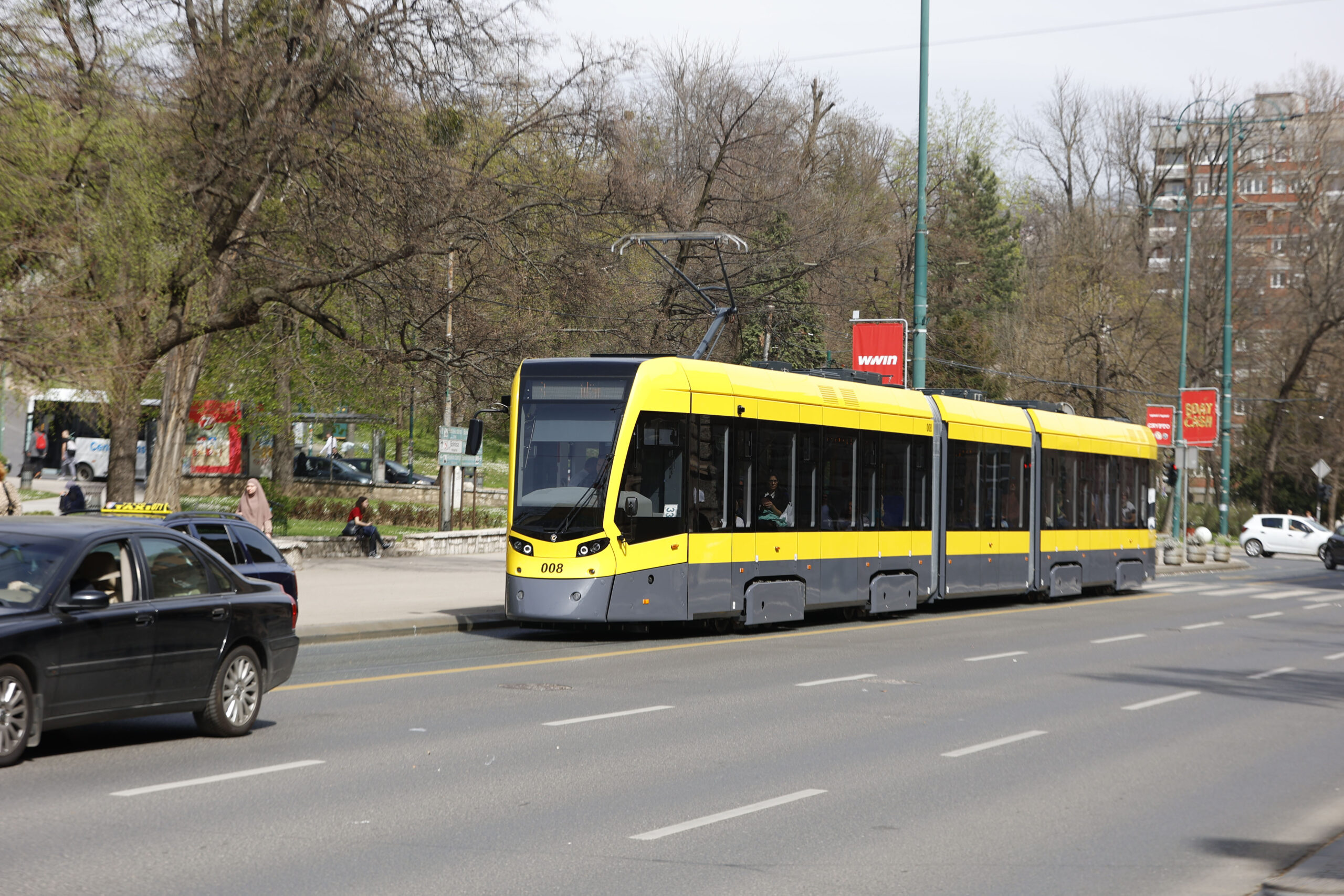
Accumulated debts, questionable reliability of old and ruined vehicles, drivers without driver’s licenses and under the influence of opiates are the image of the Sarajevo public company GRAS. The question that arises is: who is responsible for this situation?
The current government announced that it found a debt of about 300 million KM in this company.
Financial decline
The last time GRAS operated with a profit was in 1999, when it made a profit of around 200,000 KM. As early as 2000, a continuous financial decline began, with a loss of 2.67 million KM, which was followed by a multi-year accumulation of millions of debts, reports BHRT.
The number of employees in GRAS currently exceeds 1,100, which further burdens the company’s already damaged finances.
Journalist Almir Terzić warns about what he says are alarming data on the number of workers.
“I was shocked by the information that, according to the latest data, as many as 1,163 workers were employed in the company. Although the data is older, this indicates the urgent necessity of publishing all data from GRAS. Because, obviously, there is complete chaos there,” said Terzić.
On the other hand, the GRAS Employees’ Union says that the number of employees is not too high and that the problems are of a different nature.
“It is not an excessive number of employees, we even lack employees in the vehicle maintenance sectors. There is a control sector, a security sector, services, accounting, legal personnel and everything else”, said the president of the Trade Union Amir Muminović.
Disputed employment
One of the main problems, as pointed out by the interlocutors, is employment “through connections”, and even for jobs that, de facto, do not exist.
“This is the problem of our public companies and excessive employment. I witnessed a situation where they say that he is newly hired, newly employed in a public company and that they know he has a chair. But they do not know what he will do, nor what his workplace is, nor where he will stay”, pointed out journalist Amarildo Gutić.
At the same time, experts warn that the problem is not only the number of workers, but also their expertise, especially in technical sectors.
“Did those people go for training, did people come from the Czech Republic to train our workers who maintain vital circuits”, asked the court expert for the traffic profession, Adis Imamović.
A question of responsibility
Almost every day, new information appears in the public about, as it is stated, the decade-long and systemic collapse of GRAS, to the detriment of citizens and their safety. Despite the financial abyss and numerous scandals, so far no one has borne concrete responsibility for the state of affairs in this public company.
While the debts, the number of employees and the technical correctness of the vehicles are discussed, the citizens of Sarajevo continue to use transportation services every day, asking the same question – who and when will be responsible for the chaos in GRAS?


