It was a crazy idea. To organize the first World Cup on the other side of the world, in the middle of an economic crisis, without qualifications, without guarantees that anyone will come. And yet – it all happened.
Uruguay, July 1930. Thirteen nations, 18 games, 70 goals and a new sport that is taking the planet by storm.
The Jabuka.tv portal brings you a series about world championships in football throughout history.
Europe was deep in economic depression. Traveling by boat to Montevideo it lasted ten days, without training, without a normal life, without the certainty that the worker-football player would find a job upon his return.
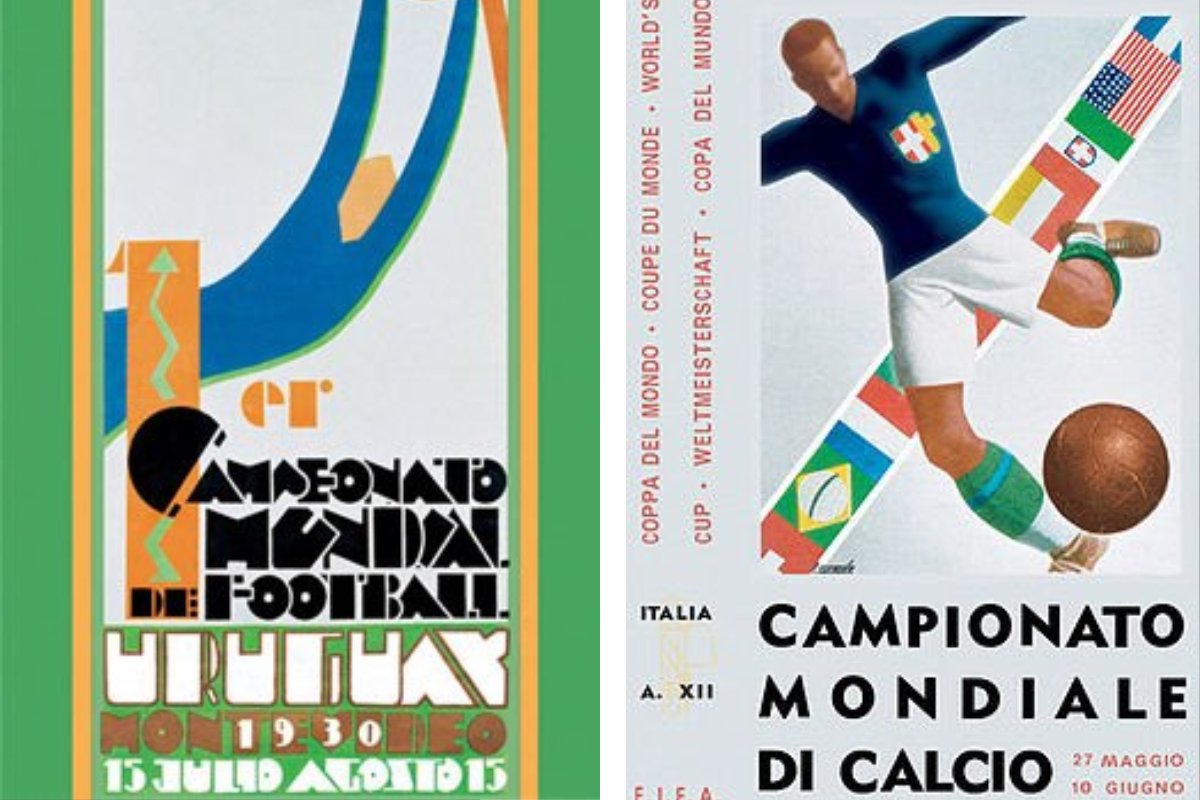
Posters: Uruguay 1930 (left), Italy 1934 (right). Photo: Footballhistory.org
England did not even appear for “prestigious reasons”. Germany and Denmark they refused to perform because of the controversies surrounding the professional players. At one time it looked as if no European team would cross the Atlantic and that the first World Cup would fail at the start.
In the end, however, three European teams arrived, none of them were among the continent’s elite. Austria, Hungary, Italy, Spainwere all absent.
Uruguay economically helped the guests who still ventured on the trip, and the group stage was introduced precisely so that the teams that traveled such a long way would play at least two games.
“Los Ichachos” from Yugoslavia
In the midst of all this, an unexpected hero of the tournament appeared – bride Yugoslavia.
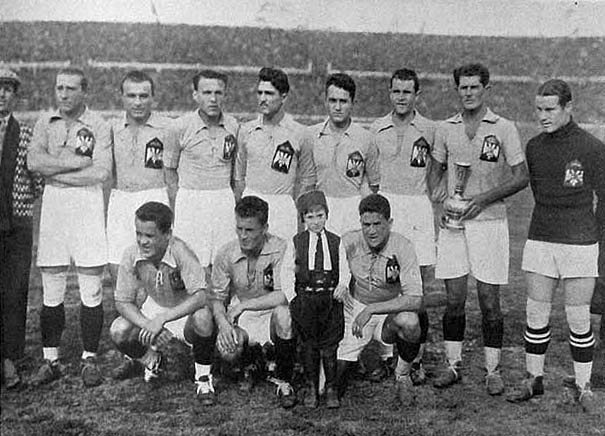
Yugoslavian team in 1930. Photo: Wikipedia
With an average age of under 22, it was the youngest team in the tournament. And immediately in the first game, at the stadium Parque Central in Montevideo, she welcomed Brazilthen still far from a superpower, and won 2:1. The Uruguayan audience immediately loved them and gave them the nickname “Los Ichachos” – guys.
Behind the scenes, however, politics ruled. Yugoslavia moved the headquarters of the football association a year earlier from Zagreb to Belgradeand the Zagreb Sub-Union banned players from Croatian clubs from participating in the World Cup, even though some of them were standard national team members.
Only the players traveled to Uruguay Serbian clubs.
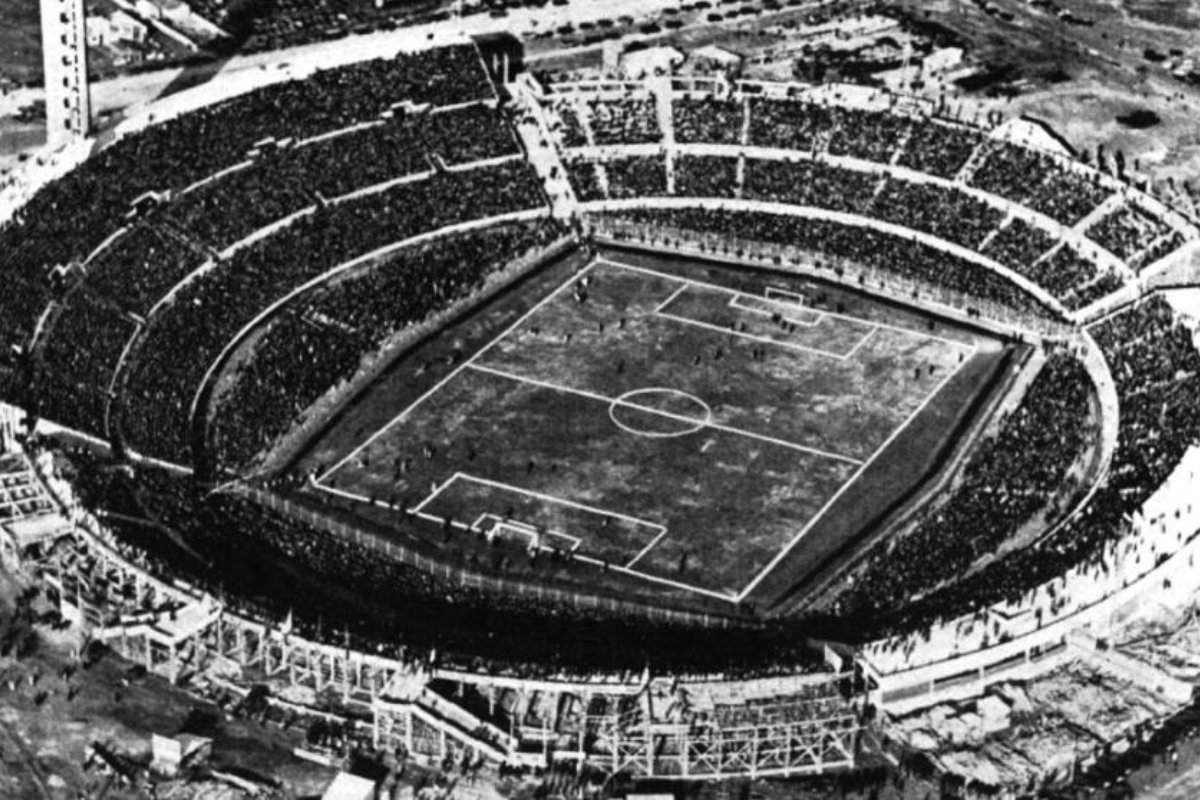
Estadio Centenario in 1930. Photo: Wikipedia
Despite this, the team passed group i won the semi-finals. There they were welcomed by the host Uruguay. The result did not reflect the actual game, Yugoslavia took the lead, then had their goal disallowed by a strange referee’s decision, and two Uruguayan goals were conceded under extremely questionable circumstances.
The home team went onand Yugoslavia finished in third or fourth place, the match for bronze was not played, so they shared that position with the American national team.
The finale that destroyed the neighborhood
The final brought what was expected, Uruguayan–Argentinian classicthe same duel that was played years earlier in the Olympic finals.
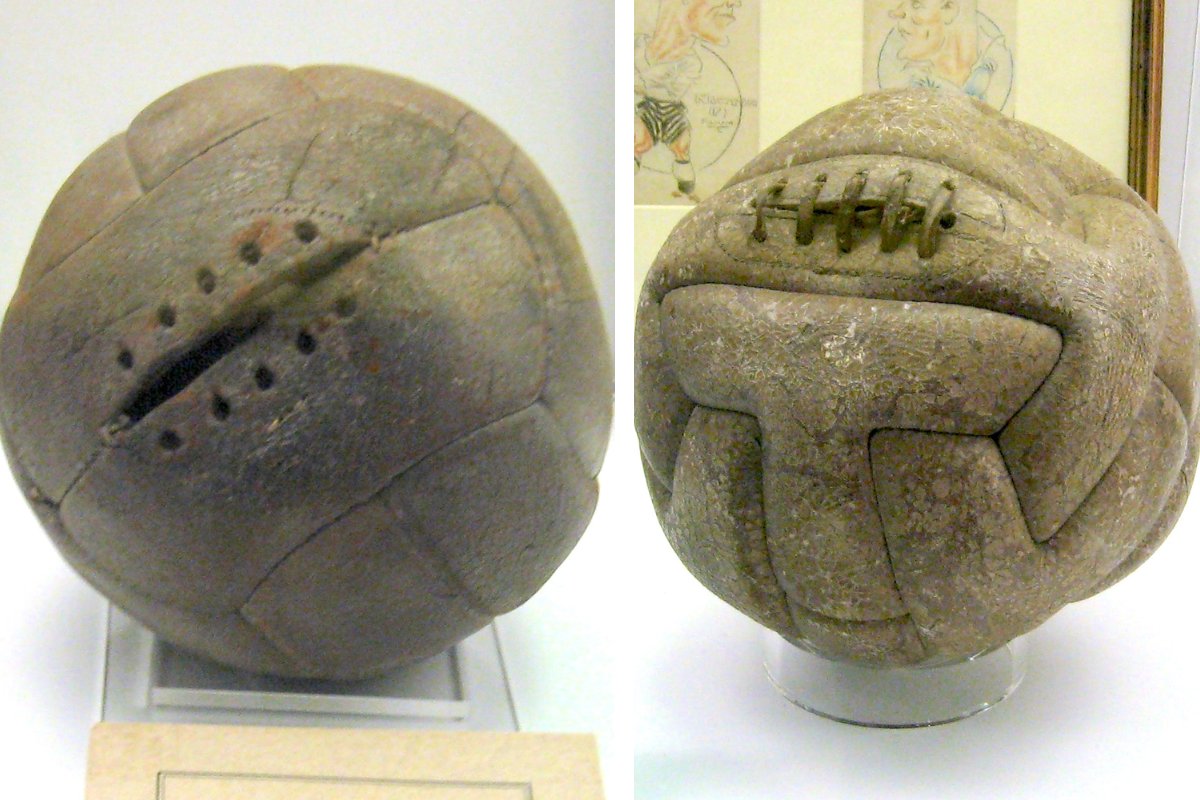
Due to the dispute, a different ball was used in each half, chosen by each team. The Argentinian ball (left) was used in the first half, and the Uruguayan ball (right) in the second half. Photo: Wikipedia
In front of more than 80,000 people on Estadio Centenarioualthough the official number of visitors was 68,346, Argentina is led 2:1 and it looked like he was going to take the trophy. It’s Uruguay flipped to 4:2 and was declared the first world champion in history.
Celebration? Short. The Argentinian players received death threats before the game, the fans were harassed, and upon returning home, the frustration turned into the vandalism of the Uruguayan embassy in Buenos Aires. The government broke off diplomatic relations with its neighbor. Because of a football match.
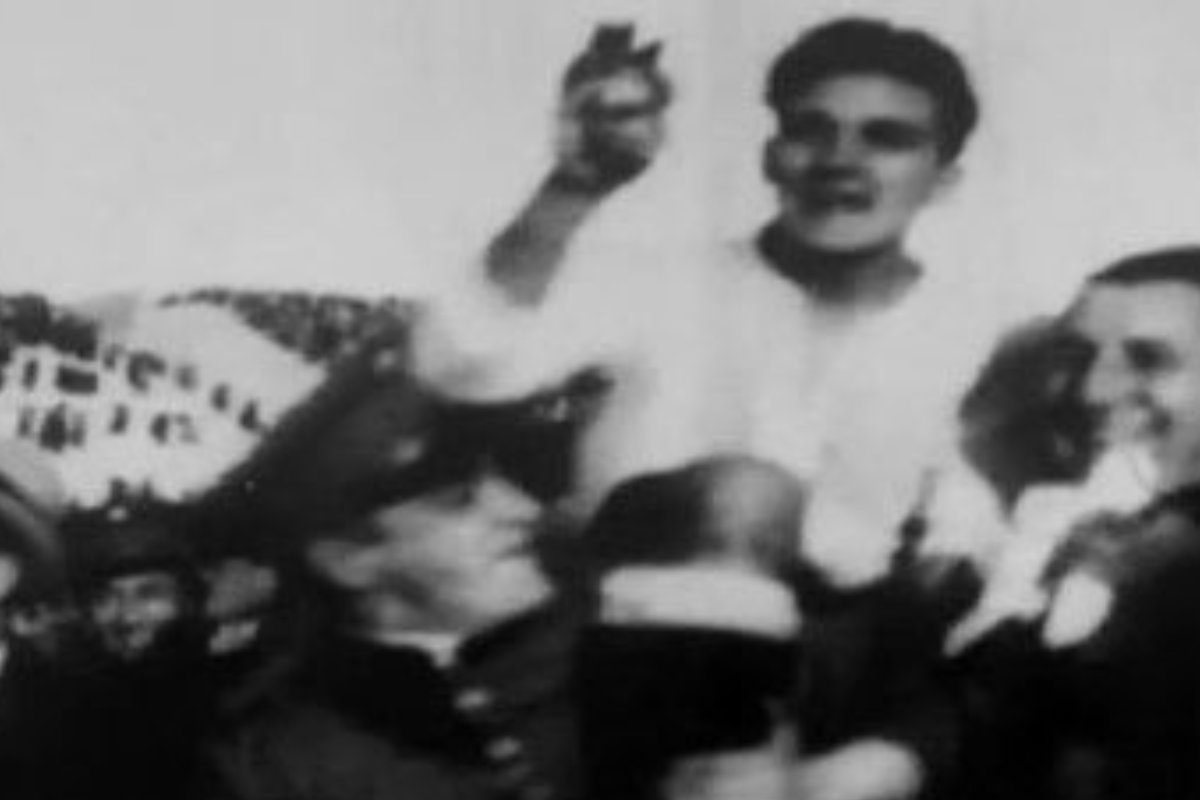
Celebration after winning the 1930 final. Photo: Footballhistory.org
Argentinian Guillermo Stables he finished the tournament as the top scorer with eight goals.
Four years and one big insult
Uruguay was the first host. Italy others. But between those two championships stood four years, one ocean, and one big insult.
When European teams refused to travel to Montevideo in 1930, Uruguay won by itself and remembered it. Four years later, when it was Europe’s turn, the defending champion just didn’t come.
Uruguay refused to participate in protestif you didn’t come to us, we won’t come to you either. Argentina has arrived, but with an amateur teamas a kind of expression of dissatisfaction.
It was a World Cup that he carried from the first day cargo policies.
Il Duce and his match
He ruled Italy Benito Mussolinithe founder Serie A and a man who saw perfection in football propaganda a tool.
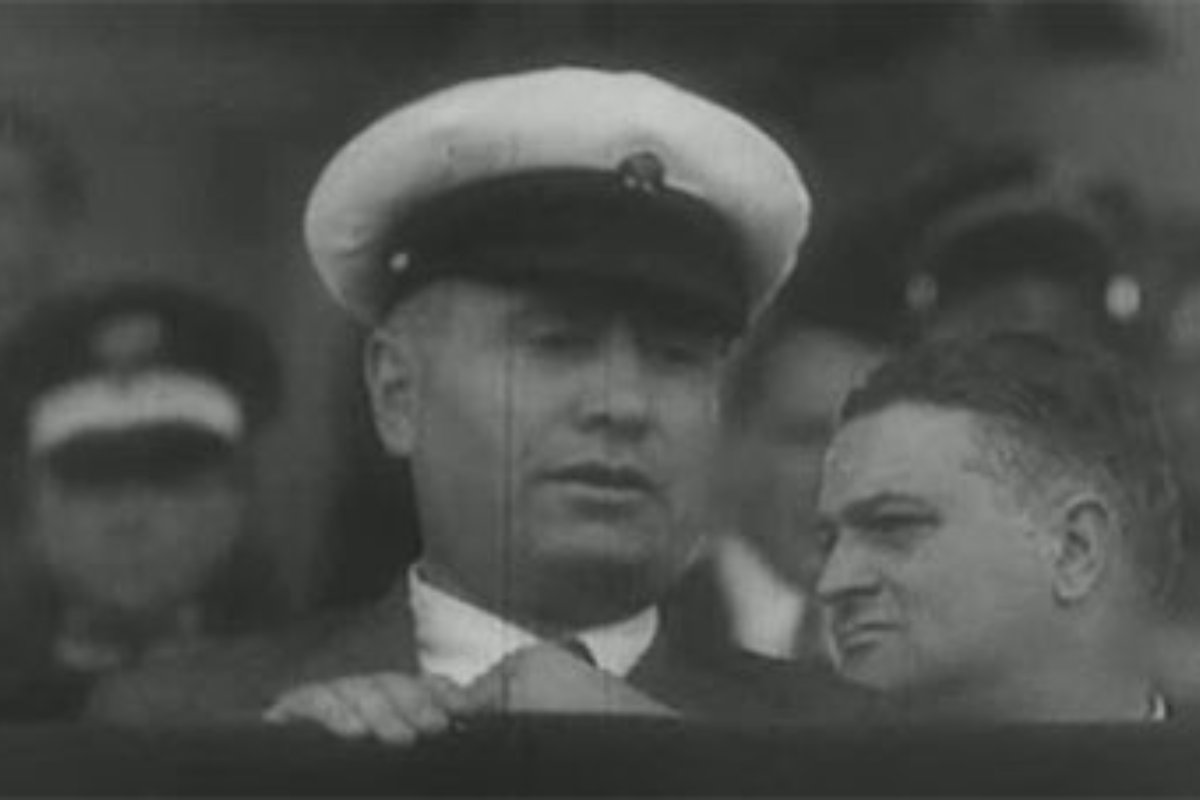
Mussolini on the stand in 1934. Photo: Footballhistory.org
The stadiums bore the names of fascist organizations, the final was played at Stadio Nazionale PNFwhere the abbreviation PNF did not stand for anything sporting, but for Partito Nazionale Fascista (National Fascist Party).
Sixteen teams, eight cities, one format, exclusively knockout–system. No group stage, no second chance. Lose and go home. And without the British, who left FIFA in 1920 and did not intend to return just for some new review.
The dramas didn’t have to wait long. After the defeat against Austria, the Hungarian players surrounded the referee and publicly accused him of deliberately damaging them.
The quarter-final between Italy and Spain went down in history as one of the most brutal matches ever playeda fight bordering on physical confrontation, with several fights on the pitch and the Spanish goalkeeper Fatigue who was so crushed in the first game that in the repeated game played the next day from scratch, because there were no penalties at that time, he could not even play.
The judge who dined with Mussolini
And then there was the judge Ivan Eclind.
A Swede who is dined with Mussolini on the eve of the match between Italy and Austria. The same referee who then refereed the final, although for that match a Belgian judge was appointed. Were the decisions on the field a coincidence? Historians argue, but the circumstances speak for themselves.
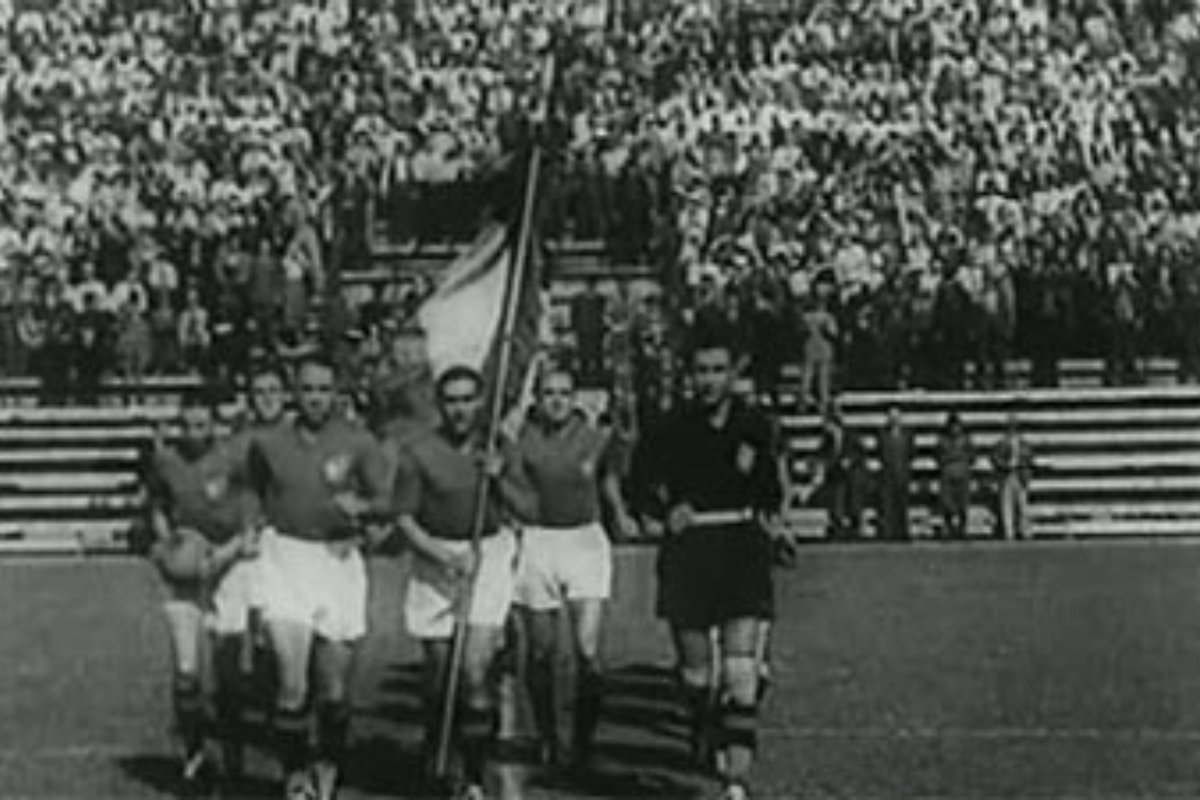
Italians with a flag entering the field in the final in 1934. Photo: Footballhistory.org
Several key players of the Italian team – Monti, Orsi, Guaita, Demaria – they were not even Italians by originbut naturalized Argentinians and Uruguayans. Mussolini wanted victory and made sure he had something to win it.
Final in Rome
In Rome, in front of 47,000 spectators, Italy and Czechoslovakia they played a final that did not give up without a fight. Czechoslovakia took the lead in the second half and looked like they would unexpectedly crown the tournament. Italy equalized and dragged the game into overtime. In the fifth minute of overtime Angelo Schiavio he scored the decisive goal for the final 2:1.
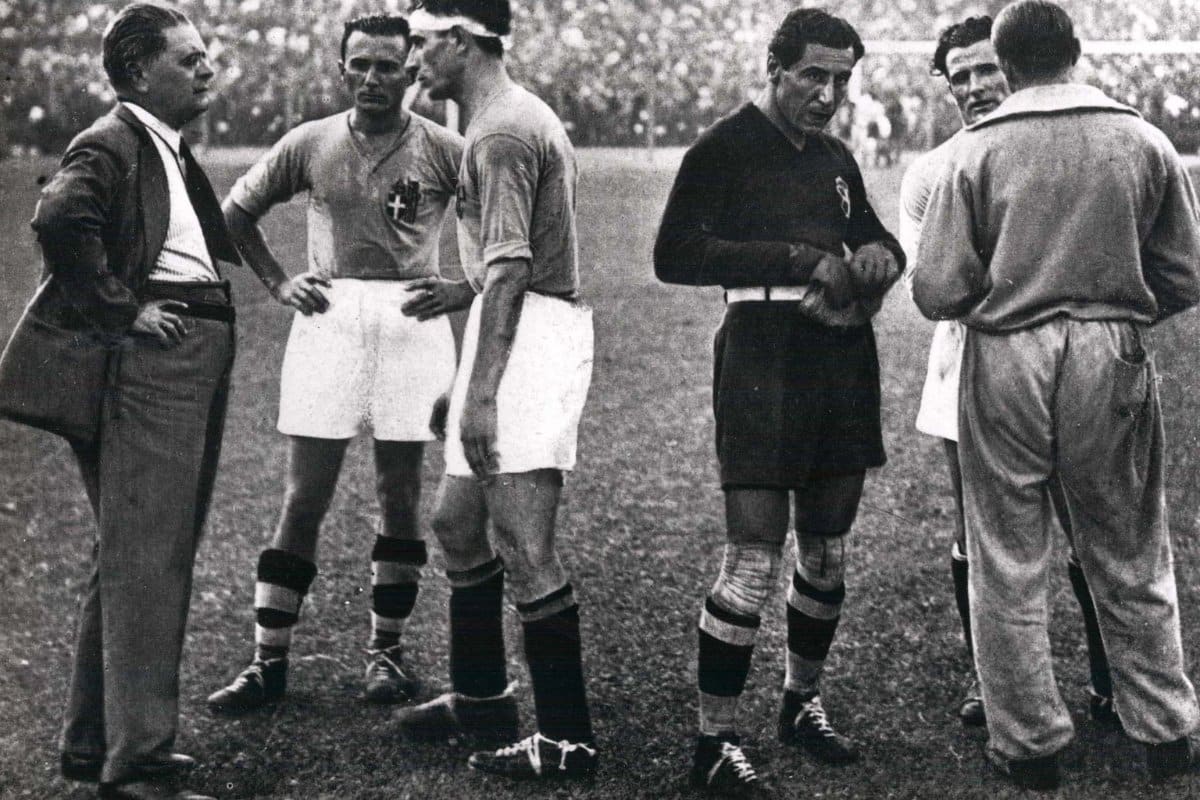
Left to right: Italian manager Pozzo, Monzeglio, Bertolini, goalkeeper and captain Combi, Monti (partially hidden) and assistant coach Carcano (behind) before the start of extra time in the victorious final against Czechoslovakia in 1934. Photo: Wikipedia
Seventy goals in just 17 games, 4,11 per gamemade the Italian tournament one of the most effective matches in the history of the competition. The best scorer was the Czech Oldřich Nejedlý with five hits.
Two world championships, two completely different stories. Uruguay 1930 was an adventure, an improvisation that worked, a tournament of love and passion that established a tradition. Italy in 1934 was something else: organized, cold, a politically infused review in which the winner was known even before the first ball was bowled.
(www.jabuka.tv | Photo: Wikipedia)