After every major tragedy in Bosnia and Herzegovina, an almost identical pattern repeats itself: a strong public shock, violent protests, some protests, calls for responsibility, promises by the authorities, and when the situation calms down, either forcibly or peacefully, a long drawn-out procedure begins, usually without a clear epilogue.
The tragedies that shook Bosnia and Herzegovina without a clear epilogue
- The Murder of Milan Vukelić (2007)
- The death of David Dragičević
- Death of Dženan Memic
- Fire in the Retirement Home in Tuzla (12 victims)
- Tragedy in Donja Jablanica (19 dead)
- Assassination of Željko Kopanja
This is how those who follow the social and social events in BiH describe every attempt to fight for basic human rights, first of all those for life, and to the question – why is it so difficult to receive justice in BiH, they answer that we do not have independent institutions, above all the judiciary.
Avoidance of responsibility
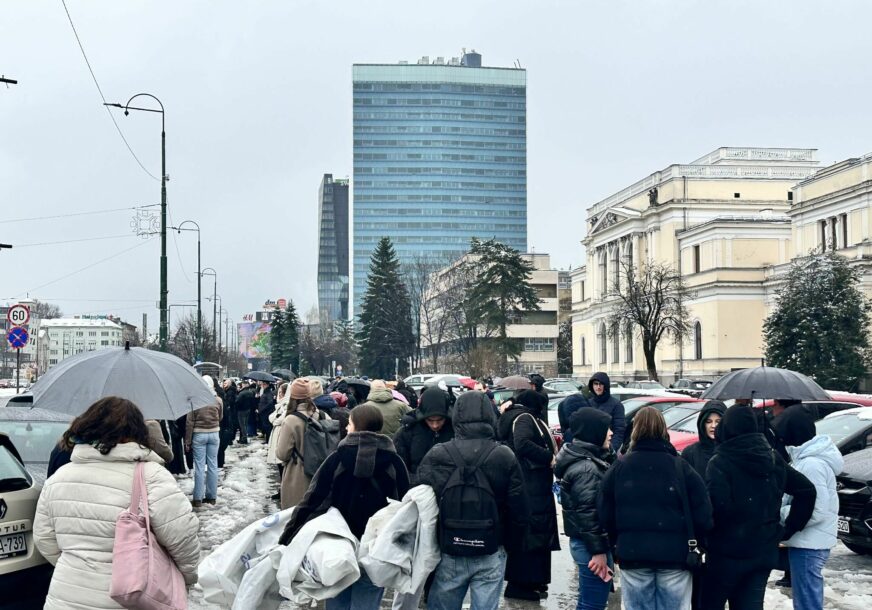
The tragedy in Sarajevo, when the tram derailed and killed a young man, Erdoan Morankić, and seriously injured several people, brought the people of Sarajevo to the streets.
The word “justice” echoes again in Bosnia and Herzegovina, and what people have received so far is only a few resignations, with claims that “it is not our fault”, but the essence is not to resign when a problem arises, but not to allow a problem to arise in the first place.
“One big problem in our society from the war until today is the avoidance of responsibility, but also the fact that the entire society has learned that there is no responsibility. And, here, today you see that no one is responsible, no one is guilty”, are some of the messages from the citizens of Sarajevo.
And whether they will be heard by those who need to hear them, is a question that has not been concretely answered countless times in Bosnia and Herzegovina.
Numerous tragedies
The assassination in which Milan Vukelic was killed in Banja Luka on November 6, 2007, the murder of David Dragičević in Banja Luka, the death of Dženan Memic in Sarajevo after being beaten, the fire in the Retirement Home in Tuzla in which 12 people died, the tragedy in Donja Jablanica in which 19 people died due to floods and landslides in the quarry, the assassination of Željko Kopanja, then the editor-in-chief and owner of “Nezavisni newspaper”, as a result of which he suffered serious bodily injuries and lost both legs.
Will the “Death Tram” case from Sarajevo be added to the search for truth and justice for the victims and victims in the aforementioned cases that have never been adequately resolved?
“I think something can change, and I hope that it will, both today and in the coming days. Security and trust have definitely been shaken and, unfortunately, this is not the first case that happened due to a system error, but we elect the government, so we hope that something will be able to change now,” said optimistically one of the participants of the protest in Sarajevo.
It is difficult to wait for justice in Bosnia and Herzegovina
However, those familiar with the situation fear that the views of Sarajli will only remain a publicly spoken word that, as in most cases so far, will evaporate into thin air.
Branko Todorović, executive director of the Helsinki Committee for Human Rights, says that it is difficult to get justice in BiH because the institutions are not independent.
“Justice in Bosnia and Herzegovina will not be achieved as long as political power stands above the law. The police, prosecutors’ offices, courts and security agencies formally exist as pillars of the rule of law, but in practice they function according to the orders of the political powerful. Political leaders who have a decisive influence on the appointments, careers and resources of institutions, abuse their power, building a system of personal interests and not the rule of law. That is why a similar pattern is repeated after every major tragedy. Such an outcome is not the result of chance or inefficiency, but of a system in which they are politically untouchable the powerful above the law and institutions,” he says.
Todorović again brings into focus the fact that the partocracy in Bosnia and Herzegovina has led to the fact that, as a rule, there are incompetent but, as he says, infinitely loyal personnel in key positions, which results in a combination of corruption, incompetence, obedience, fear and the absence of personal responsibility.
Society mobilizes only after a tragedy
As an additional problem, he cites the fact that public space in BiH has been saturated with inter-ethnic divisions and conflicts for years, while solidarity and public interest have been suppressed.
“There is another part of the problem. Society in Bosnia and Herzegovina mobilizes when a tragedy becomes visible and personal, but the pressure rarely lasts long enough to force the system to make real changes. The government often counts on fatigue, fear and a sense of hopelessness among citizens. That is why today we have a closed circle, politically controlled institutions that protect the government, systemic corruption that blocks accountability and a society that is exhausted by constant crises. In such circumstances, protests are an understandable expression of despair, but without real independence of institutions, they rarely lead to justice.” says Todorović for “Nezavisne”.
Vasić: Young people are determined
Sociologist Vladimir Vasić says that people taking to the streets in Sarajevo, above all young people, is proof that they are determined and ready to take the problems of this society on their backs.
“They sent, in my opinion, even a silent message that they don’t want to leave here, but that they also don’t want a society in which fear reigns. The atmosphere of fear is one of the biggest problems in this community of ours. People may be afraid to go out to a protest so that someone wouldn’t label them that they belong to someone else, that they are against someone. We are citizens of this country, we fight for rights and safety. Of course, some things cannot be prevented technically, like some traffic accidents, but we can send a message that society in BiH needs more responsibility. We can’t do anything without that,” Vasić told “Independent newspaper“.