His call for mass demonstrations, broadcast via satellite channels and Persian media outside Iran, was strongly echoed by sections of protesters in several cities across the country.
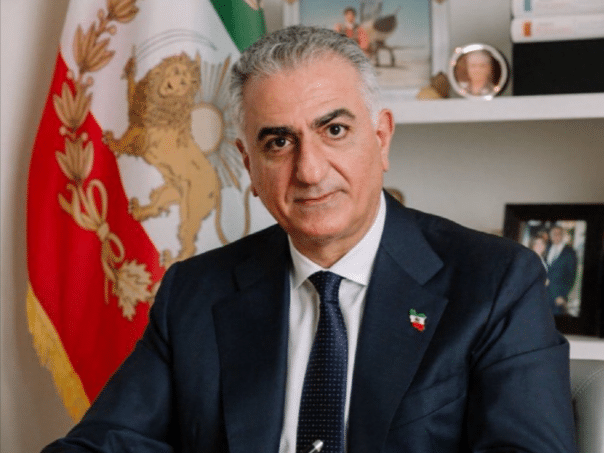
Pahlavi has been in exile for almost half a century. His father, Mohammad Reza Pahlavi, was overthrown in 1979 during the Islamic Revolution, following mass street protests that led to the collapse of the monarchy. Today, 65-year-old Reza Pahlavi acts as a political activist and critic of the current regime, although he insists that he is not personally fighting for the restoration of royal power.
Born in 1960 in Tehran, Pahlavi was a symbol of the succession of power since childhood, since the shah after two failed marriages had a son who, according to the constitution of the time, was supposed to become the future ruler. However, political upheavals soon changed his life path. In 1978, he went to the United States to study as a military pilot, while his father left Iran the following year. The monarchy was overthrown in a very short time, and the shah later died in exile.
On his 21st birthday, Reza Pahlavi declared his “willingness to accept his responsibilities as the legal king of Iran”, but postponed the swearing-in until, as he stated, “the conditions for this are created”. On that occasion, he swore by the “tricolor of Iran and the Koran” that he would act as a “factor of national cohesion”. He later completed fighter pilot training and studied political science, and claimed that during the Iran-Iraq War he offered to join the Iranian army as a pilot, but never received a response.
After the death of his father, Pahlavi became a symbol of the monarchist opposition for part of the Iranian diaspora. In one period, he talked about forming a “government in exile”, but his real political influence remained limited for years. Although among his supporters there are those who openly advocate the return of the monarchy, Pahlavi today claims that his goal is not a title or personal power.
As he states, his plan is to “overthrow the regime and hold a referendum where the people will decide on the future system”. Such an approach distanced him from a section of hard-line monarchists, but at the same time brought him some support among younger Iranians, who did not live during the Shah’s reign, but increasingly compare the current state of the country with the period before 1979.
His growing publicity is partly the result of the weakness and fragmentation of the opposition in exile. No opposition group has managed to gain wider credibility, while the most organized among them, Mujahideen-e Khalq, has very limited support due to its ideology, internal rules and history of collaboration with Saddam Hussein. Attempts to form a broader opposition front, including the one after the “Women, Life, Freedom” protests in 2022, proved to be short-lived and unstable.
Pahlavi’s calls for protests are still echoed today, and in some cities slogans of support and calls for his return can be heard. However, despite this symbolic role, it remains an open question what is its real political capacity and whether nostalgia for the pre-Islamic order can be turned into a viable and widely accepted political alternative in Iran, which has changed profoundly in the meantime.
(Vijesti.ba)