
The United States and Israel this morning launched coordinated attacks on Iranian military and security targets.
The Pentagon called the operation “Epic Wrath”, while the Israeli side called its action “Lion’s Roar”. US President Donald Trump said in the video that the aim of the attack was to “end the security threat to the US” and “give the Iranians an opportunity to overthrow their rulers”.
This was followed by Iranian missile counterattacks on Israel, but also on American military sites in Bahrain, the United Arab Emirates and Qatar. Israel has declared a state of emergency, and the region is on the brink of a wider conflict.
In this context, an Israeli official told Reuters that “the Ayatollah is dead and his body has been found.” Tehran has not yet officially confirmed this information.
The man who ruled for 36 years
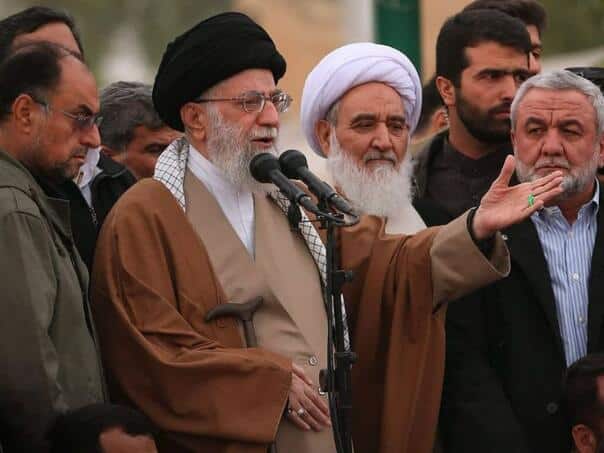
Ali Khamenei, 86, has dominated Iran since 1989, when he took over as supreme leader for life following the death of Ruhollah Khomeini. As the highest authority in the political and religious system, he controlled the armed forces, the security services, the judiciary and key political decisions.
During his three decades in power, he survived student protests in 1999, mass riots in 2009, a wave of rebellions in 2019, and the “Women, Life, Freedom” movement in 2022 and 2023, triggered by the death of Mahsa Amini in custody. Each time the regime responded with repression.
His rule was marked by tight control, reliance on the Revolutionary Guards (IRGC), and constant confrontation with the United States and Israel. He refused to recognize Israel and supported allied groups throughout the Middle East.
A war that exposed weaknesses
During the Twelve Day War in June 2025, when Israel launched its deepest strikes inside Iran so far, Khamenei was forced into hiding. The war exposed serious security lapses and the penetration of foreign intelligence services into Iranian structures.
Despite this, he emphasized in public addresses that Iran will not give in. On the occasion of the 47th anniversary of the Islamic Revolution, he claimed that the revolution “saved Iran from foreign influence” and that the country’s strength lies in unity.
But analysts have assessed in recent months that his position is more fragile than ever, especially due to economic problems, sanctions and the growing dissatisfaction of the population.
Who takes power if it is established that the Ayatollah is truly dead?
If his death is confirmed, the issue of succession becomes crucial. According to the constitution, the Council of Experts appoints a new supreme leader. There has been speculation in political circles for years about his son Mojtaba Khamenei, who runs his father’s office from the shadows and enjoys strong support from hardliners.
The Revolutionary Guard, as the most powerful institution in the country, could play a crucial role in the transition. The American CIA had previously estimated that, in the event of Khamenei’s death, the hardliners from the IRGC could consolidate power.
Iran’s parliament said in January that any attack on the supreme leader would mean a “declaration of war on the entire Islamic world” and could prompt the declaration of jihad.
A region on the edge
After the attack, Trump spoke with the leaders of Saudi Arabia, Qatar and the United Arab Emirates, as well as with NATO Secretary General Mark Rutte. The consultations followed Iranian strikes on US bases in the region.
If Khamenei is indeed killed, Iran is entering a period of deep uncertainty. An internal showdown between factions is possible, as well as an additional escalation of the conflict with Israel and the United States.
For a regime that rested on one figure for 36 years, this could be the moment that changes everything, reports Index.hr.
(Vijesti.ba)


