Global business enables great retail companies to minimize the impact of higher customs in the United States, but their strategy takes care of central banks as it could encourage inflation in other regions, such as the European Union, where consumer prices have finally started stabilizing.
German Birkenstock and Danish Pandor are considering the possibility of transferring US customs customs to all markets. Birkenstock Financial Director said last week that the global increase in prices in the “lower single-digit range” could fully compensate the effect of American customs.
PANDORE CEO, Alexander Lacik, said that this producer jewelry will consider whether prices increase globally or increase in the USA, which is their biggest market.
“Companies are seriously considered how to distribute customs costs,” said Markus Goller from the German consulting company Simon Kucher, adding that non-American producers could slightly increase the prices in the United States, Europe and other parts of the world.
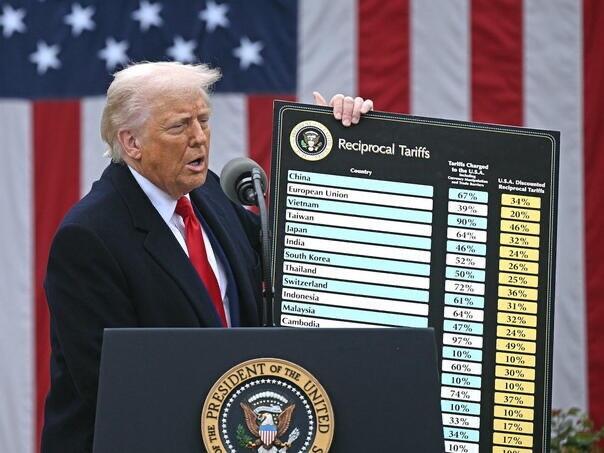
U.S. President Donald Trump introduced a general customs duty of 10% on all global imports and threatens the introduction of higher, so-called “Reciprocal” customs with trade partners. When American retail Gigant Walmart announced price increases due to customs, Trump ordered the company to “the cost of customs.”
If companies announce the increase in prices and outside the US market, they could avoid similar criticism from the White House.
“If the products you import in the US are now subject to customs, it is mathematically clear that Jean-Pierre Dubé, professor of marketing at Chicago, would make increases in all markets to protect themselves from charges that they do this exclusively due to customs.
Retail companies could increase the prices of certain products or introduce rise in the markets where consumers are less sensitive to prices, in order to subsidize the sales, said Jason Miller, a professor of supply chain management at Michigan University.
“Perhaps a company that operates exclusively in the US must raise prices by 12%. But the global company can increase by 8%, deploying higher market increase,” professor explained.
If more multinational traders decide to distribute US customs in other markets, inflation could also grow in countries like Great Britain, which have already been achieved by trade agreements to mitigate the consequences of customs.
The Governor Bank of England Andrew Bailey has recently warned that global companies are increasingly determined by prices universally, regardless of different customs rates in countries, which, as he said, should be “closely monitored.”
Inflation in the eurozone is finally approaching the target rate of 2%, set by the European Central Bank (ECB). European retail companies that participated in the ECB survey in March stated that the price growth in the sector was weak.
Just a few days later, 2. April, the US president announced a new customs policy and further increased customs in Chinese imports – up to 145%. Recently, these customs were reduced to 30%, which enabled some European merchants to procure goods from China at lower prices because US customers canceled orders, and marine transport prices also fell.
Martino Pessina, CEO of Fashion Fashion, which operates in 17 European countries, stated that Chinese suppliers offered more favorable prices as orders from the USA declined significantly.
“We don’t know if inflation in the United States, or whether that inflation will be poured into Europe,” said Pessina.
While individual companies are considering deployment of customs costs, others completely reject price increases outside the USA.
“There is no reason to increase the prices outside the US due to the customs,” said the director of Adidas Bjorn Gulden at the end of last month, emphasizing that all talks within the company concerning the customs market relations exclusively on the US market.
The member of the ECB Executive Board, Isabel Schnabel, stated that the inflation in the eurozone could temporarily fall below targeted 2%, but for customs duties to later cause new inflationary pressure. “In order to compensate the increased entrance costs, companies often increase prices and products that customs do not affect directly,” Schnabel said.
Although each firm has its own pricing policy, economists warn that some can use the situation and increase prices more than it is realistic, with the goal of increasing profits – as they did during Pandemic inflation 2021-2022.
“Consumers will be extremely difficult to assess which part of the total price of the product comes from customs, and even what is the customs rate is created by the ideal conditions for abuse,” Hal Singer, the professor of the economy from Utah.
Expectations of American consumers about inflation in the next 12 months increased in April to 6.7% – the highest level of 1981. Years. The eurozone also grows the expectation of inflation among consumers.
“When people expect inflation, it gives the firms additional prices to increase prices,” Miller concluded.
(Vijesti.ba / Hina)