
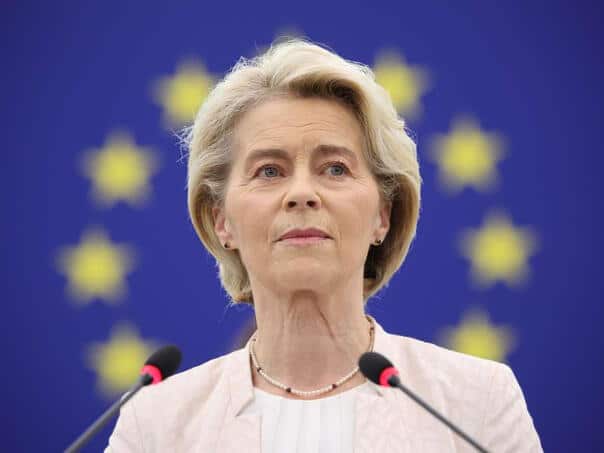
The lawsuit filed New York Times and his correspondence of Matina Stevis-Gridneff, stating the violation of transparency rules after the Commission refused to submit text messages on request. The journalist in Aptil 2021. discovered that Von der Leyen and the Executive Director of Pfizer exchanged SMS in the eve of concluding the procurement of vaccines.
She asked for all text messages for the next year that Von Der Leyen and Bourla exchanged between 1. Janaur 2021. and 11. May 2022, and according to legal law on access to EU public documents.
The refusal of the Commission encouraged to present it to the case before the European Court of Justice, with the support of its newspapers. As the New York Times reported, personal contact between Von Der Leyen and the Executive Director of Pfizer was key to achieving an agreement on the purchase of vaccines in the EU worth more billion euros at the pendo pendulum.
In the spring 2021. On behalf of 27 EU Member States, the contract has concluded a contract worth up to 35 billion euros if it is fully executed by 1.8 billion dose of vaccine. When rejecting the request, the Commission claimed not to possess such documents.
The manner in which the Commission acts with the Coronavirus vaccination contracts, provoked criticism. In 2022. The European Ombudsman, an independent body, was sharply condemned the Commission’s response to the requirements for access to texts. The Office of the European Public Prosecutor is also currently investigating the purchase of vaccine against coronavirus in the EU.
In a separate case, the EU’s General Court ruled last year that the Commission did not provide the public sufficient approach to sales contracts for the Coronavirus vaccines. Hearing 15. November 2023. led to a vibrant exchange between the two sides in Luxembourg. Bonda Kloostra, New York Times lawyer, accused the Commission that violated the principles of good governance and communication overwhelming the importance of these text messages.
On the other hand, Paolo Stancanelli, a lawyer responsible for the defense of the Commission, has determined that exchanged SMS messages were in no way part of the negotiations on the conditions of the vaccine procurement. He admitted the existence of messages, but also claimed that the contract negotiation did not take place through SMS.
Furthermore, the Commission’s services, 2022. asked to find those messages, the Von Der Leyen’s office contacted, from which it was said that they could not find them. The affair caused controversies within the institutions in Brussels, and in Januro 2022. The Commission indicated that it considers the update of its policy to access documents, not stating additional details.
(Vijesti.ba / Hina)


