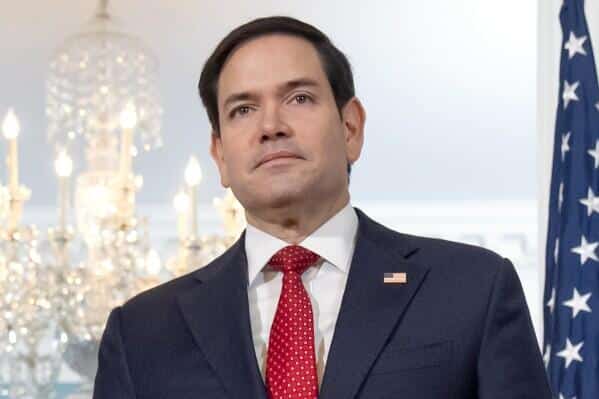
In his first, occasion, Testimony as a head of diplomacy, he confronted criticisms for immigration, Trump Relationships with Russian President Vladimir Putini and the Priority to the U.S. to the White South Africans in the Refugees from other parts of the world.
He addressed the Senate Committee for Foreign Affairs, Rubio said that the aim of changes conducted is not withdrawal from the U.S. from the world, nor the dismantling of American foreign policy. He stated his journey in 18 countries as proof during 18 weeks from taking office in January.
“I just visited 18 countries in 18 weeks,” Rubio said. “That doesn’t sound like a drag from the world.”
The Donald Trump administration blocked the reception of non-white refugees, while the relocation of Africanians – descendants of the mostly Dutch immigrants from South Africa – under the explanation that they were exposed to discrimination and alleged genocide. The South African government dismisses that claims.
Senator Chris Van Hollen from Maryland accused Rubia to abandon the principles previously advocated, “You turned his head from the genocide in Sudan, and invented him in South Africa. You left the Ukrainian people, and Putin used you.”
“You said that foreign help is key to promote American values. Now until Elon Musk destroy USAID and other programs,” he said he was sorry he was sorry for Rubia.
Rubio replied, “What you regret your voice for me, just confirms that I do my job well.” He added that Russia did not give any concessions and that sanctions remain in force.
Rubio said that the administration budget proposal was 28.5 billion dollars for fiscal 2025/26. year, and that it will enable the implementation of the Trump Foreign Policy Vision, with savings of 20 billion dollars in “duplicate, wasteful and ideologically motivated programs.”
He confronted the issues of abolishing numerous foreign aid programs and reducing the number of State Department and USAID, who previously had about $ 40 billion a year, and now merges with the State Department.
Rubio said to abolish the programs did not serve the interests of the United States, and that Washington will remain the largest donor of humanitarian aid in the world. He also announced a new A1OF Fund worth $ 2.9 billion, which will take part of those tasks.
Senators were examined by Rubia about the possible abolition of Syria sanctions, his role in stopping immigration, help Palestinians in Gaza and the war in Ukraine.
Rubio said the American assessment shows that the Syrian government is extremely unstable and that there is a risk of civil war and the disintegration of the state. He added that American staff in Turkey, including ambassador, cooperate with local Syrian officials to determine what help is needed.
During the testimony, several protesters interrupted exposure to cries “Stop genocide”, after which the police performed them from the hall. Demonstrations during the congress hearings have become common occurrence since the war in Gaza began.
Rubio welcomed the decision of Israel to allow humanitarian aid to enter after a multized blockade and said that the military actions of Israel focused against Hamas, not the Palestinian people.
He added that Washington contacted other countries in the region and asked whether they would be ready to receive Palestinians from Gaza who wanted to voluntarily relocate, but denied the claims that talks with Libya were on that issue.
Republicans bragged Rubia, which became a central figure in Trump administration. He is currently serving the National Security Adviser, performs the director of USAID and the temporary main archive of the United States.
“When I have a problem, I call Marc. He solves him,” Trump said earlier this month.
(Vijesti.ba / Hina)