It says: Iva Badanjak / Jutarnji.hr
Ukrainian President Volodimir Zelenki rejects the idea of freezing conflicts and territorial concessions, clearly saying that just peace does not include rewards for aggressors. His statements come as a reaction to American proposals according to which Ukraine would recognize Russian control over Crimea, with potentially freezing conflicts on existing front lines.
Green remains consistent in his attitude; Neither the crime or other occupied territory are subject to negotiations if Ukrainians in return do not receive a fully and unconditional truce. His attitude relies on the principle of international law and the support of the Allies, but it is at the same time opposing increasingly stronger and more common signals from Washington about the necessity of compromise for the rapid end of war.
Call Kiev and Moscow
The last statement of Donald Trump in an interview for ABC News, in which he says Putin wants to end the war, “may not want to introduce the US president as a key peasant to relieve his relationship to facilitate the conflict solution. The United States called on Kiev and Moscow to present concrete proposals for the interruption of war, warning that otherwise could be drawn from the intermediary role.
– The two sides must submit concrete proposals on how to end this conflict. As we will continue the decision that belongs to the President Trump. If there is no progress, we will withdraw as intermediaries in this process – the US Secretary of State Marco Rubio add that Trump would decide on the continuation of the war in Ukraine this week.
The UN American representative in the UN Security Council John Kelley blamed Russia to continue the bloodshed, saying Russian attacks caused unnecessary lifelong losses, including innocent civilians.
– If both sides are ready for peace, now they will support them in that, “he said.
Kremlin confirmed on Wednesday that Putin was open to peace negotiations, but also that the situation is too suptile for a quick solution.
Dmitry sand spokesman said that political and diplomatic solutions are still the priority of Moscow, but the goals of the war must be achieved. He added that Putin is ready for direct negotiations with Ukraine, but says that from Kiev did not arrive on that offer.
At the same time, Russian Foreign Minister Sergei Lavrov expressed readiness to direct negotiations with Ukraine without preconditions, and at the same time rejected the Ukrainian application for 30-day breaking fire, calling him “prerequisite”. The message from Moscow remains ambiguous: on one side openness for dialogue, on the other hand, rejection of concrete deescal procedures.
Although the West is increasingly talking about security guarantees for Ukraine after the war, the actual military willingness of Europe is shown in question. According to the information published by the British Times, Europe could hardly collect 25,000 soldiers for the mission of deterrent to Ukraine, with maximum efforts.
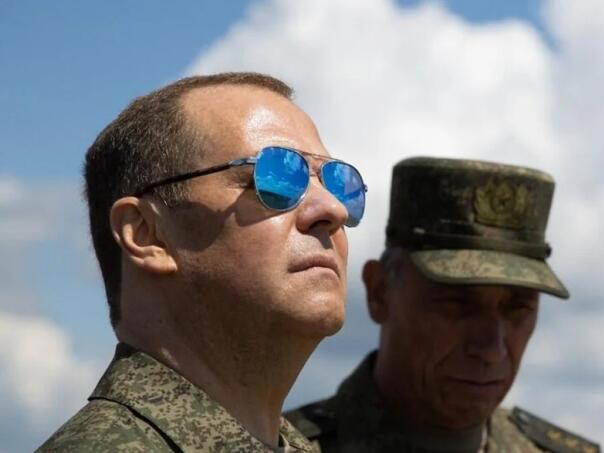
The biggest problem is the lack of manpower, sub-financed army and political reluctance of large countries such as Germany, Italy and Spain to send troops. In such a vacuum of military-diplomatic determination in the west, Moscow increases verbal pressure. Former President Dmitry Medvedev threatened to be new NATO members, especially Sweden and Finland, now potential targets of nuclear strokes if there is a wider conflict. The statement for the TASS Medvedev Agency once again demonstrated a hardline position that strengthens the Russian deterrence strategy through intimidation.
Despite the Russian announcement of a three-day truce from 8. to 10. May, the fighting is not calmed. Russian drones hit Kharkiv and Dnispro raring more dozens of people and killing at least one person. Ukrainian authorities report on intensifying attacks, especially in the coverage, where Russian forces try to break down the defense lines.
The Supreme Commander of the Ukrainian Armed Forces is Oleksandr Sirski that Russia sends new units on the front every day, resulting in large losses among her soldiers, while the Russian side of the public shows “illusory successes”. The Ukrainian army adds that the target attacks were civilian targets and infrastructure, including hospitals and energy facilities, which further undermines the credibility of any Russian call to a ceasefire.
(Vijesti.ba)