
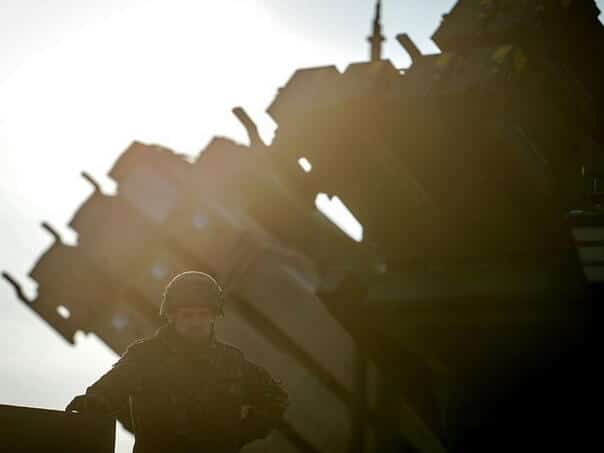
The defense plan will include a defensive zone that the enemy must cross before advancing, a sort of “hot zone,” Brigadier General Thomas Lowin, deputy chief of staff for operations at NATO’s Land Forces Command in Izmir, Turkey, told Sunday’s edition of the Welt am Sonntag newspaper.
Specifically, the sensors will detect enemy forces and activate defense systems, such as armed drones, partially autonomous combat vehicles, unmanned ground robots, as well as automated anti-aircraft and anti-missile defense systems, the general specified.
However, the final decision on the use of such weapons “will always be a human responsibility.”
The sensors, which must cover a zone of several thousand kilometers, will be located “on the ground, in space, in cyberspace or in the air,” according to Lowin, reports Hina.
They will be able to collect data on “enemy movements or use of weapons” in order to inform all NATO countries in real time, he explained.
The plan envisages the strengthening of existing weapons stocks, the maintenance of stationed units at the same level as today, and finally the use of cloud computing and artificial intelligence to manage the system, the general concluded.
The first elements are already being tested as part of pilot projects in Poland and Romania, and the entire NATO system should be implemented if possible by the end of 2027, according to Welt am Sonntag.
Faced with an increase in incursions by Russian or unidentified drones last fall in Poland, Germany, Romania, Denmark and Belgium, the European Commission floated the idea of establishing a “drone wall”, the framework of which has yet to be defined. The EU intends to rely on the experience of Ukraine, which has been facing this type of attack for more than three years.
Poland is preparing to sign a contract for “the largest anti-drone system in Europe,” Polish Defense Minister Wladyslaw Kosiniak-Kamysz told daily Gazeta Wyborcza on Saturday.
The minister did not specify how much the contract will cost, which will refer to “different types of weapons”, nor the name of the consortium that will sign it at the end of January. This decision is a response to an “urgent operational need”, he emphasized.
(Vijesti.ba)


