France, June 1938. The third World Cup in history. And on the horizon of Europe there was already a shadow that would soon engulf the continent – and with it, for a full twelve years, extinguish the greatest competition.
The decision to take the second consecutive World Cup held in Europe it caused a real diplomatic upheaval in South America.
The Jabuka.tv portal brings you a series about world championships in football throughout history.
Uruguay and Argentina they boycotted the competition. The Argentines even submitted a late application, but eventually withdrew it due to a dispute between the federation and the clubs.
The defending champions, Italyand the host France, they entered automatically, and from the remaining places even 11 it fell to the European nations.
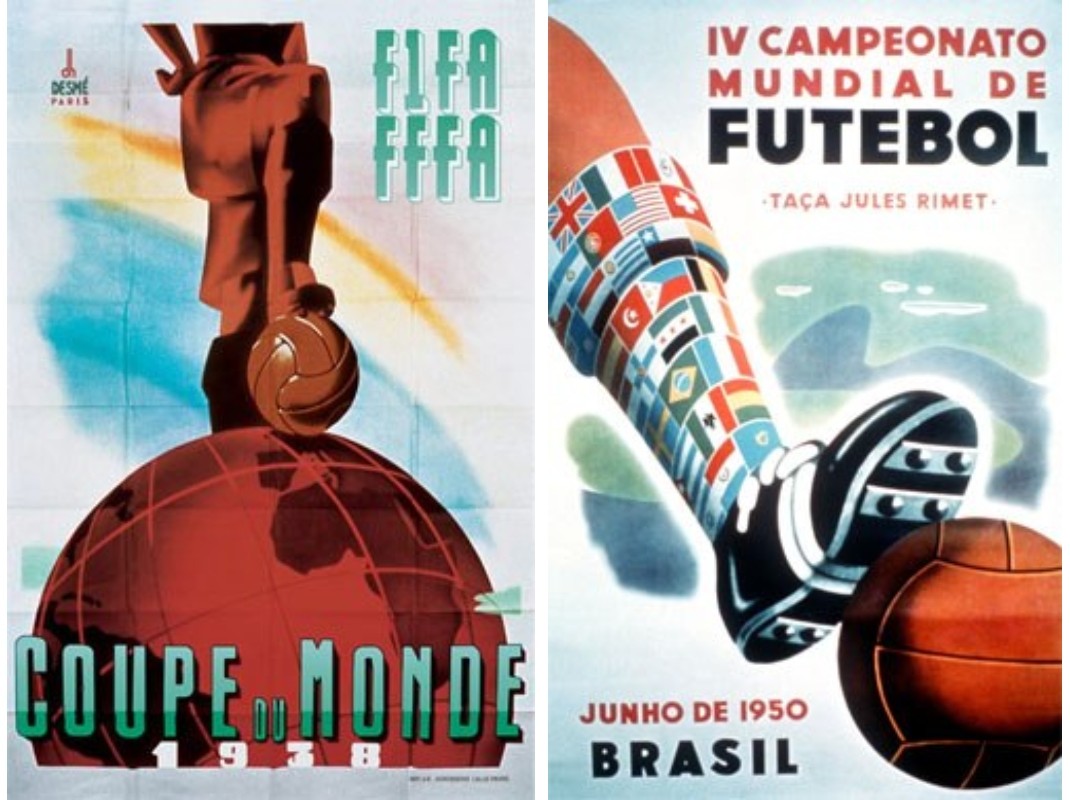
Posters: France 1938 (left), Brazil 1950 (right). Photo: Footballhistory.org
The result was a tournament with a dramatically Eurocentric face, only three non-European teams: Brazildebutant Cuba and Netherlands East Indies (today’s Indonesia), which became the first Asian team in the history of the World Cup, and qualified because all other Asian teams withdrew their applications.
But even Europe did not appear complete. Spain was consumed by civil war, and the most dramatic of all – Austria has disappeared.
The Anschluss that wiped out the team
On March 12, 1938, just three weeks before the start of the tournament, Nazi Germany annexed Austria. The country with one of the strongest European national teams has ceased to legally exist.
The Austrian players scattered, some were forcibly included in the German team, and the star of Viennese football Matthias Cinderella he refused to play for the united team.
Austria was eliminated from the draw, a Swedenwho was supposed to play against her, automatically advanced to the quarterfinals.
Cubans, Brazilians and the brutality of Bordeaux
The biggest surprise of the first round was victory of Cuba over Romaniaand in a repeat match. The format remained the same as in 1934 – exclusively a knockout, and if overtime does not bring a decision, a new match is played from the beginning the next day.
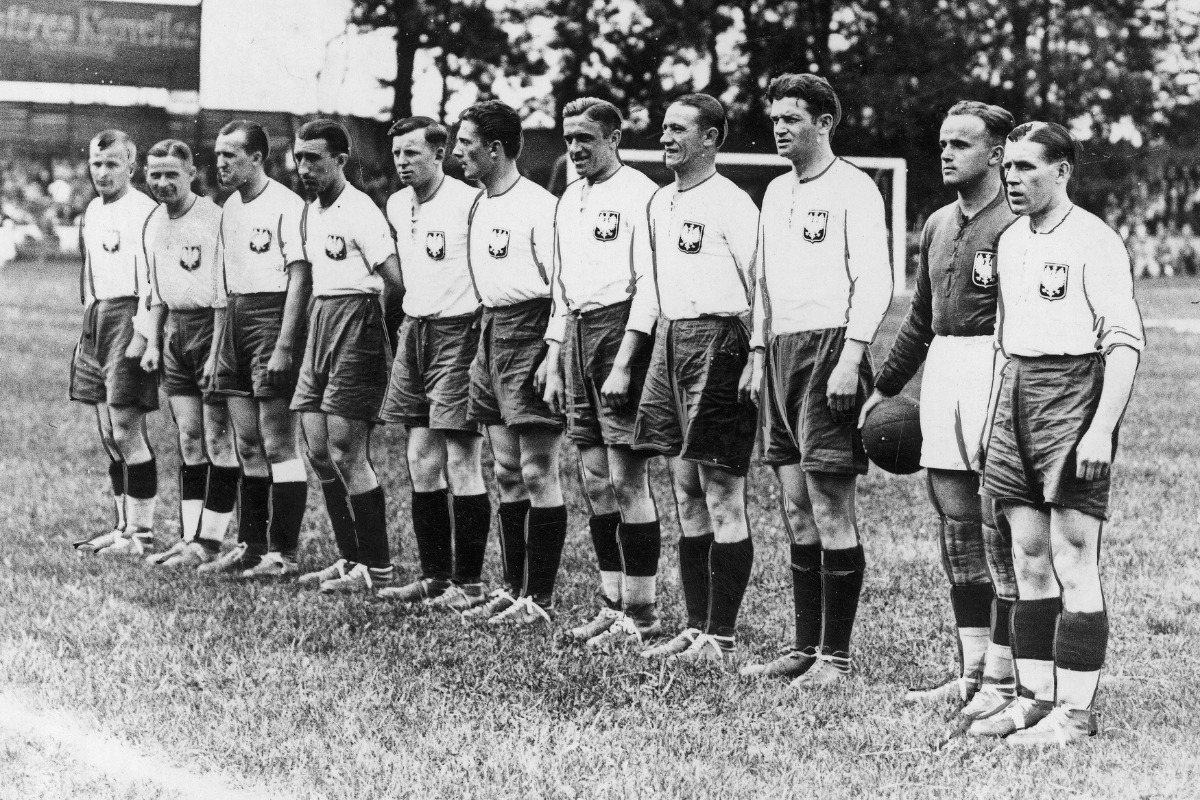
Polish players at the World Cup in France in 1938. From left: Ewald Dytko, Antoni Gałecki, Gerard Wodarz, Leonard Piątek, Ernest Wilimowski, Wilhelm Góra, Erwin Nytz, Ryszard Piec, Fryderyk Scherfke, Edward Madejski and Władysław Szczepaniak. Source: Ilustorowany Kurier Codzienny (June 9, 1938) / Narodowe Archiwum Cyfrowe (nac.gov.pl)
Brazil shone brightly for the first time. Their attacker Leonidas was a spectacle in his own right and finished the tournament as the top scorer with seven goalsand his team played attractive, attacking football which delighted the European audience.
But the way to the semi-finals went through Bordeauxwhere they are Brazil and Czechoslovakia played one of the most brutal games in the history of the competition, a duel with several serious injuries and players excluded from the field, which was not decided in regular time, nor in extra time, but only the next day in a replay.
Czechoslovakia went to that second game without two standard players, both broke bones in the first game.
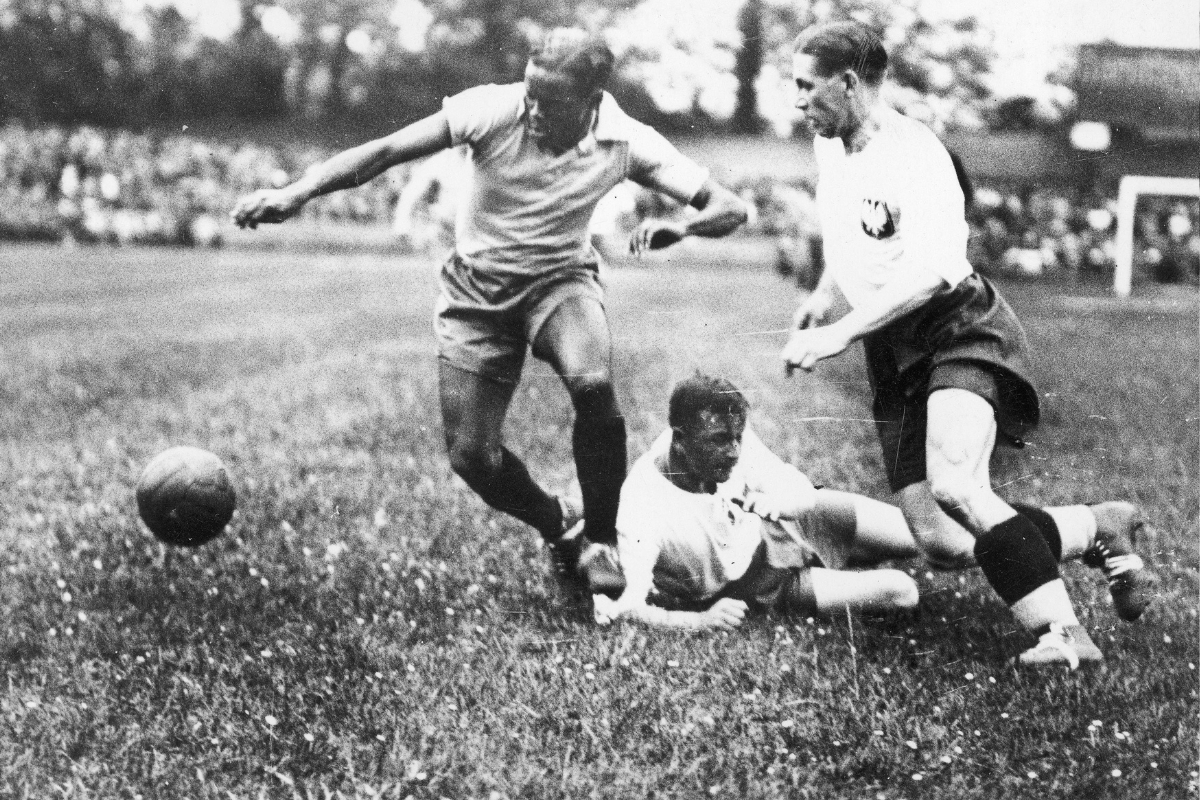
A moment from the match between Brazil and Poland at the World Cup in France in 1938. From left: Leônidas da Silva (Brazil), Antoni Gałecki and Władysław Szczepaniak (Poland). Source: “Raz Dwa Trzy” no. 23/400 (June 12, 1938) / Narodowe Archiwum Cyfrowe (nac.gov.pl)
Black jerseys and right hand in the air
Italian football players were coming out on the field with a raised right hand fascist salutebut the peak of political propaganda happened in the quarter-finals against France.
How both national teams performed traditionally in blue jerseysItaly was forced to change the set with the draw.
Instead of the standard white variant, by direct order Benito Mussolinithe team ran out in all black gear (maglia nera).
That’s the move, with emphasis fascist symbol (Fascio Littorio) on the chestwas a clear attempt to promote the regime.
You can see the photo of the Italian team in black jerseys giving the fascist salute before the quarter-final against France via this link.
The provocation caused a stormy reaction; the stadium tribunes in Colombes responded thunderously whistles and insultsbut Italy is despite the hostile atmosphere won by 3:1.
Semi-finals and a telegram that may never have existed
Italy eliminated Brazil in the semi-finals without Leônidas, whom the coach spared because he planned to save it for the finalwhich Brazil did not even welcome. Hungary is the turn with 5:1 broke up Sweden.
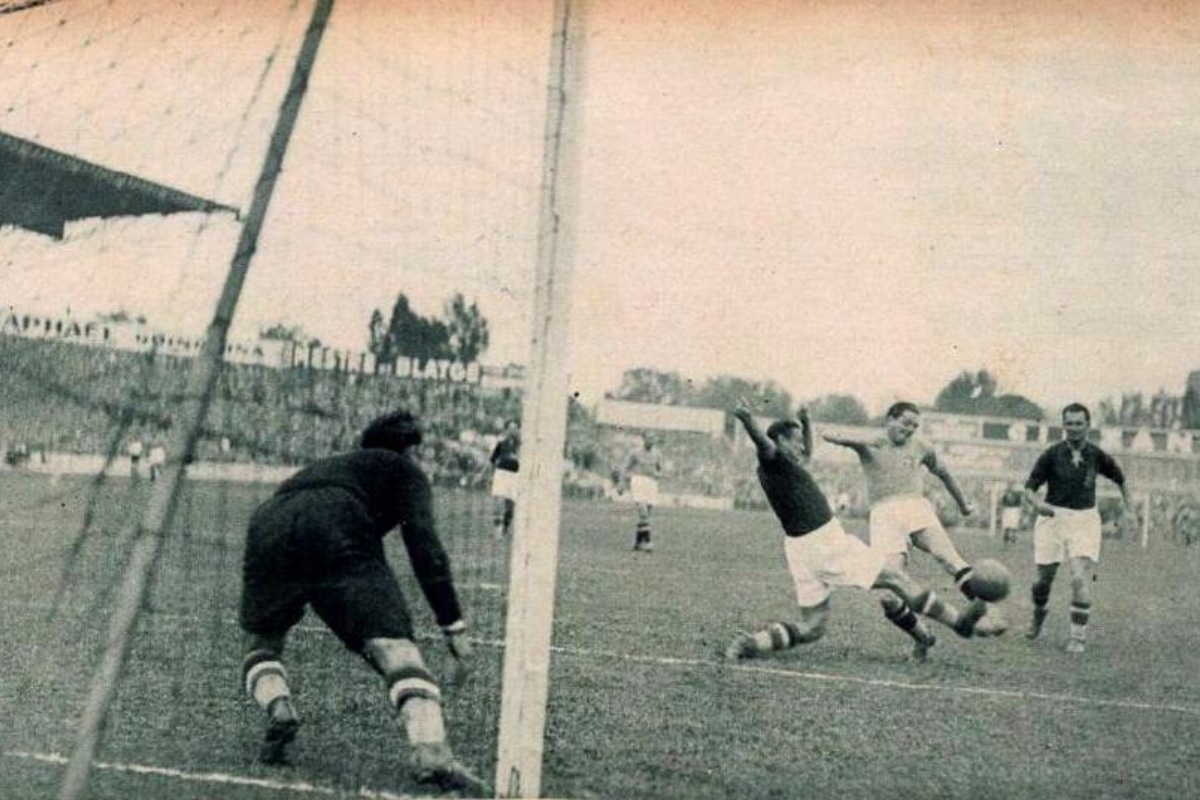
Italian striker Silvio Piola shoots at the goal, and Hungarian goalkeeper József Bíró defends. 1938 World Cup Final, Colombes, France. Source: Le Miroir des sports (June 21, 1938)
Before the final, there was a rumor that it was Mussolini sent a telegram to the team with the message “Vincere o morire” – win or die. One of the players, Pietro Ravahe categorically denied that story decades later in an interview. Indeed, the telegram that arrived was a standard message of support, nothing more.
Final in Paris
At the Stade Olympique de Colombes before 45.000 viewers Italy and Hungary they played a final full of twists and turns. Italy took the lead, Hungary equalized, Italy took the lead again – and led 3:1 at halftime. Hungary never seriously got back into the game.
Final 4:2 it confirmed the first defense of the title in the history of the world championships. Same menu, Vittorio Pozzotwo titles in a row.
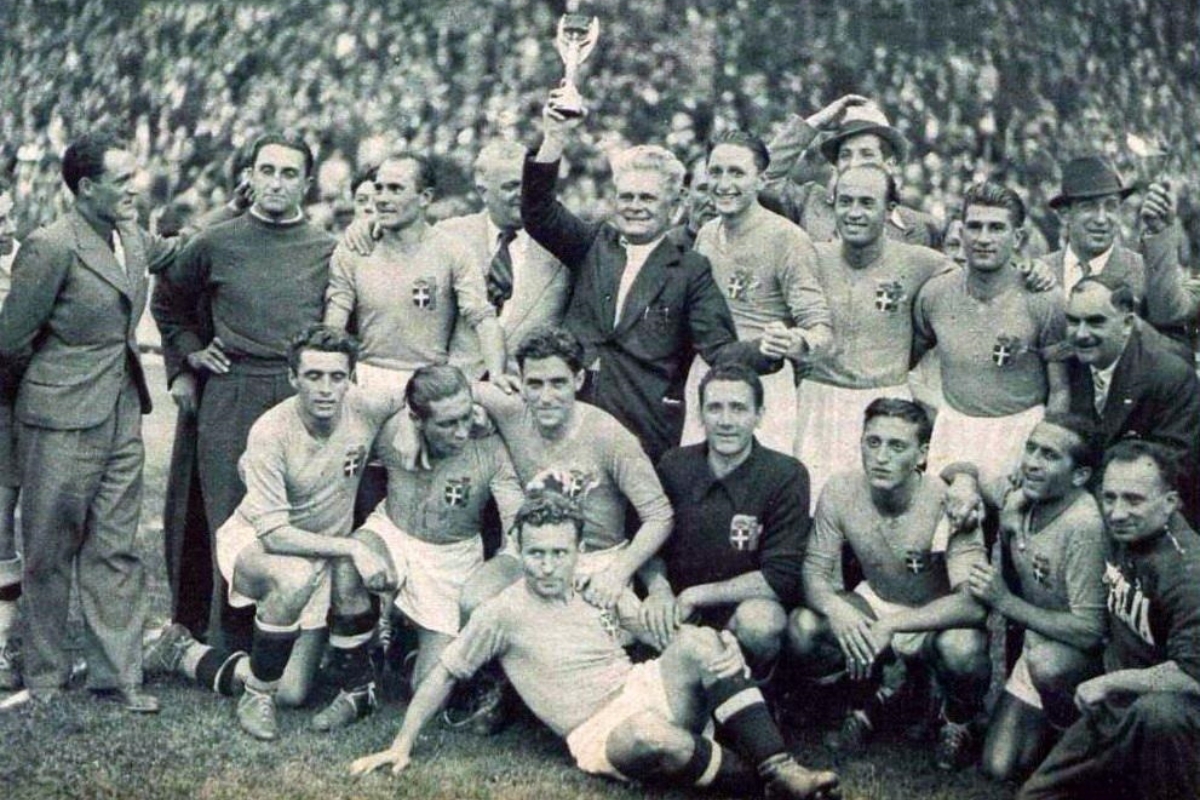
Italian coach Vittorio Pozzo with the trophy after winning the world championship title. 1938 World Cup Final, Colombes, France. Source: Le Miroir des sports (June 21, 1938)
And the trophy? Italian Vice President of FIFA Ottorino Barassi he will save it from the Nazi military authorities in a completely unexpected way, he will hide it in a shoe box under his bed.
Twelve years of silence
It had to wait in 1942. Brazilians signed up for hosting, Germans signed up. Votes were collected, plans were made. And then the war started.
World Cup in 1942. never played. Not even the one in 1946. Europe was burning, cities were in ruins, millions were dead.
In 1946, FIFA made a decision: the next World Cup is being played 1950., in Brazilfar from the ashes of the Old Continent. Italy remained champion for 16 years.
Brazil 1950: Stadium of Dreams and Nightmare
The Brazilians built something unprecedented for the occasion. Maracanã – capacity stadium close by 200.000 placesa symbol of a modern, self-confident Brazil that emerged from the Second World War as an economic power and now wanted to show the world that it is also a soccer power.
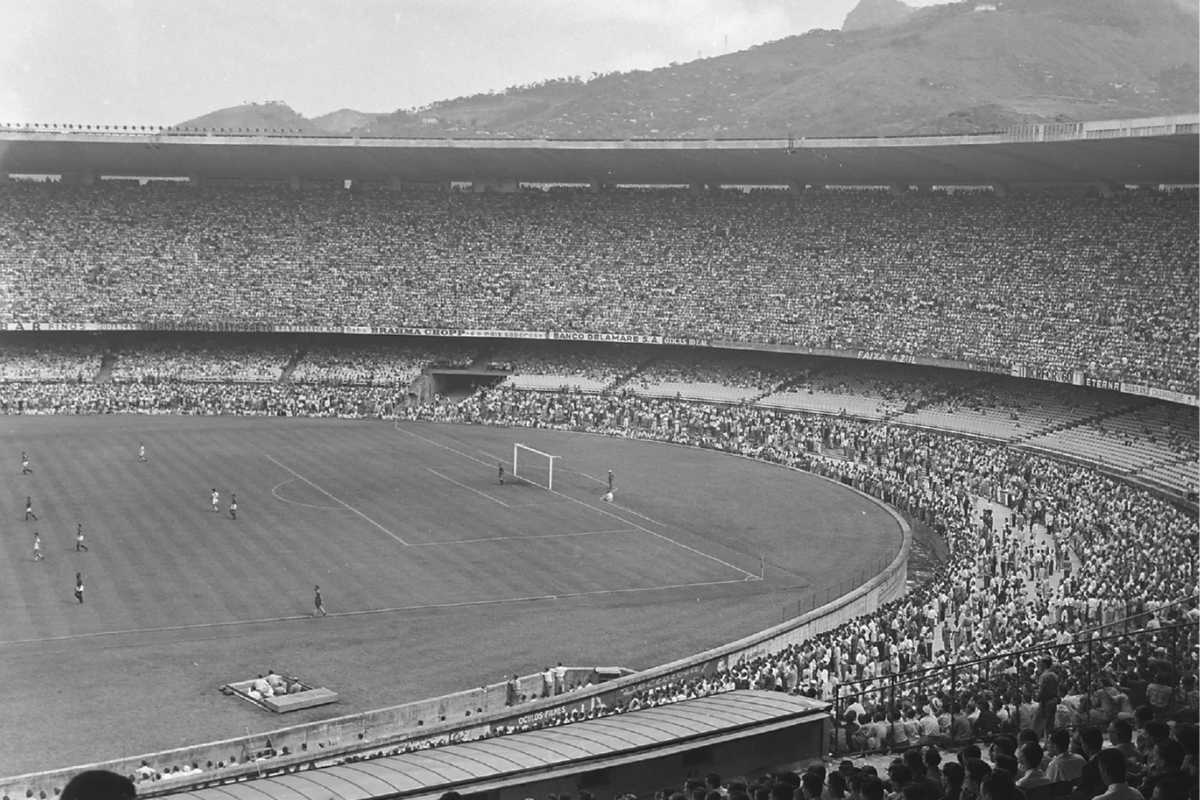
The opening of the Maracanã stadium just before the 1950 World Cup. Source: Arquivo Nacional (Brazil)
The tournament, which returned after 12 years, arrived with a bunch of resounding absences. Germany and Japan the performance was forbidden. The Soviet Union, Hungary, Czechoslovakia refused to perform for political reasons.
Uruguay and Argentina were absent since 1930. – Uruguay is now backArgentina is not.
And she arrived England – finally. After decades of self-isolation and beliefs that the British Isles football rules and tradition enough without any World Cup, the English entered FIFA and signed up. They performed as one of the favorites.
New competition format
The format was different than ever before or since. Instead of the classic knockout system or standard groups with a final match, in 1950 it was played in two group stages. The four winners of the first round entered in the final four-team group in which everyone played against everyone – and whoever collects the most points becomes the champion.
Without finalswithout a decisive match in the usual sense. Just a table. The winner was only known when the last match was played.
That decision had its own logic: the Brazilians built a gigantic stadium and they needed as many games as possible to fill it and cover the costs. But they inadvertently created a format that will break a country’s heart in front of full stands.
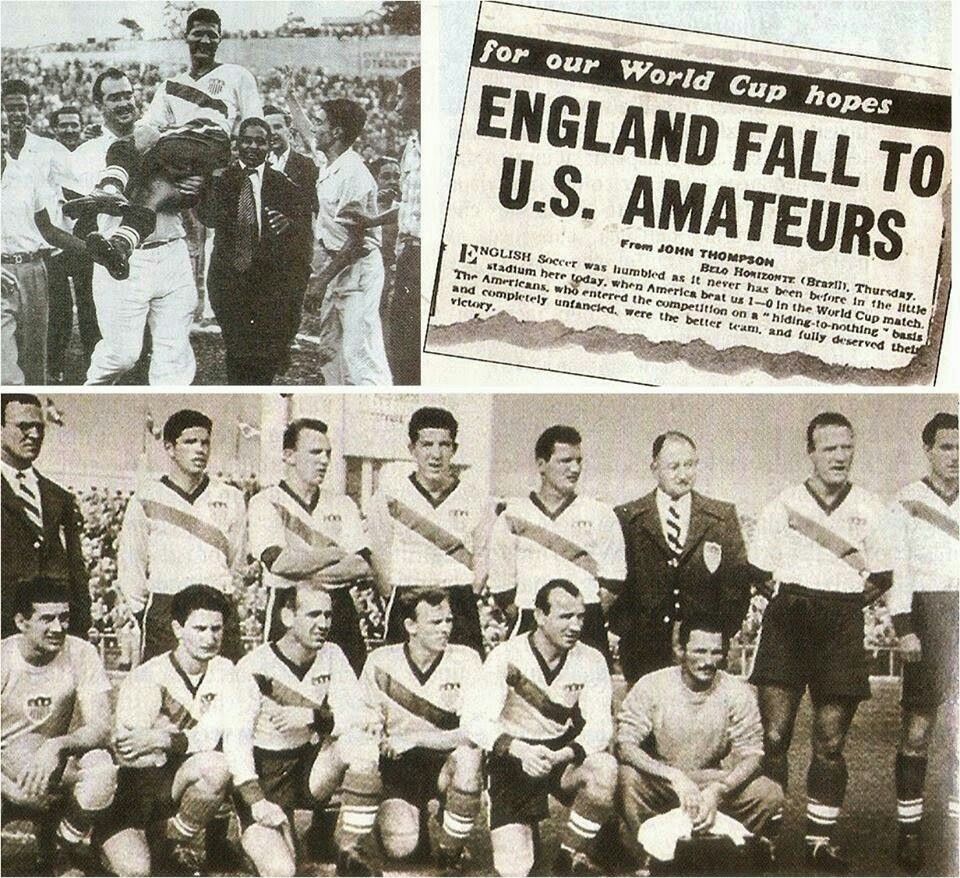
A collage dedicated to one of the biggest surprises in the history of football. Top left: post-match celebration. Top right: British newspaper cover reporting England’s defeat. Below: Team USA. Source: EndaStories.
Sensation from Belo Horizonte
England is in the first game beat Chile 2:0 and everything seemed predictable. And then he arrived on June 29.
In a modest stadium in Belo Horizonte, in front of only about 10,000 spectators, England lost to the United States of America 0:1.
The goal was scored by a Haitian American Joe Gaetjens in the 37th minute – an emigrant who worked in New York as dishwasher.
British journalists who received the result by telegraph they thought it was in question errorthat someone confused the result and that it is in fact England won 10:1. It wasn’t a mistake. England crashed out of the tournament without progressing to the second stage.
Italya two-time defender, lost to Sweden 2:3 in the first game and was also eliminated in the first round.
Towards disaster
Brazil passed the group, then demolished in the final round Sweden 7:1 and Spain 6:1. They entered the deciding game with Uruguayand they only needed a draw for the league title. Journalists have already written about the winners. The city was delirious.
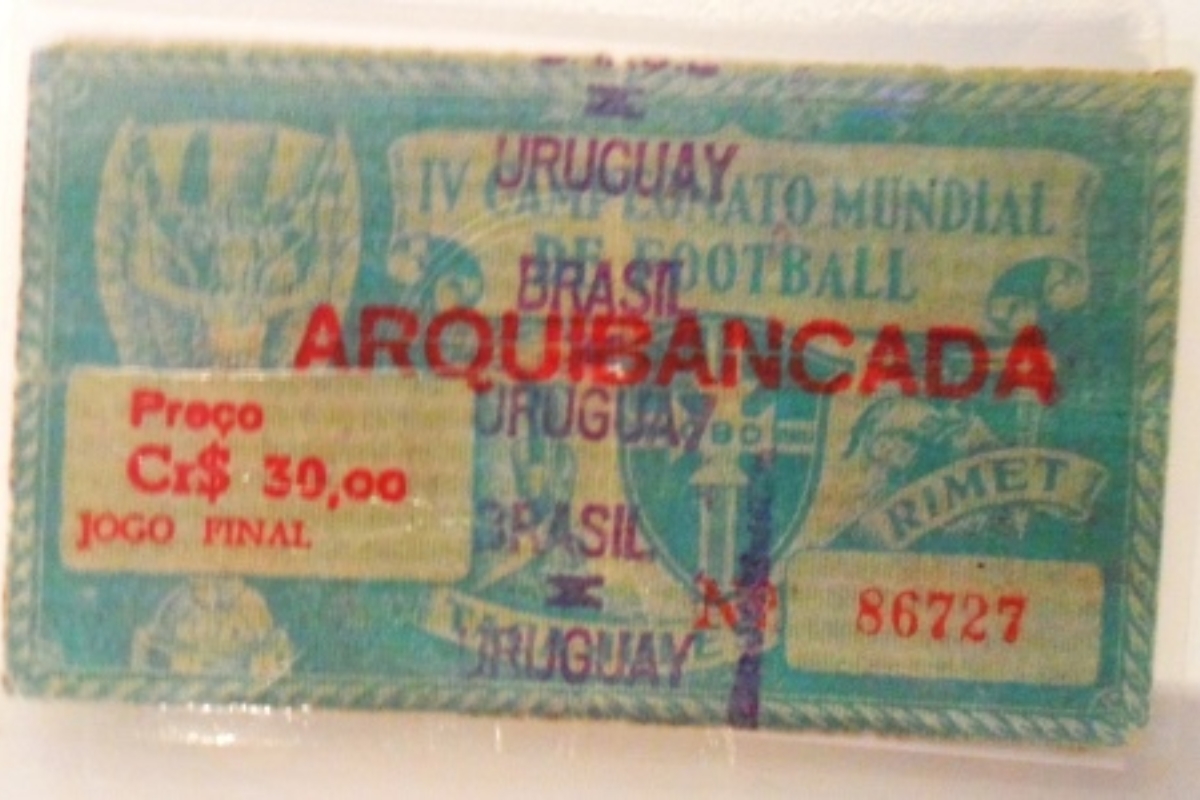
The original ticket for the 1950 World Cup final that Joedir Belmont kept for 64 years after he stayed with his sick mother instead of in the Maracana stands. He donated it to the FIFA museum in exchange for the 2014 final. Source: Football Museum / UOL.
On the day 16. July 1950. nand Maracani gathered between 173,000 and an estimated 205,000 spectators – never so much in the history of football. Brazil took the lead in the second half with a goal Friaçe. And then Uruguay came back.
He equalized Schiaffinoand in the 79th minute Alcides Ghiggia he put the ball in next to the goal post and past the Brazilian goalkeeper Moacyra Barbosa. 2:1 for Uruguay.
Silence fell to 200,000 people.
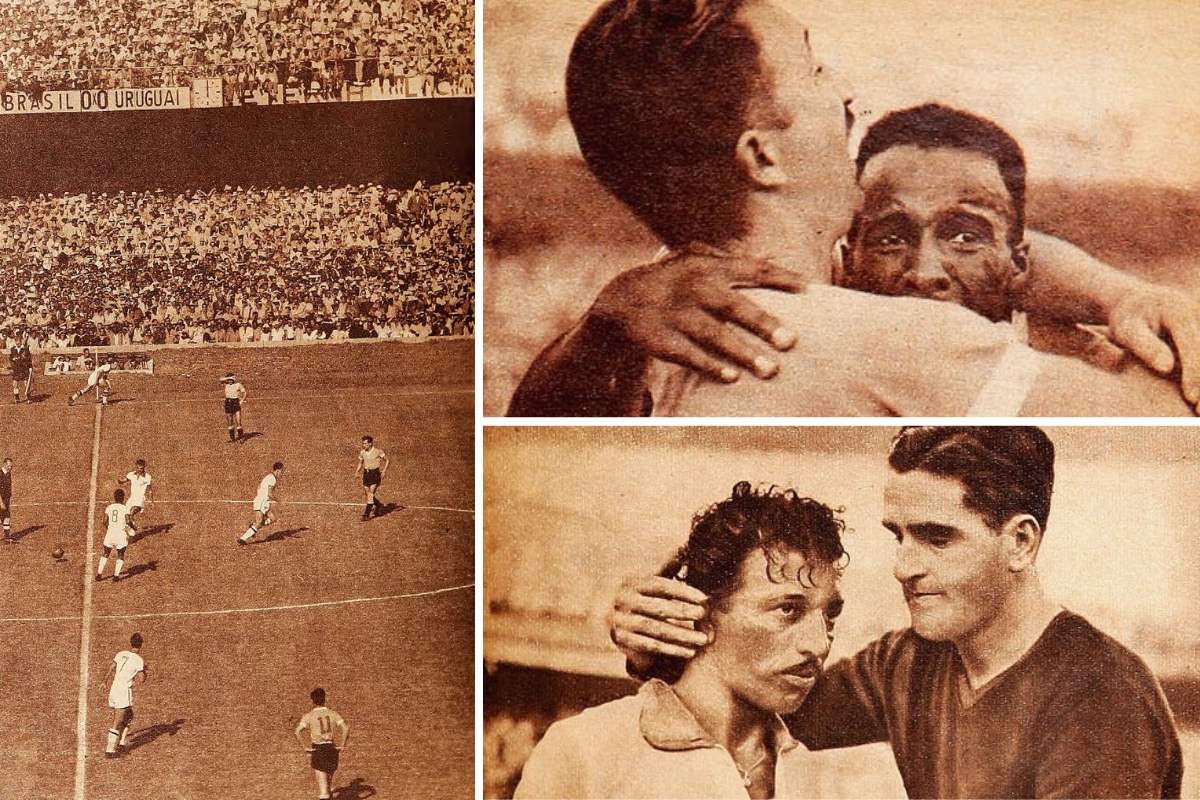
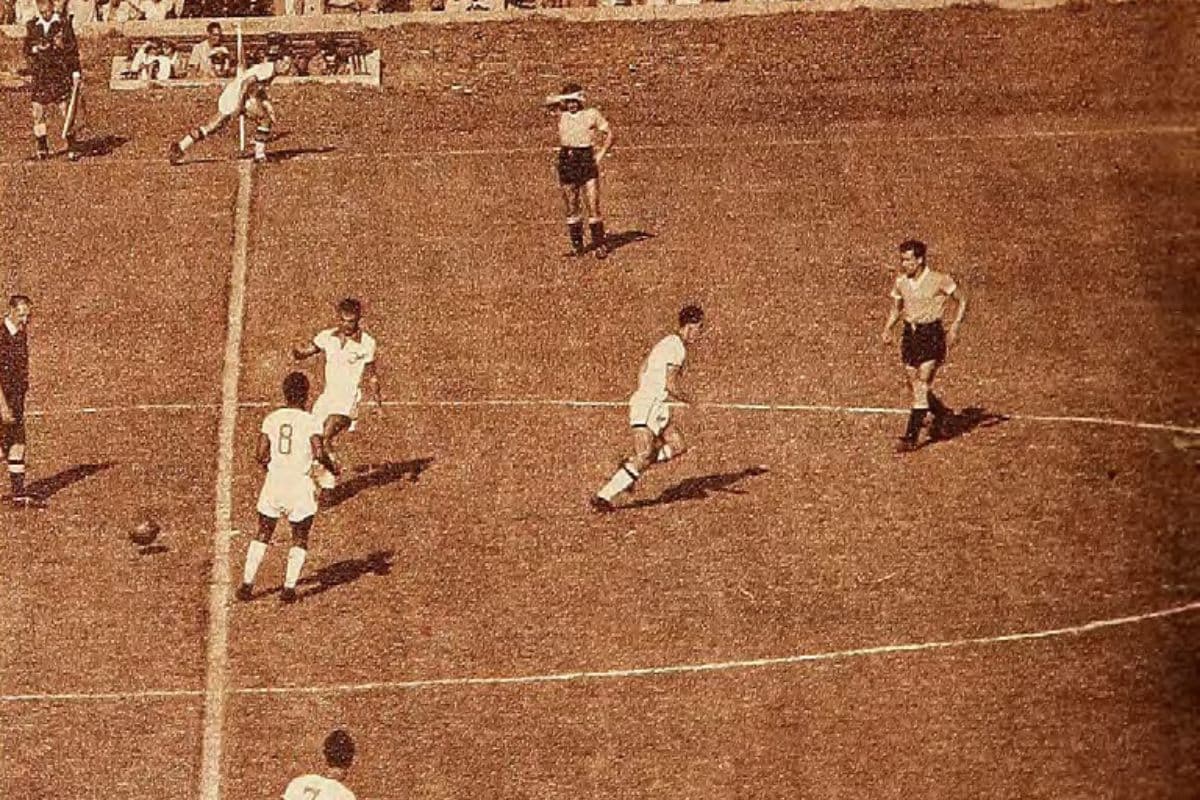
Scenes from the 1950 World Cup final in Brazil. Left: kick-off in the Brazil-Uruguay final. Top right: Uruguayan players Tejera and Víctor Rodríguez Andrade. Bottom right: Brazilian midfielder Zizinho and Uruguayan goalkeeper Roque Máspoli. Source: “Estadio”, Chilean sports magazine published by Zig-Zag (Santiago), no. 568 (1954), no. 613 (1955) and no. 462 (1952)
That match went down in history under the name Maracanazo – Maracana shot. Barbosa lived with that minute for the rest of his life.
In an interview In 2000, shortly before his death, he said: in Brazil, the maximum sentence is 30 years in prisonand he is paying for something for which he is not responsible for 50 years.
Brazil changed their jerseys forever after that, from white to yellow.
Uruguay was decorated second championship title from two appearances at the World Championships. He did not perform in 1934. not even in 1938., and he came back for the trophy.
Two tournaments, and in between 12 years of silence. In four years, with new forces, the world will turn around towards Switzerland – and a completely different story.
(www.jabuka.tv | Photo: Estadio / Zig-Zag)