
Canadian Prime Minister Mark Carney has reached a trade deal that cuts tariffs on Chinese electric vehicles and Canadian canola oil.
British Prime Minister Keir Starmer visited Beijing this week with the aim of repairing relations that have been strained for years, while German Chancellor Friedrich Merz is expected to visit China next month.
Among the last European leaders to meet with Xi was Finnish Prime Minister Petteri Orpo.
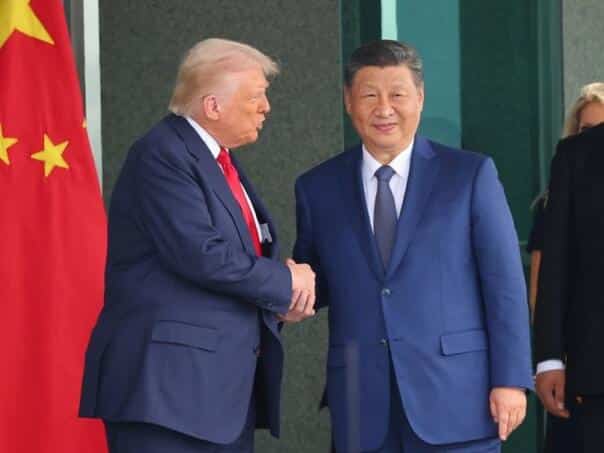
In a major shift in the global order since US President Donald Trump took office again, America’s closest partners are exploring cooperation with China after a standoff with Trump over tariffs and his demand that the United States (US) take over Greenland from NATO ally Denmark.
Despite the risk of angering Trump, they are resetting relations with a country that has long been considered one of the main adversaries of Western allies and the US’s biggest economic rival.
– We engage broadly and strategically, with open eyes. We are actively facing the world as it is, and not waiting for the world we would like – said Carney at the meeting of the World Economic Forum last week in Davos, shortly after returning from Beijing.
Some leaders, lawmakers and experts are lamenting the turn, warning that it could tip the balance in Beijing’s favor and against Washington. Others, however, see China as just as challenging as the US, as both powers exert pressure in line with their own interests. Either way, the way countries rank alongside the world’s two superpowers is changing.
– Instead of creating a united front against China, we are pushing our closest allies into its hands – said US Senator Jeanne Shaheen, the leading Democrat on the Senate Foreign Relations Committee.
Asked about Starmer’s visit to Beijing, Trump told reporters it was “very dangerous.”
– And it is even more dangerous that Canada enters into business with China – said Trump, who is expected to visit Beijing in April.
European Union High Representative for Foreign Affairs Kaja Kallas acknowledged that China poses a long-term challenge due to its coercive economic practices, but added that it is necessary to establish different partnerships, with different countries around the world.
While Europe is reassessing its strategic approach, “it is not a turn towards China”, according to Una Aleksandra Bērziņa-Čerenkova, director of the Latvian Institute of International Relations in Riga.
– It is a turn towards a kind of reliance of Europe on itself as a bloc – she pointed out.
French President Emmanuel Macron, Irish Prime Minister Micheál Martin and South Korean President Lee Jae Myung have also visited China in recent weeks.
Friedrich Merz is now expected to visit Beijing for the first time as German chancellor. He has taken a tougher stance on China than his predecessors and is expected to reset relations, while also opening up issues of particular importance to Germany, namely the trade deficit and dependence on China for key minerals, the AP reports.
(Vijesti.ba / FENA)


