In order to accelerate the economic development of the Western Balkans, the European Union has launched an ambitious financial program worth six billion euros – a growth plan, which provides for the allocation of funds that meet the requested reforms. North Macedonia The first received pre-financing funds and at the end of March. The tranche is 52.4m euros, or seven percent of the total amount of assistance for this country of around 750m euros.
Thorough work
The analyst from Skopje Petar Arsovski says that half of the funds go to budget support, and the other half on investments. The main goal is, expire, bringing the economies of North Macedonia’s economy to the EU economy. As the Arts explains, it is the result of the fast legal procedure and the rapid response of the newly formed Ministry for European Integration on the Reform Agenda.
– I think the first tranche is capacity building that other funds can be used properly. The government has not yet published a list of priorities, given that it has also taken this loan from Hungary and this new investment cycle from England, so that the government has not yet published a list of priorities where these investments will go. I think that in the first tranche is the case of capacity building, so that the other 700 million could be used properly, arsovka.
In March, Albania provided the first payment of EUR 64.5 million. Montenegro recently received 26.8m euros of pre-financing from the Reform Agenda within the EU Growth Plan for the Western Balkans. Of this amount, 12.5m euros as a favorable loan were paid into the budget, while the remaining 14.3 million will be focused on infrastructure projects through the Western Balkans investment framework. This represents seven percent of the total assistance intended for Montenegro within the Plan.
Bojan Vujović, director of the EU Financial Support Coordination in the Ministry of European Affairs, has explained how this payment was preceded by the thorough operation of the Montenegrin administration and government on the preparation and adoption of key documents.
The most important among them is the reform agenda, adopted in late September 2024. year, which contains 32 reform measures and as many as 130 specific reform results, which are a prerequisite for the next phases of funds payment. In addition, it was necessary to conclude and ratify accession agreements for reforms and growth, and sign a loan agreement with the European Commission.
– So there was a lot of work. In essence, the European Commission, as usual, made a fairly administrative process, but we are essentially satisfied because we can also go a little more seriously with the first means of the reform, says Vujović for Oslobođenje.
According to him, more than half of the funds go for infrastructure projects – specific, three projects in the field of energy worth 14.3m euros, while the remaining 12.5 million was paid directly to the state budget for the implementation of reforms. Vujović points out that the European Commission expects Montenegro, but at this stage, as someone who has retaliated in the process of negotiations, itself funds its budget reforms and achieves the results in the next tranches.
He emphasizes that the success of reforms is key political support, especially considering that the measures from the reform agenda target the broader segments of society.
– Fundamental political support is very important and I would say that at this point, we really have the government support in Montenegro to continue with key reforms. Of course, with the desire to implement reform agendas in the region and in the neighborhood, primarily, so we monitor what happens in BiH especially through collaborations with colleagues at least at this technical level. We know that a lot of efforts are invested in the preparation of the document itself, and we hope that only the adoption will come soon, said Vujović.
While neighbors count tens of millions of euros from the EU Rasta Plan, Bosnia and Herzegovina has not yet received a cent, because the first SNSD, and then the HDZBiH, blocked the government. The estimated amount is around 70m euros, but our country has no adopted and approved reform agenda. Of the 113 requested reforms, 111 were met, so the European Commission rejected and the BiH document on further refinement and harmonization returned.
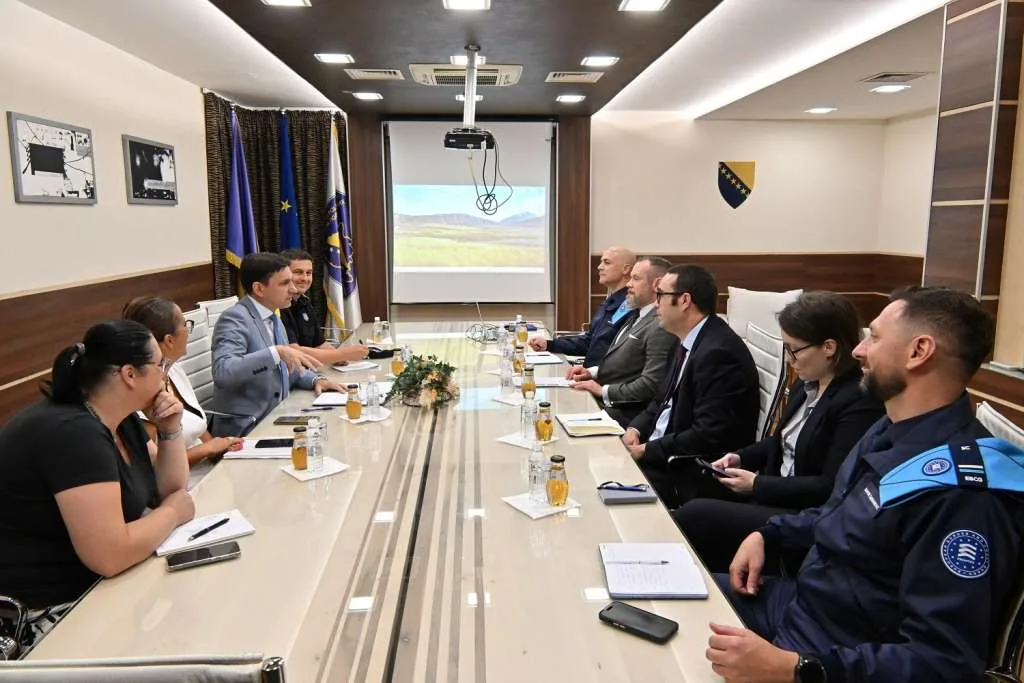
– At the eighth meeting for economic and financial issues and statistics between the EU and BiH, the European Commission welcomed the Law on Border Control, and appointment to the main negotiator to the EU’s EU negotiations with BiH. The European Commission called for BH. Authorities to finalize and submit a reform plan, and in order to take advantage of the opportunity provided by the growth plan for the Western Balkans, they stated in a statement from the Directorate for European Integration of BiH.
Economic analyst Igor Gavran emphasizes that our country cannot expect anything until it meets the requirements.
– Although the EU can be very flexible to countries like Ukraine and Moldova from Purely Geopolitical reasons, and in return, we cannot expect to remain out of this process until we meet the set conditions, says Gavran.
The causes of non-fulfillment of obligations are mostly consciously rejection of changes that are required, writes Liberation.
– Thus, consciously blocking the process, although in part certainly have inability and populist politicization in an attempt to achieve some other interests to some trade. It is generally not discussed at all than about locations (where the seats of the judiciary), competencies (which is recognized that in BiH is not to conduct them, because it is not controlled by certain territory and does not treat themselves and others equally), says Gavran.
Strict control
Stresses that the loss of significant financial resources “does not touch politicians, as they certainly manage budgets and how they fall to their minds increase taxes and contributions or borrow if they need them.”
– Such money is much easier to embezzlate than the EU funds, which is expected to strive consumption control. If you ever get these funds, it would be best for anything but regular budget spending, as it will disappear without a trace as well as a good part of public revenues and meaningless projects for which EU specially likes to provide money to foreign consultants and domestic non-governmental organizations. Infrastructure, strategic economic reforms such as fiscal, health, domestic production, digitalization where money can be produced only if it is under strict control, which is unfortunately unlikely, concludes raven.