
Orthodox believers who celebrate Christmas according to the Julian calendar today celebrate Christmas Day and prepare for the day of Jesus’ birth.
Many customs are associated with this holiday, such as cutting Christmas trees, preparing numerous dishes and family gatherings.
The custom on the eve of Christmas Day is not to sleep, and early in the morning the owners of the house go to cut down the Christmas tree, which must be cut with three blows so that it falls to the east. Also, the Christmas tree is a symbol of the tree that, according to tradition, the shepherds brought to Joseph and Mary to light a fire and warm the cave where Jesus was born.
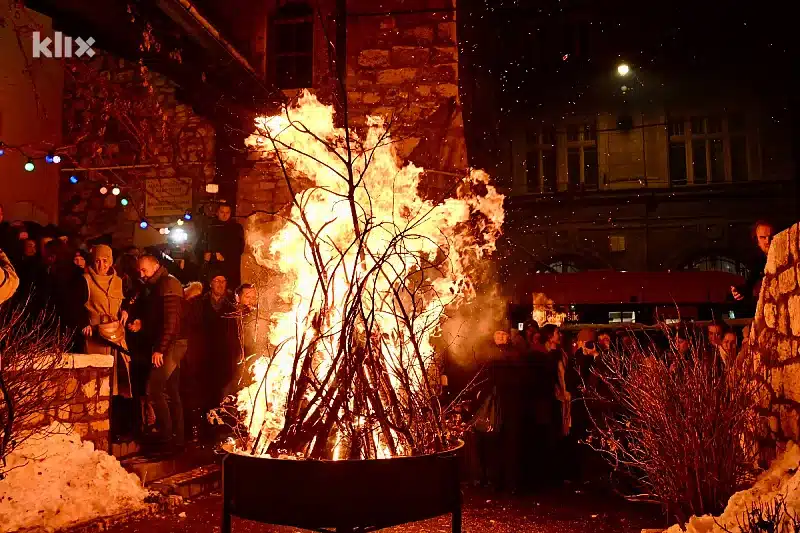
Christmas eve is lit before the holiday and burns until Christmas when the joy of Christ’s birth is announced. In addition, the burning of the Christmas tree is a symbol of parting with constant beliefs and accepting the new light that comes with faith in the New Born Christ.
On this day, the floor is sprinkled with straw and in this way the homes are “transformed” into the Bethlehem cave where Jesus was born. Also, Christmas roast is baked on Christmas Day, prepared the day before, on Tucindan. An indispensable part of the table is the garlic that breaks during the dinner.
In addition, Christmas Eve is a family holiday when families gather around a Lenten table with many Lenten dishes such as fish, sauerkraut, pickles and Lenten pies. In addition, grain, honey, nuts and wine are prepared, and the main meal contains foods that symbolize prosperity and togetherness.
According to customs, anyone who has had an argument with someone during the year must reconcile with that person on Christmas Day. The meaning of Christmas is also that the family warms up around it with love, sincerity and harmony. Christmas is always the first fat day, no matter what day it falls on and the day when those who have observed the rules of the Christmas fast receive communion in the churches.
Christmas Day and Christmas Eve on January 6 are celebrated by all Orthodox churches and believers who observe the Julian calendar, namely the Russian Orthodox Church, the Patriarchate of Jerusalem, the Holy Mountain, the ancient calendarists in Greece and the Egyptian Copts, it says Klix.