
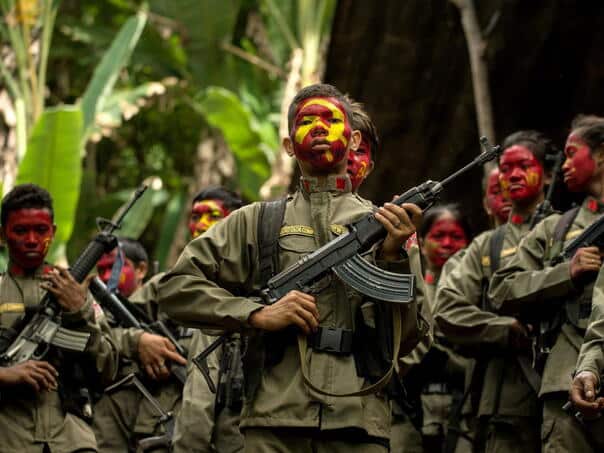
One such glimpse of peace appears every year in what is often considered the world’s longest-running communist insurgency. It is about the guerrilla conflict in the Philippines between the Maoist New People’s Army (NPA) and state forces, which will enter its 57th year in 2026 and which has claimed around 60,000 lives so far, reports Morning paper.
However, once a year the fighting mostly subsides: both sides lay down their arms for Christmas. This tradition has been followed for many years since at least 1986.
According to data from the Oslo Peace Research Institute (PRIO), the number of conflicts involving states at the end of last year reached the highest level since 1946. In total, 61 armed conflicts were active in 2024 – almost twice as many as twenty years ago.
Last year was also the fourth bloodiest since the end of the Cold War, with fewer deaths only in the three years preceding it. Among the main reasons for this increase, according to researcher Siri Aas Rustad from PRIO, are the expansion of Islamic State branches since 2014, as well as the devastating wars in Ukraine and Gaza.
Conflicts today, she adds, last longer than before, while peace operations and peace processes are in constant decline.
Fragile peace order
Behind the shift, experts see a broader, discouraging trend: the weakening of the Western-based liberal order and multilateral institutions like the United Nations.
That order, based on the ideas of universal human rights and democracy, encouraged the resolution of disputes through non-violent means, says Oliver Richmond, one of the world’s leading peace researchers from the University of Manchester.
However, the Western allies, led by the United States of America, failed to establish a truly just global system and often gave priority to their own interests, thus, according to Richmond, they themselves opened up space for new challenges. New powers such as China, Turkey, Russia and the Gulf states present themselves as peacemakers, but at the same time they are building their own systems of domination.
Conflicts from Ukraine to Sudan today drag on indefinitely, while external actors tolerate – or even enable – violence in pursuit of a so-called “winner’s peace.”
Small pauses, big meanings
In such a gloomy context, the Christmas truce in the Philippines offers a glimpse of a different approach, writes Sky News.
The tradition of suspending hostilities during the holidays – inspired by the biblical message of peace on Earth – goes back a long way. The most famous example happened in 1914, when British and German soldiers came out of the trenches during the First World War and celebrated Christmas together.
Such short-term truces rarely ended wars, but they helped build the long-term trust needed to reach lasting peace agreements, Rustad points out.
In the Philippines, it has become common for both sides to declare a Christmas truce unilaterally, without a formal agreement.
Even former President Rodrigo Duterte – known for his brutal “war on drugs” and now facing the International Criminal Court – has occasionally called for a Christmas truce, promising Filipinos “peace and tranquility” during the holiday season.
The motives, however, were not entirely altruistic. “The Christmas truce was good propaganda for both sides,” says Patricio Abinales, a political historian at the University of Hawai’iu Manoi.
“When the guns fall silent for a while, rural communities can celebrate Christmas in peace – just like government soldiers in their bases and NPA fighters in guerrilla zones.”
Tradition on the wane?
The Christmas tradition of peace in the Philippines still exists – but just barely.
This year, as in 2023, the NPA declared a four-day truce spanning Christmas and New Year, although government forces did not retaliate. Professor Abinales believes that the insurgency has weakened considerably and is becoming increasingly irrelevant – which could eventually lead to an end to the decades-long conflict.
(Vijesti.ba)


