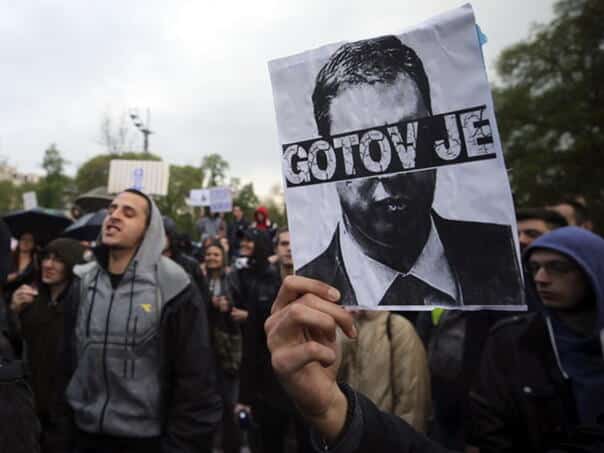
Protests that, after the death of 15 people under a pile of concrete, glass and iron in the fall of the canopy of the newly renovated station building, started by students demanding the responsibility of the authorities for negligence, irresponsibility, corruption and corrupt activities without public tenders, spilled over into 2025, accompanied by increased nervousness of the authorities.
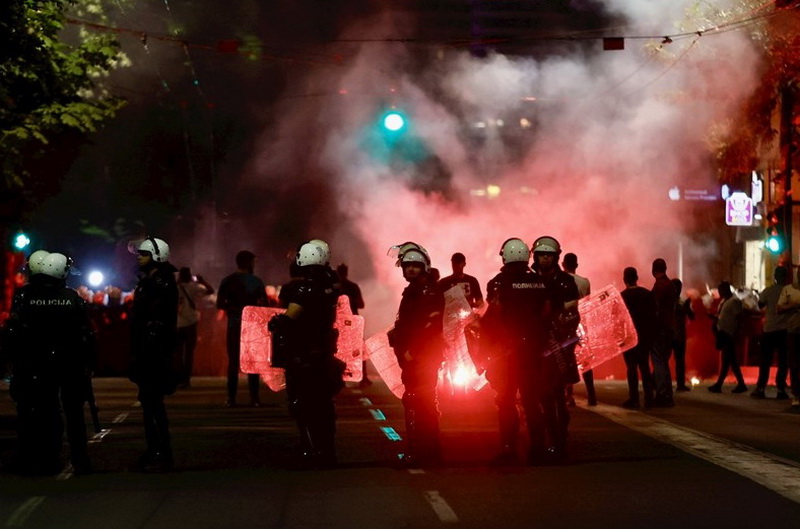
The rise of repression, the fall of the government, uncertain elections
An attack by a few supporters of the ruling Serbian Progressive Party (SNS) on a group of students who called for protests in Novi Sad, when one student’s jaw was broken with a baseball bat, created an additional public revolt in early January, which led to the fall of the government of Prime Minister and SNS leader Miloš Vučević, reports Hina.
In March, the 16th victim of the fall of the canopy died, and on March 15, more than 300,000 people gathered in Belgrade at the invitation of students for the most massive protest to date.
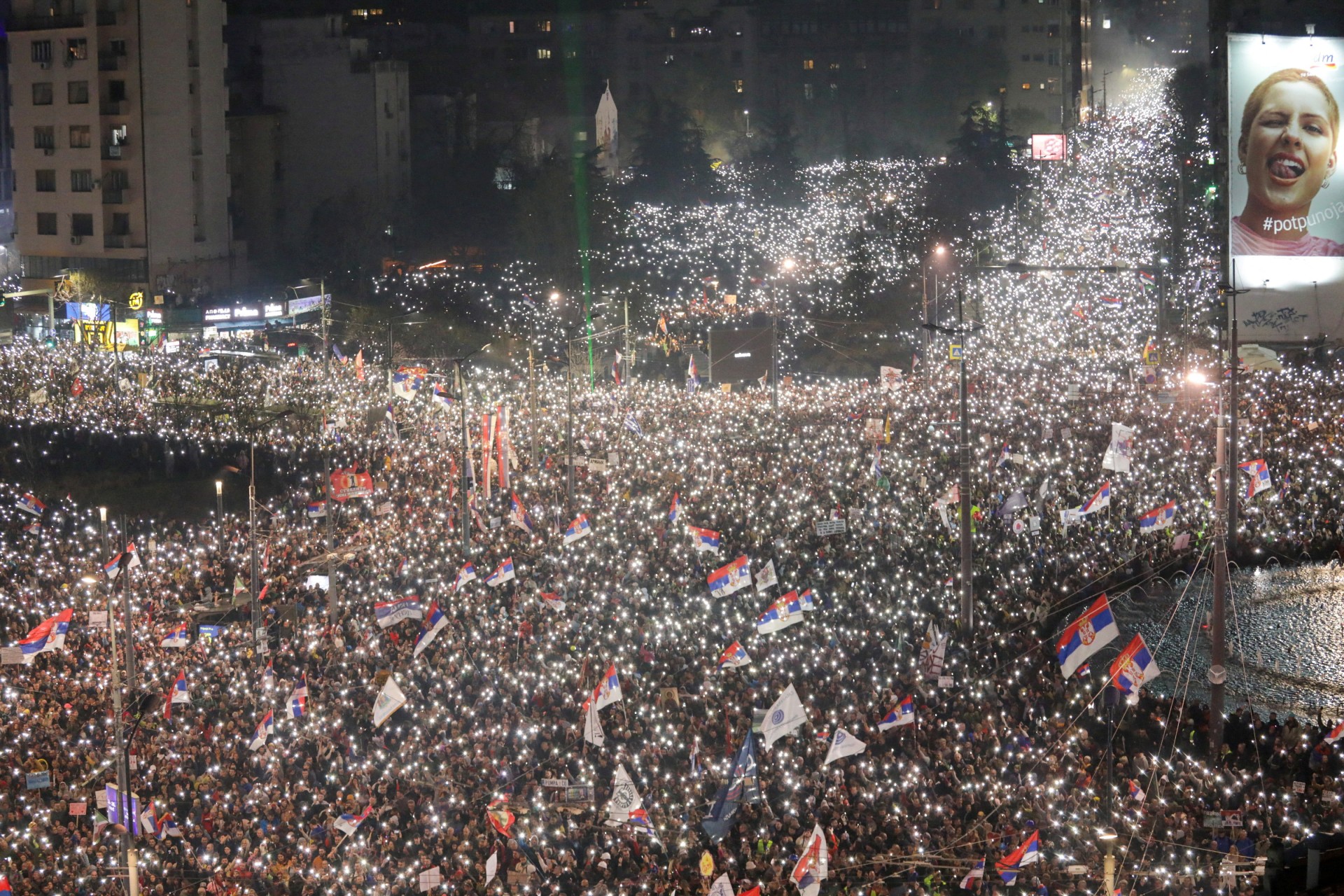
The protest was interrupted by an unidentified piercing sound, and the demonstrators accused the government of using sonic weapons, the so-called. sound cannon. Those in power unconvincingly denied it, especially Vučić, stating that he would leave power if it was proven.
Serbia got a new government in April, headed by Đuro Macut, an endocrinologist and professor at the Faculty of Medicine, who is almost unknown to the political public. The opposition called the ministerial team, which is supposedly Macut’s choice, a “transitional government”, and Macut Vučić’s “puppet”.
Student blockades of more than 40 faculties and protests, which the state leadership persistently calls an imported “color revolution” aimed at overthrowing Vučić, continued throughout Serbia, with increased repression and numerous arrests of students and demonstrators on charges of plotting to overthrow the constitutional order.
Students demand that the institutions, primarily the judiciary, do their work without political pressure and influence, with the release of arbitrarily arrested demonstrators and activists. They also added a request to call early elections.
In the meantime, Vučić, who in previous years often called for early elections, sent vague messages that “there will be elections”, denying occasional public opinion polls that neither his nor the SNS ratings are at a level that would guarantee them victory.
The last message in the series was at the beginning of December that Serbia has “entered the election year”, and that the only question is whether presidential elections will be called in addition to the parliamentary ones, and that “within a year at the latest” Serbia will have elections.
Vučić’s second presidential term, after which he can no longer run for office according to the Constitution, expires at the end of May 2027. The opposition and civil society believe that they will try to secure support that would enable him to become prime minister and continue to rule in the elections.
In the meantime, the process initiated against those responsible for the death of 16 people in Novi Sad has not progressed beyond the indictments, which include two former ministers, Goran Vesić and Toma Momirović. The beginning of the trial is not even in sight.
Not a step closer to the European Union
On the international level, in 2025, Serbia did not make a single step forward in European integration, not opening a single new cluster.
In its report at the end of the year, the European Commission repeated its negative assessment that there is no acceptable progress in the establishment of the rule of law, respect for media freedom, freedom of assembly and expression of public opinion, and least of all in harmonizing with the EU’s foreign policy, especially in joining the sanctions against Russia and removing China’s influence.
Vučić, in the meantime, tried to convince his electorate that he has everything under control with almost daily populist appearances on television with a national scope, some of which support him with propaganda and fans.
Fall of foreign investments, crisis with NIS
The image of the economy is propagandistically maintained through information that foreign investments continue to arrive, that the economy is stable, and that the monetary policy is completely satisfactory.
However, for the eight months of 2025, net foreign investments were worth 1.49 billion euros, compared to the same period in 2024, when the balance was 3.2 billion euros.
The government, on the other hand, accuses the “student blockaders” of reducing the chances for additional economic growth and foreign investments through months of protests.
According to official information at the end of the third quarter, the public debt exceeded 38 billion euros, and in the last four months, bonds in the amount of more than half a billion euros were additionally offered on the domestic and international markets. The monetary authorities, however, emphasize that the share of public debt with 46.5 percent of GDP is within the so-called Maastricht criteria.
In the last few months alone, several foreign companies were closed, and more than 2,500 people lost their jobs.
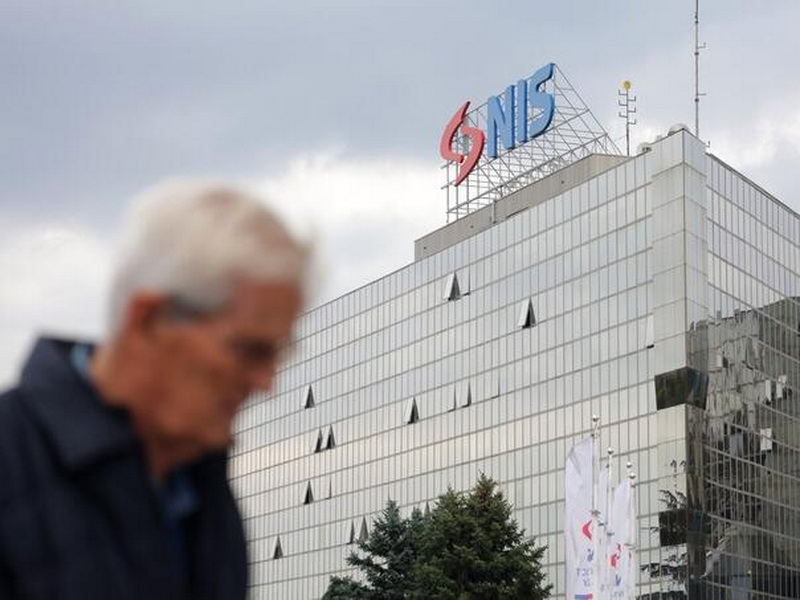
The problem for Serbia, on the economic level, was brought about by American sanctions introduced at the beginning of the year on the Russian energy sector, officially including the Oil Industry of Serbia (NIS), which is majority Russian-owned since October, with the message from Washington that they want “zero” Russian share, which is now 65.15 percent.
Due to the lack of a timely reaction, Serbia has put itself in a situation where it threatens its own energy security because the Croatian Janaf, following the US sanctions, suspended the delivery of crude oil to the NIS refinery in Pančevo, which supplies 95 percent of the Serbian market with derivatives. The refinery ceased operations on November 25.
Regarding the ownership of NIS, Serbia does not want to hold a grudge against Russia, with whom it is currently trying to renew the gas arrangement in the long term. At the same time, Belgrade expects that the Russian energy sector will offer its package in NIS to a third party in order to avoid a takeover, but it has expressed its willingness to buy out Russian ownership.
The value of NIS is estimated at around 4.3 billion euros.
Military positioning in the region
On the occasion of the Day of Serbian Unity on September 20, the “Strength of Unity” military parade was held, which was the first major military parade since 2014.
By showing the strengthening of military power, according to analysts, Serbia wanted to send messages to both domestic and international audiences, but the parade “amidst political pressure was also aimed at internal consolidation” and showing “military readiness and capacity, as well as Serbia’s sovereign balancing act between Russia, the European Union and NATO”.
Serbia has agreed with France to purchase 12 Rafale warplanes, with a loan of 1.92 billion euros from several French banks and financial institutions to pay for the aircraft and related products and services. That decision divided the public into doubts about whether those planes are necessary for Serbia at that price, or whether Vučić wants to additionally position himself as a “friend” of certain European leaders.
On the day-to-day political level, even in 2025, there was no shortage of sparks on the Belgrade-Zagreb route and towards the authorities in Sarajevo, but the decision to expropriate Milorad Dodik was passed without too much zeal to defend him as one of Vučić’s most loyal men.
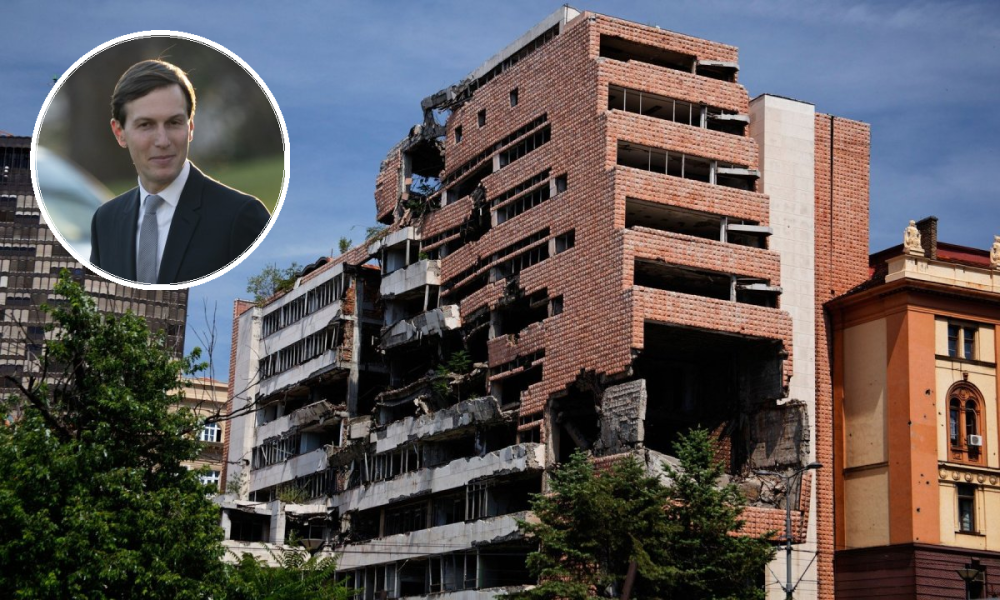
At the end of the year, it was announced that the company of Jared Kushner, the son-in-law of US President Donald Trump, decided to withdraw from the project to build a luxury hotel and residential complex, planned on the site of the bombed headquarters in the center of Belgrade, after numerous protests and in the midst of an affair that links Serbian officials and institutions with favoring Kushner.
That decision angered Vučić, so he promptly announced “criminal charges against all those who participated in the chase” opposing the project, asserting that Serbia is losing an investment of 750 million euros.
(Vijesti.ba)