While the Vjetrenica cave and the Janj rainforest are already on the World Heritage List, and the Nevesinska Olympics are awaiting a decision on their entry into the Representative List of the Intangible Cultural Heritage of Humanity, the Perućica rainforest is still in a dormant phase, and the Martinbrod waterfalls are awaiting evaluation.
When it comes to the entry of elements from Bosnia and Herzegovina into the UNESCO register of intangible cultural heritage of value to humanity, the head of the UNESCO Office in Bosnia and Herzegovina, Siniša Šešum, said in an interview with Fena that Bosnia and Herzegovina currently has one nomination file and that it is about the Nevesina Olympics.
The long-standing tradition of national sports competitions at the Bratac Lug near Nevesinje, known as the Nevesinje Olympics, is recognized as a valuable segment of intangible cultural heritage that BiH is applying for inclusion in the UNESCO list.
This custom, which has been going on since the 19th century, is a symbol of local identity and continuity of the community through different historical eras.
– The decision on the possible registration of the Nevesinska Olympics will be made by the end of 2026, and not at the end of this year in India, as was planned – he explained.
In the beginning, local hosts competed at the Nevesinska Olympiad, but over time it became more and more massive. Since then, it has been interrupted only twice, during the Second World War and during the war in Bosnia and Herzegovina. It is interesting that this event was always supported by the current government, first the Turkish Empire, then the Austro-Hungarian Monarchy, and today BiH, more precisely the Republika Srpska.
This event is said to have a tradition longer than the modern Olympic Games. Equestrian races, shoulder throwing, bellows jumping, rope and piston pulling, sack race, with an egg in a bowl, are just some of the fun competitive activities that gather thousands of visitors every year at Bratački Lug since 1875.
While the Nevesinska Olympiad is a candidate for inclusion on the UNESCO list of intangible cultural heritage, Bosnia and Herzegovina also conducts activities within the framework of the UNESCO Convention on the Protection of World Cultural and Natural Heritage from 1972.
In this context, the Martinbrod waterfalls, located in the Una National Park, were singled out as a potential natural heritage of exceptional universal value.
This picturesque waterfall complex, known for its magnificent cascades surrounded by untouched nature, owes its name to a tragic love story. The name of Martin Broda, a place that was created in the area of the medieval town from the end of the 14th century, is connected to a sad legend. The main character is Marta, a girl who fell in love with a young man from the other side of the river. According to legend, she died trying to approach him, slipping on a tufa while crossing the river. This place is named after her. By the way, “ship” is an old-fashioned name for a ford of a river, that is, a place on the water, usually on a river, where you can cross, step over.
Precisely because of its unique natural and cultural value, the state commission at UNESCO supported the initiative of the Una National Park in 2017 to enter the Martinbrod Waterfalls and Štrbački Buk on the Tentative List of Bosnia and Herzegovina.
According to Šešum, the nomination file for travertine waterfalls in Martin Brod has been completed, and Bosnia and Herzegovina has submitted all the necessary documentation.
That process, he says, is now entering the next phase and involves the evaluation of the submitted documentation.
– Discussions are currently underway with the advisory bodies of the World Heritage Center and the World Heritage Committee to determine when their evaluation will be carried out. So now we expect the confirmation of the evaluation bodies of the Convention from 1972 on the date of the evaluation – said Šešum.
In addition to the activities that BiH carries out with the aim of preserving and internationally promoting its intangible and natural heritage, one of the oldest and most valuable protected areas, the Perućica rainforest, deserves attention.
This unique natural entity, located within the Sutjeska National Park, has been on UNESCO’s Tentative World Heritage List since 2017. However, despite its exceptional importance, Šešum says that so far no concrete steps have been taken in the direction of her official nomination.
– In the meantime, as far as we are aware, nothing concrete happened. We are ready to provide any kind of assistance if Bosnia and Herzegovina makes a decision to nominate this area, because we think it has all the elements that would satisfy the inscription on the UNESCO World Heritage List. However, it is a process that must be led by institutions within Bosnia and Herzegovina, including entity, competent ministries, as well as ministries at the state level – Sešum points out.
He noted that institutions within Bosnia and Herzegovina are exclusively responsible for initiating such processes.
– We cannot and must not influence what and when will be nominated – he emphasized.
He also points out that, when a specific nomination file is proposed for inclusion on the World Heritage List, it is crucial that the state has all the necessary mechanisms for adequate protection of that area.
– We are ready to provide support to competent institutions and authorities in the eventual preparation of new nominations, but we must not be the initiators of those processes – adds Šešum, reminding that BiH is a sovereign state that makes its own decisions about what and when it wants to run for something.
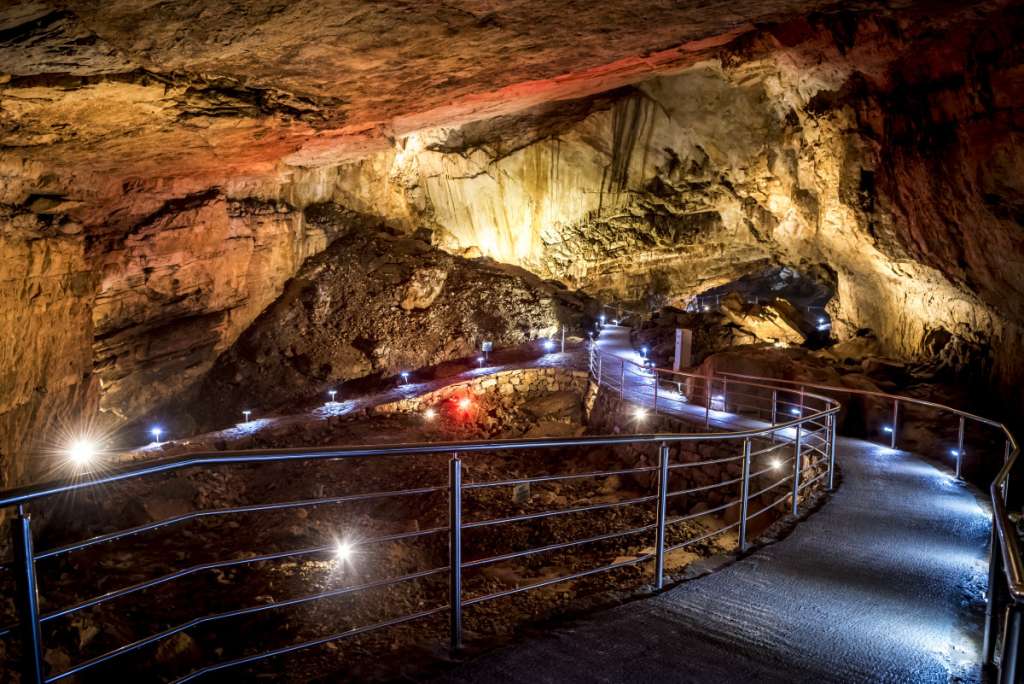
The head of the UNESCO Office reminded that the last site from Bosnia and Herzegovina to be inscribed on the UNESCO World Heritage List is the Vjetrenica Cave, which in 2021 became part of the serial entry “Dinaric karst with underground water systems” on the World Natural Heritage List.
– At the moment, it is expected that the competent institutions make decisions on the nomination of new localities, which would continue to represent the wealth of the country’s natural and cultural heritage on the international stage – he added at the end.
Vjetrenica, located on the edge of Popovo polje in Ravno municipality, is the largest and most important cave in Bosnia and Herzegovina. So far, more than 7 km of its underground channels have been explored, although experts assume that its actual extent is much larger.
It got its name from the strong, cold wind that comes out of the cave in summer, as a result of the difference in temperature between its interior and the outside air. That natural phenomenon is just one of many that make this cave unique.
The Windmill is a real treasure trove of underground biodiversity, home to more than 200 different animal species, of which more than 90 are endemic, which means they cannot be found anywhere else in the world. Among them is the famous human fish (a blind amphibian that lives exclusively in the caves of the Dinarides).
The interior of Vjetrenica is decorated with underground lakes, waterfalls, rapids and streams that disappear into the rocks, forming a complex and impressive hydrological system. In addition to natural wealth, the cave is also an important archaeological and paleontological site. The remains of a cave bear, leopard, and prehistoric people were found in it, as well as drawings on the walls testifying to its use in prehistoric times.
Bosnia and Herzegovina already has significant results in the field of cultural and natural heritage protection through cooperation with UNESCO. So far, four elements have been inscribed on the Representative List of the Intangible Cultural Heritage of Humanity: Snake Embroidery, Equestrian Wood Carving, Iva Grass Picking on Ozren and the Tradition of Grass Cutting Competition on Kupres.
In addition, two extremely valuable documentary assets, the Sarajevo Haggadah and the Manuscript Collection of the Gazi Husrev Bey Library, were included in the “Memory of the World” Register.
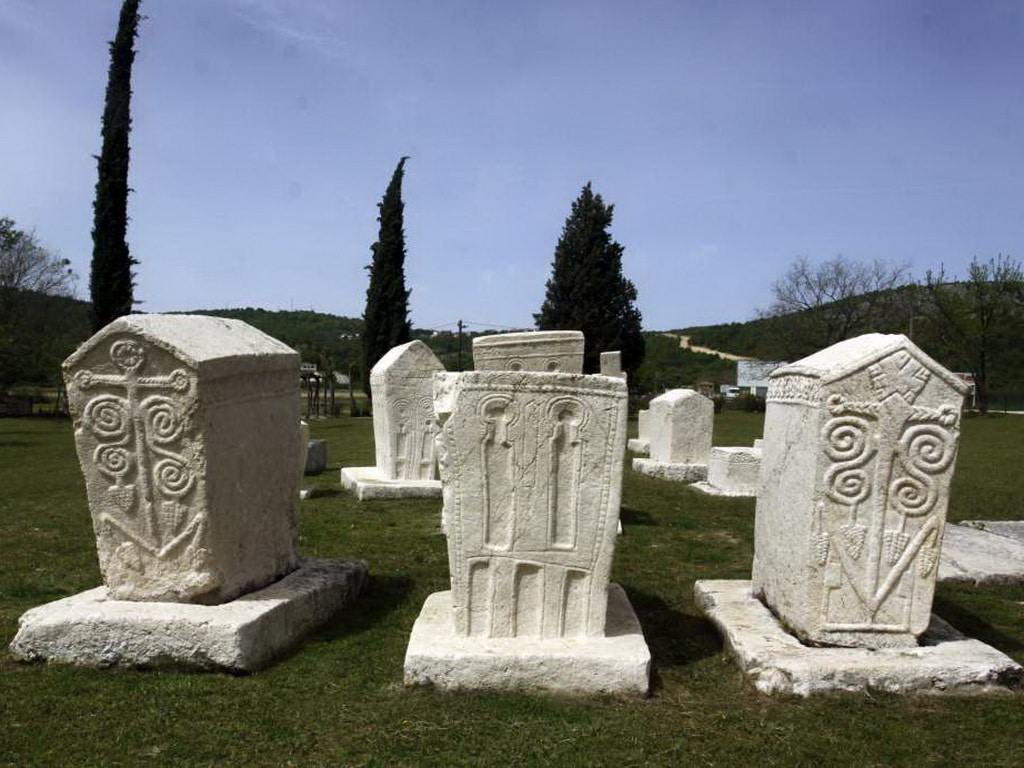
When it comes to natural and material, i.e. world heritage, BiH currently has five sites inscribed on the UNESCO World Heritage List: the Mehmed Pasha Sokolović bridge in Višegrad, the area of the Old Bridge and the old town of Mostar, 22 necropolises of medieval stećaks, the Vjetrenica cave in the municipality of Ravno and the Janj rainforest, which is part of a series of inscriptions called “Primitive beech forests of the Carpathians and other regions of Europe”.
This already achieved success confirms that BiH has enormous potential in the field of protection and promotion of cultural and natural heritage. However, the continuation of that path requires joint work and proactive action of competent institutions, so that other valuable localities, such as Perućica, can be included in the world heritage lists in the future.
(Vijesti.ba / FENA)