US Defense Secretary Pete Hegseth partially distanced himself from those claims, saying that no US objective is ‘conditional on the arming of any particular force’. However, a source cited by CNN claims that the operation could begin ‘in the coming days’.
At the center of potential developments are the Kurds – a people without their own state, but with deep historical roots in the Middle East, writes Sky News.
The largest nation without a state
The Kurds are the indigenous people of the Middle East, estimated to number up to 45 million. Their historical homeland, Kurdistan, stretches over the territory of four countries: Turkey, Iraq, Iran and Syria.
They make up about 20 percent of the population of Turkey and Iraq and approximately ten percent of the population of Iran and Syria. Despite their numbers, the Kurds are often described as the largest nation in the world without a state of their own.
Nevertheless, during the last decades, they managed to win a certain degree of autonomy within the existing state borders.
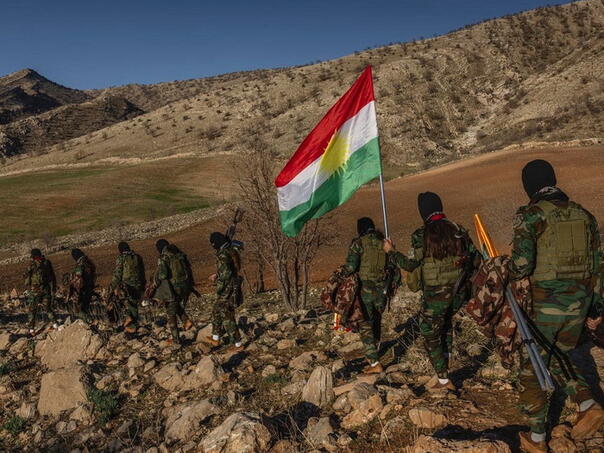
In Iraq, the Kurds control four Kurdish-majority northern provinces. They have their own parliament, security forces and legislative framework there, which gives them a high degree of self-governance.
They also established an autonomous region in northeastern Syria, but the Syrian government under new president Ahmed al-Sharaa has since retaken much of that territory.
Alliance with the USA and new tensions
The Kurds are mostly Muslim, and in recent years have been an important ally of the United States in the fight against the so-called Islamic State. It was the Kurdish forces that formed the backbone of the ground operations against the jihadists.
But relations with Washington are not without tension. Recently, the White House called on the Kurds to cede territory in Syria to the authorities in Damascus, which caused discontent among the Kurdish leadership.
In the context of a possible new conflict in Iran, their role could once again become crucial, but also further complicate the already sensitive regional balance.
(Vijesti.ba)