The Federal Prosecutor’s Office of the FBiH Federal Prosecutor’s Office is currently referring to the resolution of employees, and resolving the financing of the institutions of culture of importance for BiH, confirmed for the Federal Prosecutor’s Office.
From the Federal Prosecution, they could not confirm that this application relates to the BiH Council of BiH’s criminal offense for BiH’s Council of Ministers, to the Parliamentary Procedure of BiH, in the Parliamentary Procedure of BiH, in the Parliamentary Procedure of BiH, in the Parliamentary Procedure of the BiH Museum and the Funding of the Land Museum of BiH, the Historical Museum of BiH, National and University Libraries of BiH, Museum of Literature and Theater Arts of BiH, Libraries for the Blind and FEELD OF BiH, Cinemaths from BiH and the BiH Art Gallery.
“In accordance with your query from 28.05.2025, we inform you that the Federal Prosecutor’s Office of the FBiH is 22. May 2025, in terms of the applicable employee’s work-legal status, and addressing the financing of cultural institutions of BiH by the competent authorities, including which It is also the terrestrial Museum of BiH, which is also the transfer of your interest. Reviews are performed from the Appointment, “they stated for the report from the Federal Prosecutor’s Office.
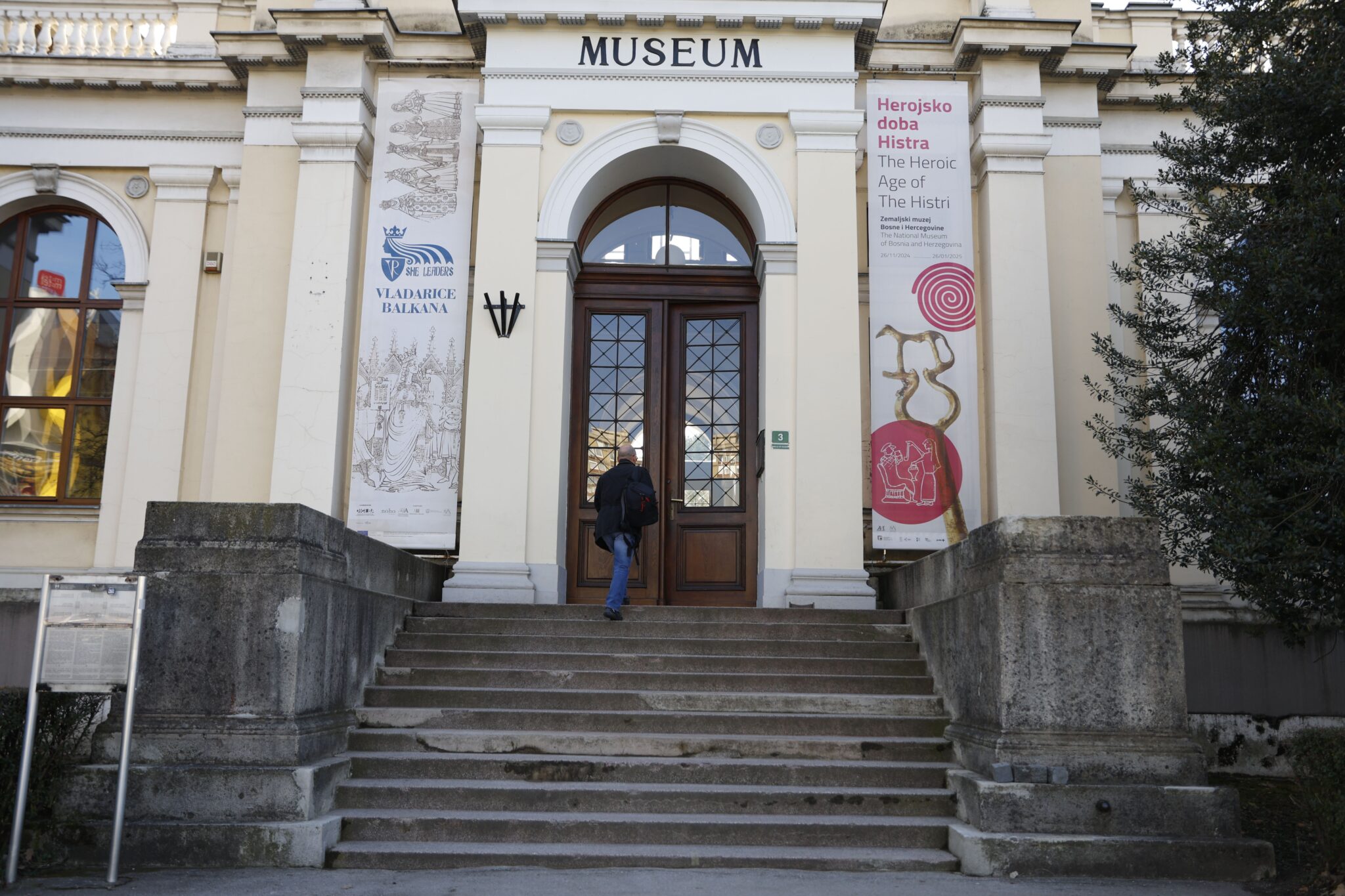
FUP and SIPA examines a lawyer in the National Museum of BiH
Inquiry, the Federal Prosecutor’s Office especially emphasized the National Museum of BiH, because our director of Mirsad Sijarić confirmed that in the National Museum of BiH and the Federal Investigations and Protection Agency concerned the status and financing of the BiH Museum of BiH.
“He went to our lawyer and answered any general issues. Nothing reported, nor what kind of report, or the case was done, nor who initiated it, but we concluded that it was related to the High Representative’s Order,” Sijaric said Report.
But it is still unclear, according to the order of FUP and the SIPA, because the special department of the Federal Prosecution applies to BiH’s importance institutions for BiH. May, and the Call of FUP and SIPA has arrived much earlier.
In FUP-I and SIPA, we could not receive information in which the case was examined by the Economic Museum of the High Representative, and not those who did not execute the High Representative, and that is the Council of Ministers of BiH at the forefront of Borjan Krišto.
It is especially interesting that BiH’s Prosecutor’s Office is on request on the request of the requesting information that the subject was formed due to the non-execution of the Rule of High Representative in BiH regarding the seven cultural institutions to BiH answered:
“In the Prosecutor’s Office of BiH, there is no recorded object that refers to the allegations from your query”.
Now it turned out that the application related to the unresolved status and financing of the state-relevant cultural institutions, was originally sent to the Cantonal Prosecutor’s Office in Sarajevo, and that it was then forwarded to the Federal Prosecution’s Special Department.
Why does the State Prosecution not investigate the opacity of Schmidt’s order
If it is known that ‘non-execution of the High Representative’s decision is the criminal offense of BiH and the criminal law of BiH and Milorad Dodik, the question is why the State Prosecution does not act in the case of the High Representative’s decision in the case of seven cultural institutions.
Because, the BiH Council of Ministers, despite the order of the High Representative, has not yet discussed that act, although their deadline for referral to the law passed in the procedure in January.
Mirsad Sijarić, director of the BiH National Museum for the Raport says that the situation in that museum is extremely difficult and that it is not optimistic that anything will be resolved in the foreseeable future.
“This condition is unsustainable. The OHR solved a problem, now they have made ten more problems and they don’t mix anymore.
That’s all frivolous. There is no real intention to address this, there is no will of Serbian and Croatian parties, and in particular, the cheeks, nor the cheeks, “Shortly commented from the Council of Ministers of BiH has not yet implemented Schmidt’s Order of State Culture Institutions.
The main brakeers of the status and funding for the seven state cultural institutions are currently the Ministers from the Secessionist SNSD Stamped Cases and Srdjan Amidžić.
Other ministers from the RS entities from the Serbian people in the Council of Ministers of BiH last more than two decades were also.
And no one of those ministers were answered, and before there was a basis for being processed.
Also, without the order of the High Representative, the constitutional and legal obligation of the Council of Ministers of BiH is to resolve this important issue.
Recommendation of the Ombudsman to spend the law after 22 years
Bosniak ministers and other pierced officials had had in recent years, and now more decisively insisted on resolving these issues.
It cannot be unfounded and unearly challenged from the RS entities that these institutions are not planned in the budget only to remain silent and do nothing.
The BiH Council of Ministers in a thousand session had the information of the BiH Ombudsman Institution signed by the ombudsmen and the ranks of the Bosniak and Serbian people.
In this information, among other things, the disagreement of the laws that will resolve the financing and status of the culture of importance for BiH, and it is recommended to act in accordance with Article 30 of the Ministries and other Board Bodies of Bosnia and Herzegovina.
It is scandalous that the ombudsmen recommend that the Council of Ministers of BiH act according to the law by which another 22 years ago.
Someone should match as many of the two decades since the Law on Ministries and other law bodies were not complied with the Council of Ministers to regulate the issue of the work of other institutions, services and bodies established by BiH and RBiH regulations, and who performed or perform administrative, professional or other tasks within the framework of the competence of BiH or for the needs of the BiH authorities’.
This provision of the Law relevant to the Cultural Institutions for BiH, had to be adopted in 2003. years when the law was passed.
And without that law, the state-owned cultural institutions have that status. Because, according to Annex II of the BiH Constitution, it is clear that the authorities should treat legal regulations in the country.
Namely, the constitutional principle of continuity of legal regulations all laws, regulations, which were in force in Bosnia and Herzegovina at the time the BiH Constitution entered into force until the competent authority of Bosnia and Herzegovina determined otherwise.
During the adoption of the BiH Constitution, laws and regulations regulated the work and functioning of seven cultural institutions of importance for BiH. Also, the Parliamentary Assembly of BiH has not yet made a new law or regulation for those institutions, but is still their founder, so this constitutional principle of continuity should have been applied 30 years ago, and not.