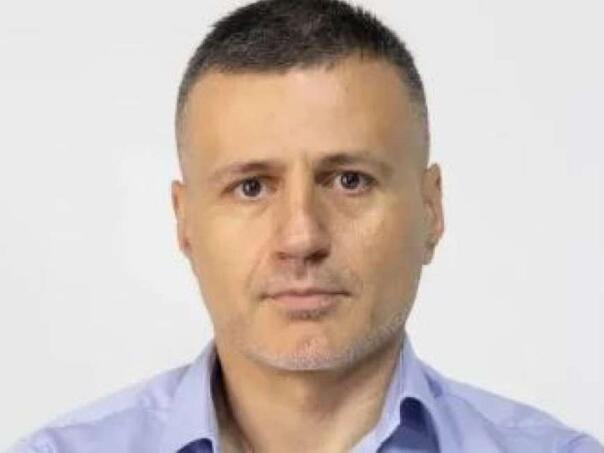
– The consequences are global, because energy flows, maritime corridors and the stability of the international order, whose weakness is exposed before the eyes of the world, are threatened. This automatically raises the conflict to the level of systemic risk – said Maksić for Fena.
He claims that the US is demonstrating readiness for high escalation, including the logic of beheading the regime, and that Russia and China are using the UN and diplomatic channels to challenge the legality and legitimacy of such an intervention.
– It is a classic pattern of multipolar competition – he said.
He points out that on the regional level it is an attempt to redefine power relations in the Middle East.
– The fall of the Iranian regime would mean Israeli regional hegemony and a significant strengthening of Saudi capacities for power projection – he said.
Maksić believes that the prolongation of the war benefits those who can withstand the costs or turn the war into political capital, and that Iran is counting on exhausting its opponents through regional strikes, economic shocks and the growth of internal resistance to intervention in the US.
– Over time, the political price for Washington will increase. Trump needs a quick and clear victory. The myth of him as a president who “doesn’t start wars” has already been shattered. If the conflict drags on without a clear outcome, the political cost will be high. But if he achieves a quick result, he can present the intervention as necessary and successful – he explained.
The professor believes that it suits Russia to divert the attention and resources of the West, as well as the increase in energy prices, but that Moscow does not suit the scenario in which the allies of the USA consolidate complete control over the Middle East.
– For Israel, and above all for Benjamin Netanyahu, only the degradation of Iran’s capabilities is not enough. If the regime survives, the threat remains. The Israeli public is more resistant to a long war than the American public, but without the support of the US, Israel cannot lead such a conflict in the long term – he believes.
Commenting on the Iranian bombing of countries in the region, Maksić says that many see it as an Iranian act of desperation, but that he still sees more rational reasons.
– Targeting civilian infrastructure, such as airports, destabilizes air traffic. Attacks on energy infrastructure raise energy prices. The overall cost of war is increasing and thus increasing the pressure on international actors to seek an end to the conflict. It counterbalances the anger of the Gulf countries over the attack on their territories. Iran is raising the price of war in order to accelerate the political fatigue of its opponents – he said.
He recalled that Turkish President Recep Tayyip Erdoğan publicly condemned the US-Israeli strikes as a “clear violation of international law” and advocated de-escalation, while Ankara is simultaneously conducting intensive diplomatic activity.
Explaining how other international actors are positioned in this conflict, the professor says that China insists that the strikes do not have a mandate from the UN Security Council and calls for the suspension of operations, while Russia uses the UN forum and, together with China, requests emergency meetings and politically condemns the attacks.
– I don’t think we’ll see much more than that. Iran can expect diplomatic and intelligence support, but not direct military involvement. None of these powers have an interest in entering into an open conflict with the USA – he said.
He claims that France, Germany and the United Kingdom condemn Iranian attacks and announce proportionate defensive measures to protect their interests and bases, in coordination with the US, but that there is no sign of readiness for wider military engagement.
– The weakness of the EU has several causes. The first is the structural security dependence on the US. The EU can articulate positions, but it does not have a single and credible military-political instrument to quickly implement them. Others are internal divisions, different historical relations to Israel and divergent energy interests. Third, Europe is currently focused on preserving NATO, supporting Ukraine, and its own strategic stability. For all that, it needs cooperation with the USA – he said.
Speaking about the coming weeks, the professor believes that the conflict is likely to escalate before entering the phase of political maneuvering.
– The key issue is Iran’s capacity to continue firing long-range rockets, because those supplies are limited. At the same time, stocks of interceptor missiles are being used up, so it is a kind of war of attrition – he said.
If there is a rapid consumption of long-range missiles, Maksic says that the focus could shift to the Gulf countries, where Iran has a larger arsenal of short- and medium-range missiles.
– The question of whether Israel and the USA have hidden options in terms of encouraging the internal destabilization of Iran is also open. The most realistic scenario is that, after several weeks of conflict, both sides declare victory: the US because they degraded Iran’s capacities, Iran because it withstood and survived the strikes of the world’s most powerful military power – he said.
Speaking about whether the wars in the Middle East are primarily the result of religious divisions between Shiites and Sunnis, or whether these conflicts are only a surface expression of deeper problems such as historical injustices, external interference by great powers, the struggle for resources and authoritarian political systems, the professor says that it is a very complex issue.
– Wars are the result of a combination of all the mentioned factors. Religious differences alone do not produce war. They become a mobilizing factor only when they are politicized and included in a wider narrative of power, threat and identity threat. History offers numerous examples of long-term coexistence of different religious communities where differences were not instrumentalized – concluded Professor Maksić in an interview for Fena.
(Vijesti.ba / Fena)