
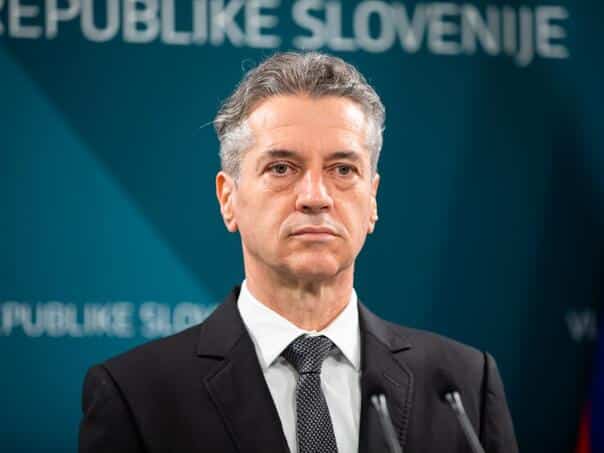
After almost all the votes from the elections held on March 22 were counted, Golob’s Freedom Movement (GS) has 29 representatives, one more than the right-wing Slovenian Democratic Party (SDS), led by political veteran and former prime minister Janez Janša.
Both parties need coalition partners for a majority in the 90-seat parliament, which further strengthens the negotiating position of smaller parties.
Golob called on the leaders of all parties, except SDS, to join the Movement in the government of national unity, at a time when Europe is facing a new energy crisis caused by the American-Israeli war against Iran, reports Reuters.
The grouping of three center-right parties, whose programs are close to SDS, has already rejected the invitation, stating that they will try to form a right-wing coalition.
The left-wing parties, which were in the ruling coalition with GS until now, would increase the number of representatives to 40, while SDS and its allies would have 43 seats, three less than the required majority.
Golob stated that all participants of the meeting agreed on cooperation in the preparation of urgent intervention measures to protect agriculture and the overall economy, which, according to him, is necessary after the reckless attack on Iran and at a time when Europe is preparing for a major economic crisis.
Slovenia is already facing problems in the supply of fuel and was forced to temporarily limit its sale at gas stations.
Under Golob’s leadership, Slovenia pursued a pro-European policy focused on social reforms, harmonizing foreign policy with other European countries, according to Reuters.
Janša, an ally of Hungarian Prime Minister Viktor Orbán and a supporter of US President Donald Trump, is in favor of introducing tax breaks for entrepreneurs, reducing allocations for social protection and the media, and changing the country’s foreign policy course, which in recent years has condemned Israel’s moves in Gaza and recognized Palestine.
The elections in Slovenia attracted additional international attention after Golob accused foreign services of interfering in the election process, following reports of a visit by representatives of the Israeli private intelligence company Black Cube to Janša in December.
Golob called it the biggest scandal in Slovenia since independence, while Janša rejected the accusations, claiming that Golob was trying to cover up corruption within his own ranks.
(Vijesti.ba)


