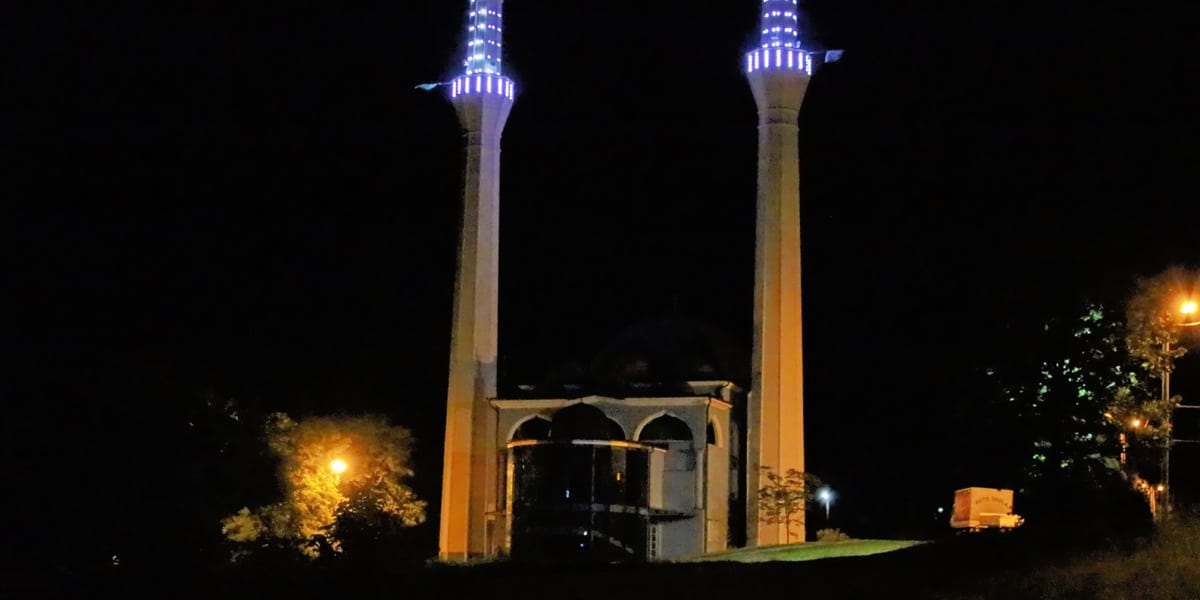
The Mubarek night Lejletul-bedr begins tonight, Friday, March 6, with the evening prayer, and in mosques throughout Bosnia and Herzegovina it will be marked with special programs, lectures and worship services.
Laylat al-Badr is celebrated in memory of the Battle of Badr, which took place on the 17th of Ramadan in the year 624, on the Badr hill not far from Medina. It was the first major battle in the history of Islam.
314 Muslims participated in that historic battle, while their opponents, the idolaters from Mecca, numbered around 1,300. Although numerically significantly weaker, the Muslims, led by Prophet Muhammad, peace be upon him, won the victory.
This event is also mentioned in the Qur’an: “How many small groups have, by the will of God, defeated many groups, because Allah is with the patient.”
The Battle of Badr remained a powerful message and inspiration to Muslims throughout the centuries. It confirms that numbers and material strength are not decisive, but sincere faith, determination and unity.
Laylat al-Badr is therefore perceived as a night of reminder of the importance of togetherness, patience and trust in God’s help, and believers spend it in prayer and thinking about the lessons of this historical event.
Remembering Bedr is not just a reminder of a historical event. It also carries a broader message that each generation has its own “Badr” – challenges and temptations that it faces in its own time.
These can be struggles to preserve freedom, to protect the community, to preserve dignity or to build a better society. Just as the participants in the Battle of Bedr defended the right to religion, life and property, so every generation has the obligation to invest maximum effort in the protection and progress of their community.
In the contemporary context, Bedr is often understood as a symbol of man’s inner struggle. Ramadan, with its fasting and worship, encourages just such a discipline – the control of passions, urges and weaknesses. This internal struggle against bad habits, injustice or carelessness represents a kind of “thigh” in the life of an individual.
Fasting, joint iftars, muqabels, terawiyas and other forms of joint worship create an environment of spiritual renewal and strengthening of interpersonal ties. In such an atmosphere, the congregation is strengthened, as well as overall social cohesion.
Bedr also testifies to the nature of human life, which is often filled with temptations, dilemmas and difficulties. Life brings challenges and suffering, but at the same time it opens up space for faith, hope and spiritual growth. In this sense, Badr reminds of struggle and temptation, while other Ramadan nights symbolize God’s mercy and hope.
Before the actual battle, the Prophet Muhammad, peace be upon him, spent the night in prayers. Tradition records his short but powerful prayer: My Allah, grant me the promised victory. If the enemy defeats me, delusion and violence will prevail, and there will be no longer those who will protect Islam.
This prayer indicates a deep awareness of responsibility towards religion and community. She also reminds that along with faith and effort, humility before God and reliance on His help are also needed.
In the Bosnian-Herzegovinian context, the symbolism of Bedr also acquired an additional meaning.
The Islamic community in Bosnia and Herzegovina declared the 17th of Ramadan – the day when the Battle of Bedr took place – the Day of Returning Congregations.
This is to emphasize the importance of supporting communities that, after war suffering and displacement, rebuilt their lives in the places of return.
A man’s walk through the Dunjaluka garden is always limited by two possibilities: the victory of Bedrov, which comes from faith, discipline and togetherness, or the lesson of Uhud, which reminds us of the consequences of weakness and disunity.
This is precisely why the memory of Bedr remains a permanent reminder that faith in God, moral strength, patience and togetherness are the foundation of every true victory, Preporod writes.