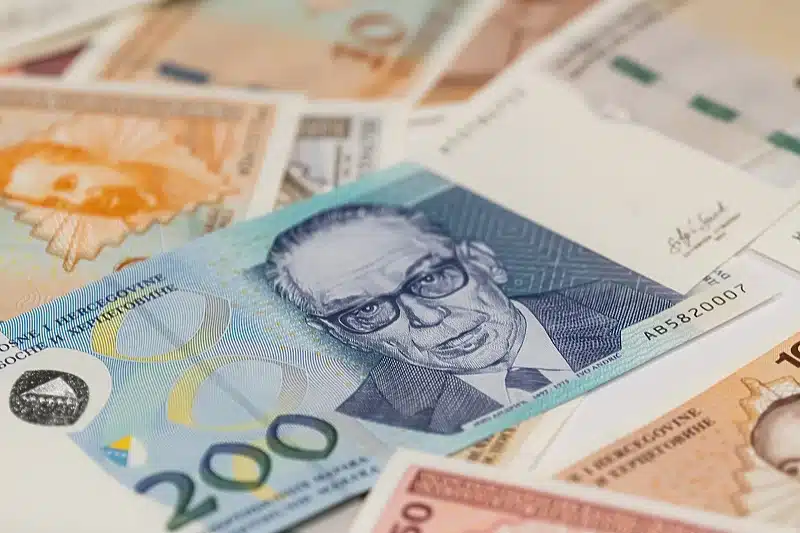
According to the available data, the year 2025 was a record year when it comes to financial ties of the diaspora with Bosnia and Herzegovina.
Remittances from abroad are still one of the key supports for thousands of households, but also an important factor in the overall economic stability of the country.
Previously published data of the Central Bank of Bosnia and Herzegovina show that in the first nine months of 2025, about 4.3 billion KM entered BiH based on current transfers, which is about 156 million KM more than in the same period of 2024. If the trend continued in the last quarter, the total amount of remittances in 2025 should exceed 5 billion KM.
The largest part of these funds is personal transfers, that is, money that citizens from the diaspora send to their families. By the end of September 2025, those transfers amounted to 3.262 billion KM, which is an increase of 196 million KM compared to the previous year. A significant part of the inflow is made up of foreign pensions, which in the same period reached 947 million KM.
Croatian media also published interesting data, referring to the Croatian National Bank. Namely, foreign workers employed in Croatia sent almost 1.6 billion euros to their home countries in the first nine months of 2025, and the largest part of that money ended up in Bosnia and Herzegovina.
Workers from Croatia sent 326.6 million euros to Bosnia and Herzegovina during that period, which is about a fifth of all remittances from foreign workers from Croatia. Thus, BiH is by far the first country in terms of the amount of money that comes from Croatia, ahead of Nepal and Serbia. This influx is directly related to the fact that citizens of BiH are the most numerous foreign workforce in Croatia, during the last year more than 30,000 permits were issued for their work and residence.
Remittances from the diaspora make up more than 10 percent of BiH’s GDP and represent a strong support for personal consumption. According to Eurostat data, Bosnia and Herzegovina ranks second in Europe, just behind Kosovo, in terms of the share of personal transfers in the gross domestic product.
Although these figures clearly show the strength of the diaspora, they also point to the weaknesses of the domestic economy. According to the calculation of the Association of Independent Trade Unions of Bosnia and Herzegovina, the average consumer basket for a family of four in November was 3,355.25 KM, while the average net salary in October was 1,632 KM. It is this gap that explains why money from abroad has become crucial for survival for many, he writes Black Chronicle.