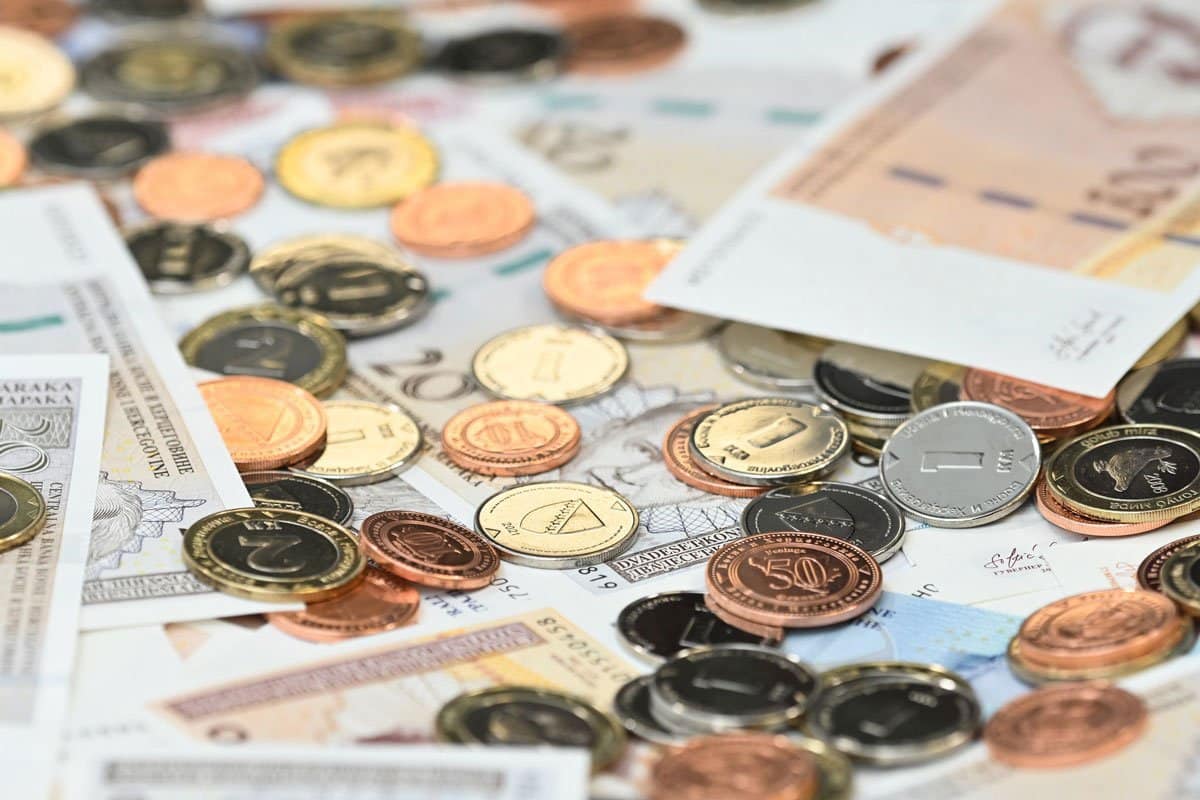
Increasing the minimum salary in the Federation of Bosnia and Herzegovina at 1,000 KM in 2025. year resulted in no larger amount of child allowance, but also significant growth in the number of beneficiaries of this fee.
According to the Federal Ministry of Labor and Social Policy, the number of children who exercise the right to allowance increased by 14,455 in just four months. While for December 2024. year issued 47,622 payments for a child allowance, in March 2025. The Appendix included 62,077 children, for the budget, 15.7 million KM was allocated.
In accordance with the Law on Material Support to families with children, the Children’s allowance in the FBiH is 19% of the minimum wage, which is currently 190 KM per child – much more than last year’s 117 km. At the same time, the income census for the exercise of the right to addition has increased from 247 to 400 KM per household member, ie 1,000 KM 1,600 for a family of four.
Although a larger number of families are now covered by this social measure, the children’s allowance remains less than one six-six children in the Federation of BiH. Estimates say that about 395,000 children live in this entity under the age of 18, and almost half of them live on the boundary of poverty.
Given the depths of children’s poverty in the FBiH, it is increasingly about the need to introduce a universal handset – a model according to which every child would have the right to compensation, regardless of the economic status of the family.
The Federal Ministry of Labor and Social Policy, in cooperation with UNICEF, has already begun an analysis of the feasibility of such a system.
This does not mean that as a society, we do not strive for a broader coverage for all children, “appointed from the Ministry, adding that the current law of the child apparent sees the child, not as a child’s universal law.
Different models of quasi-universal and universal child allowance, their applicability in FBiH, as well as the financial costs that such a system implied. In doing so, the experiences of European countries are taken into account, where the majority already has a universal system, as well as the capacities of domestic institutions – such as social work centers – to administer such a model.
The Ministry announces that the optimal model for FBiH will be proposed after the analysis. The goal is, to order, allow access to a children’s appendix to a larger number of children, thus contributing to the risk of poverty, a better approach to education and health, and strengthening the human capital and the stability of society.
The introduction of a universal child allowance would be a significant step forward in the social policy of the FBiH – a step towards a fairer society that supports every child, not only those from the most vulnerable families, transmits Hayat TV.