Economic analyst Faruk Hadžić, in publication on Facebook, analyzed the current economic situation in Bosnia and Herzegovina and announced that 2025 would be “challenging”. Although some economic indicators recorded growth, inflation challenges, the decrease in the number of employees and slower economic activities indicate the possibility of further slowing down.
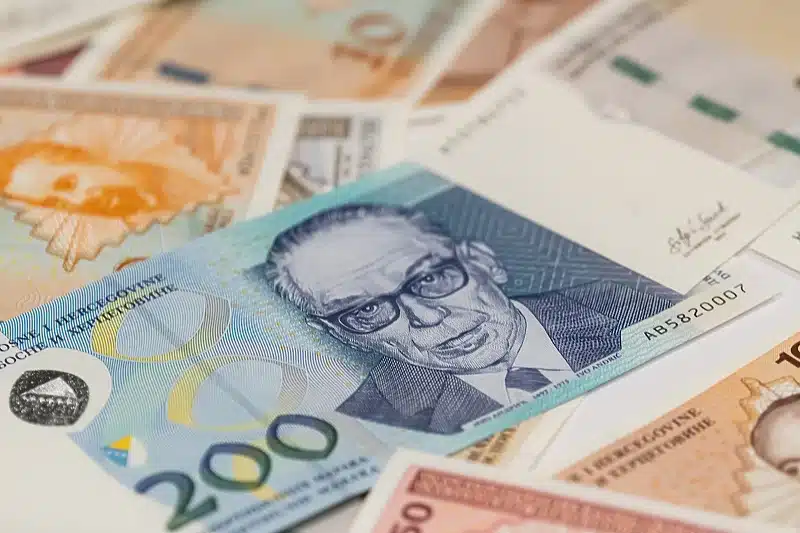
The data published by the Federal Statistical Office show that the average net salary in the Federation of BiH in January this year amounted to 1,546 KM, which is an increase by 8.3% compared to December last year. The increase is the result of the growth of the minimum salary. The largest increase was recorded in the catering, art, entertainment sectors, recreation, construction and shops. However, in the Financial Activities sector, there was a declining salary of 5.4%.
Hadžić points out that, although the income from indirect taxes in the first two months of this year increased by 44 million KM (2.51%), this did not contribute to the increase in the entity revenues, because they were reduced due to higher debt repayments. In the Federation of BiH, they were reduced by 12 million KM, while in the RS, the decrease was 7 million KM.
“Revenues based on direct taxes in the Federation of BiH increased by 10.23%, and the number of employees in the Federation of BiH fell for 1,733 compared to January this year. The decline in employment was recorded in all cantons, except in Sarajevo Canton, where minor growth was recorded “Hadzic said.
He also pointed out the decline in traffic in the 55 municipalities of the Federation of BiH in February 2025. year, while in 24 municipalities growth was recorded. The biggest decline in traffic was recorded in Lukavac, Novi Grad Sarajevo, Gradačac and Mostar. On the other hand, the municipalities like Zenica, Orašje and Sarajevo recorded significant growth.
Hadžić also notes the return of inflation, which in January 2025. amounted to 3.3%, which is accelerating compared to October last year when inflation was 1.3%. He warns of the negative political climate, which could increase uncertainty among citizens and companies, which would further reduce consumption and investment.
“The worst thing that can happen to us is stagnation and inflation, because it is very difficult to fight with that phenomenon”Hadzic points out.
According to him, the negative effects of the introduction of customs and protection of protectionism, especially between the United States and the rest of the world, will further increase economic pressures to Bosnia and Herzegovina, writes Akta.
However, in this challenging geopolitical and economic environment, Hadžić sees the opportunity for BiH in the purpose industry.
“Europe will increase the Defense expenses, which is an opportunity to increase our capacity, train the workforce in this sector and thus create an engine that can withdraw economy forward”, Hadžić concludes.