
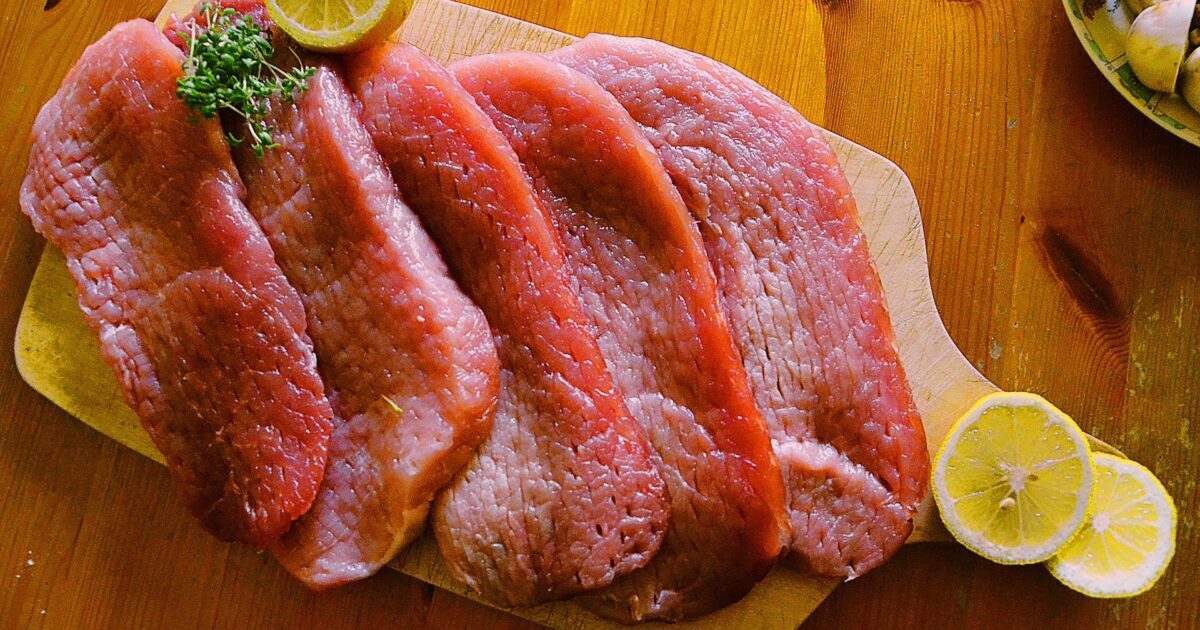
Meat prices in Bosnia and Herzegovina are the highest since the end of the war, and according to experts’ predictions, the rising trend will continue.
Thus, the prices of veal in the RS reached a historical maximum and approached the limit of 50 marks per kilogram, while at the same time the offer on the market has never been scarcer.
Beef more acceptable
Unlike veal, the situation with beef is somewhat more acceptable. However, when it comes to veal, the situation is significantly less favorable for consumers.
In Banja Luka butchers, prices vary and range from 27 to even 47 marks per kilogram, depending on the quality and part of the meat.
“The veal thigh reaches the highest price and is 47 KM per kilogram, the shoulder is about 42 KM, while veal on the bone costs 35 KM per kilogram,” they say from a Banja Luka butcher shop.
However, in another butcher’s shop, the situation is somewhat different, so a kilogram of boneless veal costs about 32 marks, while veal with bones is 27 KM.
As for the prices in FBiH, the prices are a little lower. A kilogram of beef is usually sold at a price of 21 to 27 convertible marks, while veal reaches 33 to 40 KM.
Prices in the region
According to available data, the highest prices are recorded in Croatia, where a kilogram of beef often costs between 14 and 16 euros, while veal is even more expensive.
Such a price level follows the European Union standard, but at the same time represents an additional burden for consumers.
A similar situation is present in Serbia and Montenegro, where a kilogram of beef is generally sold for 10 to 13 euros, with minor deviations depending on the city, supply and quality of meat.
The lowest meat prices in the region are recorded in North Macedonia, where a kilogram of beef can be bought for eight to 10 euros, which distinguishes this country as the most favorable for consumers when it comes to this type of product.
Declining domestic production and uncontrolled imports
Due to the decline in domestic production and the increasing reliance on imports, meat is becoming a luxury that an ever-increasing number of citizens can afford.
Stojan Marinković, president of the Association of Associations of Agricultural Producers of the Republic of Srpska, points out for Independent newspaper that this problem has been warned about for two decades, but that there are no specific reactions from the competent institutions.
“Excessive and uncontrolled imports have led to a decline in interest in domestic livestock breeding, and therefore to a decrease in livestock,” said Marinković.
As he explains, the problem is especially pronounced when it comes to veal, because domestic butchers and markets mostly sell imported meat.
“The prices are dictated by the exporting countries and that’s why they are so high. Since our customers have no alternative to buy domestic veal, they are forced to pay the price offered to them in butchers,” said Marinković.
Uncertain situation
The owner of the chain of Banja Luka butchers “Kod Laza” Lazo Šešić emphasizes that the situation on the ground is extremely difficult and uncertain.
“The price of live weight of veal ranges from 15 to 16 marks, and when VAT is added, we arrive at almost 19 KM. However, a bigger problem than the price itself is that the goods are simply not available. Farmers are increasingly giving up farming because production is not profitable for them,” said Šešić.
He adds that the market is additionally affected by global factors, such as geopolitical crises and rising energy prices.
“The conflicts in the Middle East, as well as the increase in fuel prices, affect all segments of production and transport, so this inevitably spills over into the final prices of meat,” explained Šešić.


