
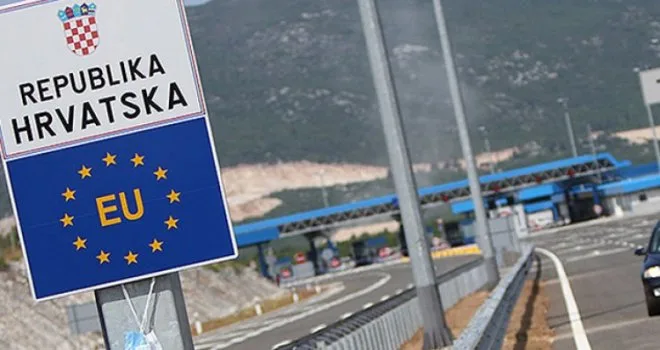
Travelers who cross the external border of the European Union, especially those who enter from Bosnia and Herzegovina, Serbia, Montenegro or other countries outside the Schengen area, are increasingly asking themselves a very sensitive question: can the border police ask them to unlock their mobile phone and show the contents of messages, photos, calls or applications?
The answer is not simple, because border control is not the same as ordinary police traffic control, but it is also not an unlimited power by which an officer can inspect the private life of passengers without reason. At the border, the police have wider powers than in regular situations, but every check must have a purpose, a reason and a legal framework, it says GPMaljevac.com.
According to the rules of border control, when crossing the external border, the police can check persons, travel documents, objects that a person has with him and the means of transport he is traveling with. This means that not only the passport or identity card is checked at the border, but also the circumstances of the trip, reason for entry, duration of stay, money for stay, accommodation reservation, return ticket, invitation letter, insurance, vehicle, luggage and other items carried by the traveler.
In practice, a mobile phone can be seen as an object that a traveler has with him, but its content is a much more sensitive matter. The phone contains private messages, photos, banking applications, health data, business communication, data of family, children and third parties. Therefore, viewing the device itself and viewing the contents of the device are not the same thing.
The border guard may ask questions about the reason for the trip. He can ask where you are going, who you are going to, how long you are staying, whether you have money, where you will sleep, whether you work in the EU, whether you have a residence or work permit, whether you have previously exceeded 90 days in Schengen and whether you can prove the purpose of your stay. If the traveler says he is going on a tourist trip, but he has no accommodation reservation, no return ticket, not enough money and does not know how to explain the travel plan, the police can carry out a more detailed check.
In such a situation, the police may ask the passenger to show proof that he already has in his phone. It can be a hotel reservation, a bus or plane ticket, a call from the person you are going to, accommodation address, insurance certificate, employer’s email, doctor’s appointment confirmation or another document that explains the reason for entry. However, this is not the same as unlimited reading of private messages and searching the entire cell phone.
The most important question is whether the police can ask for a PIN, code or biometric unlocking of the phone. In practice, this can happen, especially if there are suspicions that the traveler is not telling the truth about the purpose of entry, is going to work without a permit, is abusing the visa-free regime, is hiding the real address of residence or there are security reasons. However, asking to unlock the phone does not automatically mean that the police can inspect everything inside the device without restriction.
If the police want to check specific evidence, the traveler can open a document, message or email that confirms the purpose of the trip. For example, if you say you are visiting relatives in Germany, you can show a message with an address or a call. If you say you are going to a hotel in Austria, you can show the reservation. If you say that you are going for a job interview, but you do not have a work permit, this kind of communication can open up additional questions and the suspicion that you are not entering as a tourist but for work.
For citizens of Bosnia and Herzegovina and other third countries, the rule of 90 days in any 180 days is particularly important. The border police check previous stays when entering and leaving Schengen, and after the introduction of electronic systems, they rely less and less on passport stamps and more and more on digital records. If the system shows that the person has already used the allowed stay or if there is a suspicion that he is staying longer than he is allowed, the police can ask additional questions and ask for evidence.
The mobile phone often becomes a problem here, not because it is an object of control in itself, but because the passengers have evidence in it that can confirm or deny their story. Messages about an agreed job, accommodation with an employer, per diems, wages, illegal work or a planned stay can be a reason for the police to suspect the real purpose of the trip. On the other hand, proper accommodation reservation, return ticket, itinerary and communication with the family can help the traveler to explain the reason for entry more quickly.
Travelers often think that it is enough to say “I’m going tourist” and show the passport. However, in order to enter Schengen, a citizen of a third country must meet the entry requirements. This includes a valid travel document, a valid reason for travel, sufficient funds for stay and return, compliance with the 90/180 day rule and the fact that the person does not pose a threat to public order, safety or health. If any of these conditions are not clear, the border police have the right to check additionally.
It is also important to know that refusal to cooperate at the border can have consequences. If the traveler does not want to answer the basic questions, cannot prove the purpose of entry, has no accommodation, no money, no return and does not want to show documents that would clarify the situation, the police can conclude that the conditions for entry are not met. This does not mean that every refusal to unlock a mobile phone is automatically a reason for a ban on entry, but in combination with other suspicious circumstances it can make the passenger’s position more difficult.
The border police should not conduct random and unlimited telephone “digging” without reason. The inspection must be related to the purpose of border control, security assessment or suspicion of a misdemeanor or criminal offence. If there is a more serious suspicion of people smuggling, false documents, abuse of residence, work without a permit or other punishable behavior, then the action can be extended to other police powers, but it is no longer a simple routine passport control.
The best advice for travelers is to prepare all the evidence in a separate folder in the phone or printed on paper before the trip. Accommodation reservation, return ticket, travel insurance, address of the person you are going to, proof of money and itinerary can prevent unnecessary delay. It is even better to have the most important documents printed, because then there is no need to show the official your private phone.
Those who enter the EU as tourists and have work arrangements on the phone should be especially careful. If you do not have a work permit, and the messages say that someone is waiting for you at a construction site, in a restaurant, at your employer’s place or at a seasonal job, the border police may suspect that you are entering for work, not tourism. In such cases, it is possible to refuse entry, because the visa-free regime does not mean the right to work.
It is not wise to give false answers either. If you say you’re going to a friend’s house, but you don’t know the address; if you say you are staying for three days, and you have messages on your phone about staying for three months; if you say you don’t have an employer, but you wear work clothes and an agreed shift, the problem won’t just be the cell phone, but the contradiction between your statements and the evidence.
On the other hand, the passenger has the right to dignified treatment and protection of privacy. Border control does not mean that a person loses all rights. If the official asks to see a certain document, it is best to calmly ask what exactly needs to be shown. Instead of handing over the unlocked phone, you can open the requested document yourself and show the screen. If a broader overview of the content is requested, the passenger can ask what the reason for such control is.
In practice, the most problems occur with travelers who often enter and leave Schengen, do not have clear evidence of the purpose of their stay, travel without enough money, do not know where they will stay or have previously overstayed their stay. For such passengers, even a simple message on the phone can become important evidence for the border assessment.
Legally speaking, the border is not a space where the police must believe every statement made by travelers. Entry into the EU and Schengen is not an automatic right for third-country nationals, even when they do not need a visa. The visa-free regime allows a short stay, but under conditions. If these conditions are not met or the passenger cannot prove them, entry may be refused.
Therefore, the shortest answer to the question in the title is as follows: the border police can ask you to show evidence from your mobile phone if it is important to verify the purpose of the trip, but this does not mean that they have an unlimited right to look at all your private messages, photos and applications without reason. The clearer your story and the neater your documentation, the less likely it is that the phone will even become the subject of scrutiny.
For travelers from Bosnia and Herzegovina, Serbia and other countries of the region, the most important thing is that they do not arrive at the border unprepared. If you are traveling as a tourist, act like a tourist: have accommodation, return, money and a clear plan. If you are going to work, you need the appropriate permit. If you are visiting relatives, know the address and contact information. If you only keep all evidence on your phone, prepare it in advance so you don’t have to open private conversations in front of the officer.
The topic of cell phones at the border is becoming more and more important as travel becomes increasingly digital. Tickets, reservations, calls, work arrangements and bank details are mostly in the phone today. This is precisely why travelers must know the difference between showing concrete proof and completely renouncing privacy. The border is a place of increased control, but the rule that every control must have a reason, measure and legal purpose still applies.


