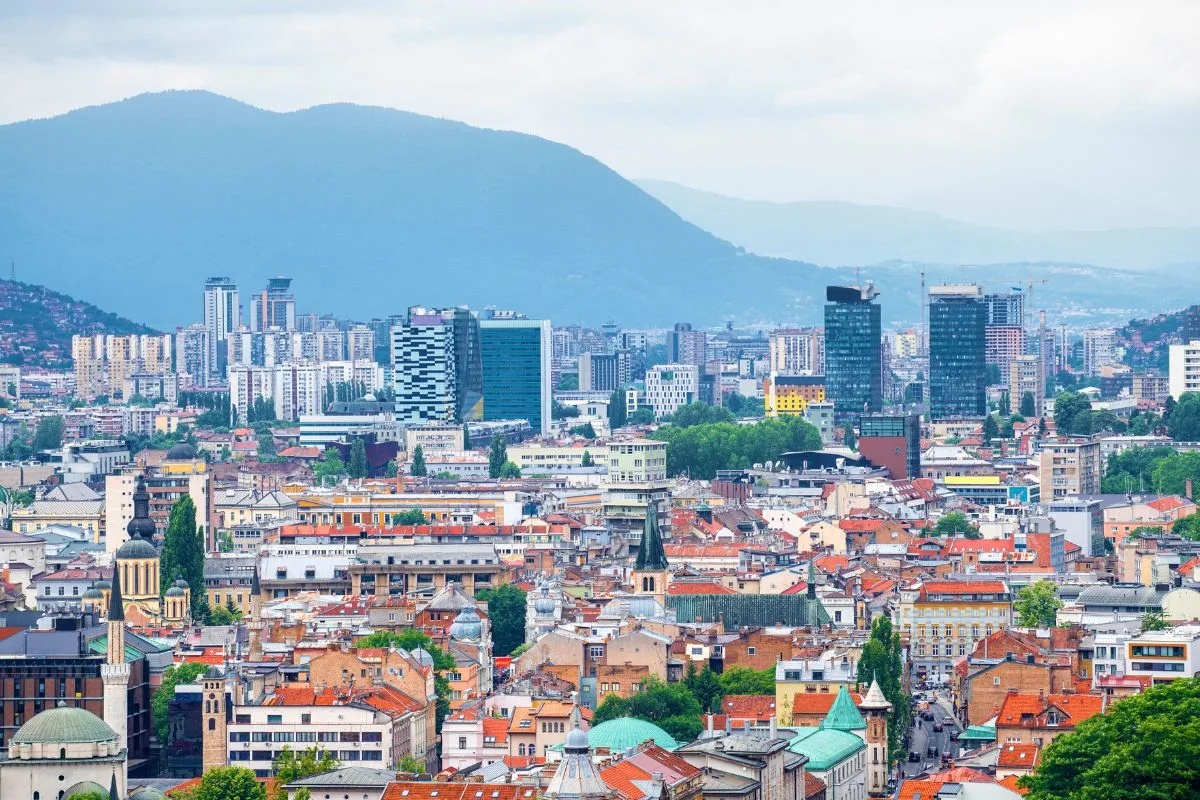
Sarajevo is best explored by combining its famous historic landmarks with quieter neighborhoods, riverside walking paths, local cafés and mountain viewpoints. While Baščaršija is an essential starting point, the real character of Bosnia and Herzegovina’s capital becomes clearer when visitors venture beyond the Old Town and discover the places where everyday city life unfolds.
From Austro-Hungarian architecture and Ottoman-era streets to green hills and modern cultural spaces, Sarajevo offers far more than a conventional sightseeing itinerary.
The city is relatively compact in its central areas, making it possible to discover many interesting locations on foot. At the same time, its public transportation system and surrounding mountains provide opportunities to experience different sides of Sarajevo.
Here is how to discover the city at a slower pace, with a focus on culture, local experiences and places that deserve more attention.
Start in Baščaršija, but don’t spend the entire day there
Baščaršija is the historic heart of Sarajevo and an excellent introduction to the city.
Its narrow streets, traditional workshops, mosques and bustling cafés reflect centuries of cultural exchange.
Visitors usually begin at Sebilj, the recognizable wooden fountain that has become one of Sarajevo’s most photographed landmarks.
Nearby, traditional copper workshops offer a glimpse into the craftsmanship that helped shape the Old Town.
A walk through Baščaršija also provides an opportunity to discover Bosnian coffee culture.
Coffee is more than a quick drink in Sarajevo. Traditionally served in a small copper pot called a džezva, it is closely associated with conversation, hospitality and taking time to enjoy the moment.
After visiting the central landmarks, however, consider continuing westward rather than returning to the same streets.
This is where the city’s architecture and atmosphere begin to change.
Walk from Ottoman Sarajevo into the Austro-Hungarian city
One of Sarajevo’s most interesting features is the visible transition between different architectural periods.
As visitors walk from the Old Town toward Ferhadija Street, Ottoman-era buildings gradually give way to structures influenced by Central European architecture.
This transition tells a story about the city’s development and changing political and cultural influences.
Ferhadija is one of the city’s most important pedestrian streets, connecting historic landmarks with shops, cafés and modern urban activity.
Along the way, visitors can explore the area around Sacred Heart Cathedral, admire historic façades and observe everyday life.
The street is especially interesting because it is not exclusively a tourist attraction.
Local residents use it for shopping, meeting friends and moving between different parts of the center.
Spending time here provides a better understanding of Sarajevo as a living city rather than simply a collection of monuments.
Discover the Miljacka River and its bridges
The Miljacka River runs through Sarajevo and connects many of its recognizable landmarks.
Walking along the river offers a different perspective on the city, particularly in areas where historic buildings and bridges create a distinctive urban landscape.
The Latin Bridge is among the best-known locations.
It is closely associated with the assassination of Archduke Franz Ferdinand in 1914, an event that became one of the immediate triggers of the First World War.
However, the river also provides quieter walking opportunities.
Instead of visiting only the most famous bridge, travelers can follow the riverside paths and explore the surrounding neighborhoods.
This approach makes it easier to appreciate the relationship between Sarajevo’s geography and its development.
The narrow valley, surrounding hills and river have all influenced the city’s architecture, streets and transportation routes.
For those planning a short visit, the detailed Sarajevo travel guide offers additional suggestions for historic attractions, cultural experiences and places worth including in a two-day itinerary.
Visit the neighborhoods where Sarajevo’s character comes alive
Tourists often concentrate on a relatively small part of Sarajevo.
However, the city’s residential neighborhoods provide an opportunity to experience a different atmosphere.
Areas such as Bistrik and the streets climbing toward the surrounding hills offer views of traditional houses, steep roads and the city’s distinctive urban layout.
Exploring these neighborhoods can be particularly rewarding for visitors interested in photography and architecture.
The scenery changes quickly as the streets move away from the river and climb toward higher ground.
Some routes are steep, so comfortable footwear is essential.
Visitors should also respect residents’ privacy, avoid photographing people without permission and remember that these are working neighborhoods rather than open-air museums.
A quiet walk through the less crowded streets can sometimes reveal more about Sarajevo than another hour spent visiting the busiest attractions.
Explore Sarajevo from Trebević
Trebević is one of the most recognizable natural landmarks surrounding Sarajevo.
The mountain provides a striking contrast to the dense urban environment below.
Visitors can reach the mountain by cable car when operating, although schedules, prices and weather-related interruptions should be checked before departure.
From higher elevations, the view reveals Sarajevo’s unusual geography: a city stretching through a valley surrounded by hills and mountains.
Trebević is also known for the remains of the bobsleigh and luge track constructed for the 1984 Winter Olympics.
The track has become a recognizable reminder of the city’s Olympic history.
Those interested in visiting should stay on marked and appropriate routes, follow local safety guidance and avoid entering unsafe or restricted areas.
Trebević is particularly appealing to travelers who enjoy combining cultural sightseeing with time outdoors.
Even a relatively short excursion can provide a completely different perspective on the capital.
Experience Sarajevo’s food culture beyond famous restaurants
Food is an important part of discovering Sarajevo.
Ćevapi, burek, other traditional pies and Bosnian coffee are among the dishes and drinks most frequently associated with the city.
However, experiencing local food culture involves more than visiting the best-known establishments.
Smaller neighborhood bakeries, cafés and traditional restaurants can offer opportunities to observe everyday dining habits.
Breakfast pastries, simple lunches and afternoon coffee breaks are familiar parts of local life.
Visitors should explore different neighborhoods and choose places that match their preferences and budgets.
Food prices and opening hours vary, so checking recent information is more reliable than relying on outdated travel recommendations.
Another useful approach is to avoid scheduling every meal in advance.
Leaving room for spontaneous discoveries can make the experience more memorable.
Use public transport to see more of the city
Walking is an excellent way to explore central Sarajevo, but public transportation can help visitors travel farther.
Trams and buses connect different parts of the city, while other transportation options serve specific routes and neighborhoods.
Travelers should check current schedules, ticketing methods and service changes before setting out.
Using public transport can provide an interesting perspective on everyday Sarajevo.
It also allows visitors to explore beyond the central tourist district without relying entirely on taxis or private vehicles.
For a more relaxed experience, plan routes around a few nearby attractions rather than constantly crossing the city.
This can reduce unnecessary travel time and leave more opportunities to enjoy individual neighborhoods.
Find a viewpoint away from the busiest streets
Sarajevo’s surrounding hills provide numerous opportunities to see the city from above.
The Yellow Fortress, also known as Žuta tabija, is among the most familiar viewpoints, particularly around sunset.
From this elevated location, visitors can observe rooftops, minarets and the surrounding valley.
The area also offers an opportunity to understand how the city developed across different elevations.
When visiting viewpoints, appropriate footwear and caution are important, particularly after rain or during colder weather.
It is also worth remembering that scenic locations may become crowded at popular times.
For those who prefer quieter experiences, exploring approved walking routes and alternative public viewpoints may be a better choice.
Discover Sarajevo’s museums and cultural spaces
Sarajevo’s identity has been shaped by different historical periods, communities and artistic traditions.
Museums and galleries provide important context for understanding this heritage.
The city’s cultural institutions cover subjects ranging from history and architecture to contemporary art and the experiences of civilians during the war in Bosnia and Herzegovina.
Visitors interested in the city’s recent history may consider institutions that document the 1992–1995 siege of Sarajevo.
These experiences can be emotionally demanding, but they provide essential historical context.
It is worth allocating sufficient time for such visits rather than treating them as brief photo opportunities.
Before arriving, check admission information, opening hours and whether guided visits are available.
A thoughtful museum visit can add depth to the experience of walking through the city.
Can Sarajevo be explored on a budget?
Sarajevo offers different accommodation, dining and transportation options, allowing travelers to adjust their plans according to their budgets.
Walking between centrally located attractions can reduce transportation expenses.
Local bakeries and casual restaurants may provide alternatives to more expensive dining establishments.
Travelers who want to spend less can also focus on public squares, riverside walks and scenic outdoor locations.
However, budgets should be based on current prices rather than older published estimates.
An earlier BosniaToday.ba report explored Sarajevo as an affordable European travel destination, reflecting the city’s long-standing appeal to budget-conscious visitors.
Because accommodation and travel costs change over time, today’s travelers should compare actual prices for their intended dates before making reservations.
A realistic travel budget should include accommodation, meals, local transport, attractions and a reserve for unexpected expenses.
How to plan a more authentic Sarajevo experience
One of the easiest ways to improve a city visit is to avoid scheduling too many attractions in a single day.
Sarajevo rewards travelers who leave room for spontaneous experiences.
Instead of moving quickly from one landmark to another, consider spending more time in a neighborhood, visiting a small café or taking a leisurely riverside walk.
A balanced itinerary might include historic sightseeing in the morning, a museum in the afternoon and an evening walk through the central pedestrian areas.
On another day, visitors could explore Trebević or discover residential neighborhoods with panoramic views.
For local developments, cultural announcements and practical city information, Sarajevo news and local guides can provide useful starting points for planning activities.
Since events, services and access conditions may change, specific details should always be confirmed before visiting.
The goal is not to see every attraction but to experience the city at a pace that allows its character to emerge.
Conclusion
Sarajevo is a destination that becomes more interesting the longer visitors explore beyond its most recognizable landmarks.
Baščaršija provides a fascinating introduction to the city’s Ottoman heritage, but the surrounding neighborhoods, riverside paths, Austro-Hungarian architecture and mountain scenery reveal additional layers of its identity.
Walking through residential streets, visiting museums, enjoying traditional food and observing everyday city life can make a visit more memorable.
Whether traveling for two days or staying longer, the best approach is to combine well-known attractions with a willingness to discover something unexpected.
Sarajevo is not simply a city to photograph and leave behind. It is a place to experience through its streets, stories, landscapes and people.