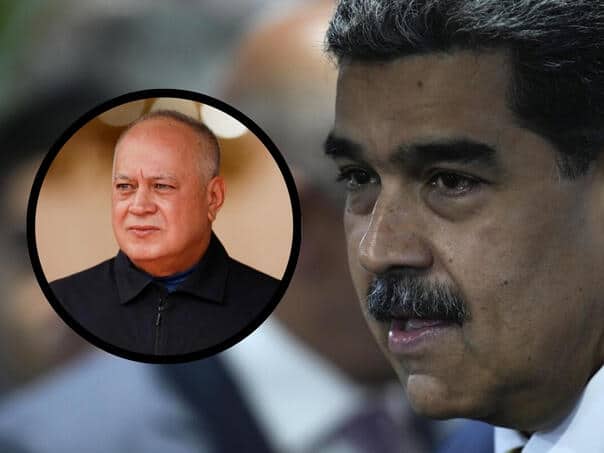
According to sources, Donald Trump administration officials have warned Cabello not to use the security services and militant supporters of the ruling party under his control to crack down on the opposition. The security apparatus, which includes the intelligence services, the police and the military, remained largely intact after the January 3 US operation.
Cabello, who is on the same US drug-trafficking indictment as Maduro, was not arrested during the operation. Communication with him, which also related to US sanctions and the indictment, began in the early days of the Trump administration, intensified in the weeks leading up to Maduro’s ouster, and continued after his removal from power.
These previously undisclosed talks are considered crucial to US efforts to control the situation in Venezuela. According to the sources, if Cabello were to activate the forces under his control, it could cause the chaos that Washington wants to avoid and threaten the power of interim President Delcy Rodríguez.
It is not known whether the talks included issues of the future governance of Venezuela, or whether Cabello acted on the US warnings. He has publicly expressed his loyalty to Rodríguez, whom Trump has so far only praised.
While the US sees Rodríguez as a key figure for the post-Maduro transition, Cabello is seen in diplomatic circles as someone who can either ensure stability or seriously disrupt US plans.
Cabello has been considered the second most powerful person in Venezuela for years. A close associate of former President Hugo Chávez, he later became one of Maduro’s most loyal allies and a key figure in the repressive government apparatus.
As a former army officer, he had strong influence over the military and counterintelligence services and was linked to pro-government paramilitary groups, the so-called “colectivos”, which were used to attack protesters.
Although Washington sees Cabello as one of the temporary pillars of stability during the transition period, US officials fear that because of his past and rivalry with Rodríguez, he could play a destabilizing role.
Cabello has been under US sanctions for years for alleged involvement in drug trafficking. In 2020, the US offered a $10 million reward for information leading to his arrest, which was later increased to $25 million. Cabello has repeatedly denied any connection to drug cartels.
After Maduro’s ouster, questions arose in Washington about why Cabello was not arrested along with him. Republican Congresswoman Maria Elvira Salazar said Cabello is “probably worse than Maduro.”
Although Cabello has since strongly condemned the US intervention, reports of raids and population controls in Venezuela have become less frequent in recent days. Both the American and Venezuelan sides announced that some of the detainees, who the opposition and human rights organizations consider to be political prisoners, will be released.
The Venezuelan government says Cabello, as interior minister, is overseeing the process, while human rights organizations warn that releases are proceeding very slowly and that hundreds of people are still being illegally detained.
(Vijesti.ba)