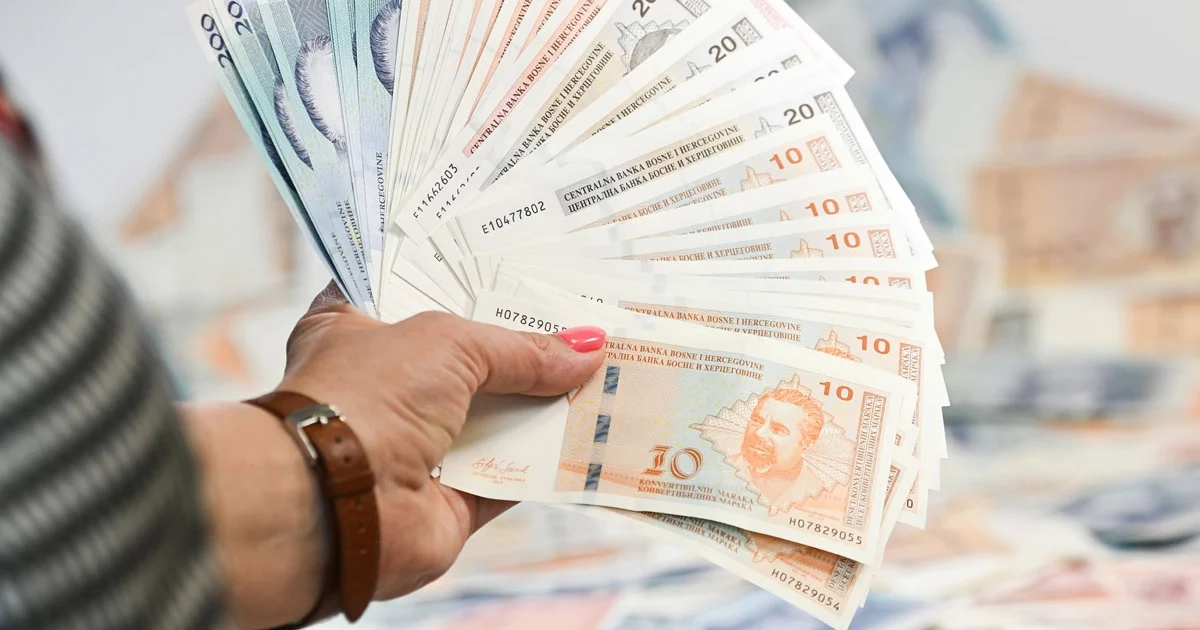
Bosnia and Herzegovina has laws aligned with European and international standards to combat money laundering, but their implementation remains a serious problem.
This is one of the main conclusions of the new report of the organization Global Initiative Against Transnational Organized Crime, which warns that the key weaknesses in BiH and the rest of the Western Balkans are related to ineffective supervision, weak coordination of institutions and rare punishment of professionals who can help conceal illegally acquired money.
The authors state that the biggest problem is no longer the lack of laws, but their implementation in practice. Supervisory bodies often lack sufficient capacity, the exchange of data between institutions is limited, and controls are mainly limited to checking documentation rather than detecting suspicious patterns of behavior and financial flows.
More reports, but few investigations and verdicts
In part reports which refers to Bosnia and Herzegovina, it is stated that the number of reports of suspicious transactions increased after the adoption of the new law on prevention of money laundering and financing of terrorism in 2024. However, the authors warn that it remains to be seen whether this will lead to more investigations, indictments and verdicts, of which there are currently very few.
The assessment that a small number of reports are submitted based on real suspicion of money laundering is particularly significant. According to the report, most applications are sent as a precaution so that taxpayers avoid possible regulatory or supervisory sanctions.
The authors describe such practice as an approach that boils down to merely filling out the legal form, instead of real risk assessment and detection of suspicious activities.
Supervision exists formally, but does not produce results
The report states that professional bodies in Bosnia and Herzegovina, including notaries and lawyers’ chambers, do not yet have sufficiently coordinated supervision mechanisms in the area of money laundering prevention.
The authors also point to the findings of media investigations, according to which disciplinary measures against notaries and lawyers are rare, even when they are linked to real estate fraud or illegal registrations.
This is why, as the report states, a system is being created in which supervision formally exists, but fails to prevent or detect money laundering in practice.
Real estate remains the main channel
One of the most important conclusions of the report refers to the real estate market, which the authors identify as one of the main channels for money laundering in the entire region.
The most common methods cited are undervalued or overvalued contracts, quick changes of ownership, fictitious invoices, fake loans and complex ownership structures that make it difficult to determine the real origin of the money.
The report warns that illegally acquired funds are increasingly being injected into legal flows precisely through the purchase of real estate, the establishment of companies and various types of business arrangements that at first glance seem completely legal.
Lawyers, notaries and accountants can play a key role
The authors especially emphasize the role of professional helpers in money laundering. These are people who know the legal and financial system well and can help to conceal the real origin of the money.
According to the report, lawyers often establish legal structures and contractual relationships, accountants shape financial documents, while notaries confirm and formalize key transactions. In some cases, such activities may be connected to networks of political influence.
Actual implementation needed, not new regulations
The conclusion of the report is that the countries of the Western Balkans, including Bosnia and Herzegovina, must move from the formal harmonization of regulations to their actual implementation.
The authors recommend strengthening the capacity of supervisory institutions, better data exchange between financial intelligence, tax and judicial authorities, stricter sanctions for professionals who facilitate money laundering, and better control of suspicious transactions.
The message of the report for Bosnia and Herzegovina is that laws in themselves are not enough if the institutions are not capable of recognizing, investigating and sanctioning those who introduce illegally acquired money into legal flows, it says. N1 BiH.