The key is that we are very weak when it comes to reserves. Especially oil. And of course there is reason to be afraid.
The fee for the establishment of reserves of oil derivatives was introduced in 2014 and amounts to 0.01 KM per liter of fuel. Although significant funds have been collected in recent years, the stocks in the terminals are sufficient for only a few days if there is a fuel shortage.
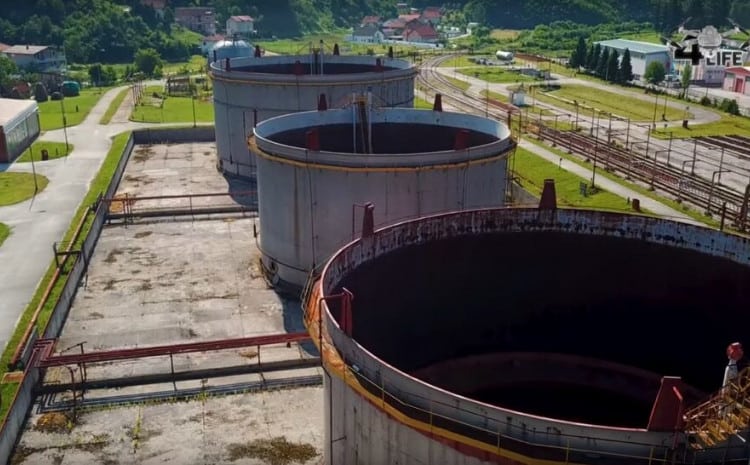
“By putting the Blažuj terminal into operation, reserves of oil and oil derivatives were formed in the Federation, the Živinice terminal has a certain amount of fuel, but it was used to test the terminal after its reconstruction in 2020. In the coming period, an increase in the amount of fuel stored at the terminal in Blažuj is planned. The Bihać terminal is currently in the reconstruction phase, and the completion of the works is expected by the end of 2026, while the terminal in Mostar is currently being resolved property and legal issues that are a prerequisite for the start of the reconstruction of this terminal as well”, said President of the Terminal Management Board of the Federation of Bosnia and Herzegovina Damir Kreso.
More than 55.4 million KM was collected from the tax for oil reserves in 6 years
In the period from 2014 to 2020, more than 55.4 million KM was collected from the tax for oil reserves. The money was spent mainly on the operating costs of the company, technical maintenance. Little has changed in the plan for dedicated tax expenditure for the period 2023-2026. year, which was publicly warned by federal representative Admir Čavalić.
“Most of these costs are related to storage, administration, at least the procurement of oil, which should alleviate the fear of shortages,” he said.
Minister Amir Hasičević said that the largest part of the fee went to the restoration of devastated capacities that did not meet the technical standards for storing fuel.
How it looks in numbers today
What are the actual stocks, concrete data are not disclosed, but the Terminal says: “If it is used for general needs, and that means consumers from all over BiH, it will be a few days, limited it will be much longer.”
Minimal stocks in FBiH, none in RS
And the system of connected containers refers to RS, because there are no terminals there. And in fact, the supplies that the terminals in the Federation have can be used tomorrow by everyone in Bosnia and Herzegovina. However, the Minister of Trade admits that they are minimal, but he trusts in private companies and in the stabilization of the market.
In the RS, on the other hand, there are no stocks at all, there are no commodity reserves, so there are no publicly owned terminals either. Oil reserves mainly refer to stocks held by distributors, that is, to the quantities of fuel stored in oil terminals and gas stations.
BiH does not have a refinery
There is currently no refinery in Bosnia and Herzegovina. The fuel we consume comes from the refineries of Rijeka, Pancevo, and refineries from Sicily, Greece, Italy… Let us remind you that Bosnia and Herzegovina does not have a state law on mandatory reserves, nor is there a state policy that governs this area, that everything is left to the entities, which is contrary to the directives that the energy community demands from Bosnia and Herzegovina. N1 BiH.