
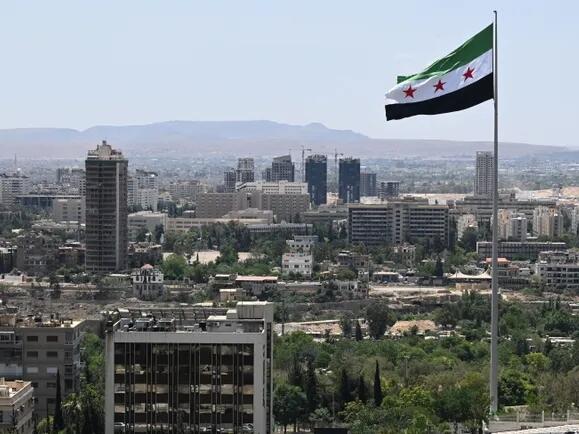
Syrian Kurdish leader Mazloum Abdi held talks with central government officials in Damascus on Sunday about the integration of his forces into state structures, but state media reported that the talks did not yield tangible results.
In March, Abdi signed an agreement with Syrian President Ahmed al-Shar’a to merge the civil and military institutions of the semi-autonomous Kurdish administration with the central government by the end of 2025, but disagreements have so far slowed its implementation.
The Kurdish-led Syrian Democratic Forces (SDF) said in a statement that a delegation of their leadership, including commander Mazloum Abdi, met with government representatives in Damascus “as part of discussions related to the military integration process.”
In a later statement, the SDF announced that the talks had ended and that the details would be announced later.
Damascus did not issue an official statement on the meeting.
However, state television, citing a government source, stated that the talks “did not lead to concrete results in speeding up the implementation of the agreement on the ground.”
It was added that both sides agreed to hold additional meetings.
The SDF controls large areas of the oil-rich north and northeast of Syria, and with the support of the US-led international coalition, played a key role in the territorial defeat of ISIS in Syria in 2019.
The integration of these forces into state institutions has proven complex since the ouster of longtime ruler Bashar al-Assad a year ago, with both sides accusing each other of obstructing the implementation of the agreement.
Abdi has repeatedly called for decentralization, which the new Syrian government rejects, and tensions between the Kurds and the government have occasionally erupted into clashes, most recently in the city of Aleppo last month.
In December, a Kurdish official, speaking on condition of anonymity, told AFP that Damascus had proposed dividing Kurdish forces into three divisions and several brigades, including an all-female brigade.
According to those allegations, the forces would be deployed in areas controlled by the Kurds, but under the command of the SDF.
Syria’s foreign minister later said the government was considering a response from the Kurdish side.
In the same month, Abdi said that “every effort is being made to prevent the collapse of this process” and that he considered failure unlikely.
Turkey, an important ally of the new Syrian government, considers the presence of Kurdish forces along its border a security threat, and has publicly called for their integration into state structures.
Last month, Turkish Foreign Minister Hakan Fidan called on the SDF not to be an obstacle to Syria’s stability and warned that Turkey was running out of patience.
Turkey, which shares a 900-kilometer-long border with Syria, has launched multiple military operations aimed at pushing Kurdish forces further from its border.
(Vijesti.ba)


