
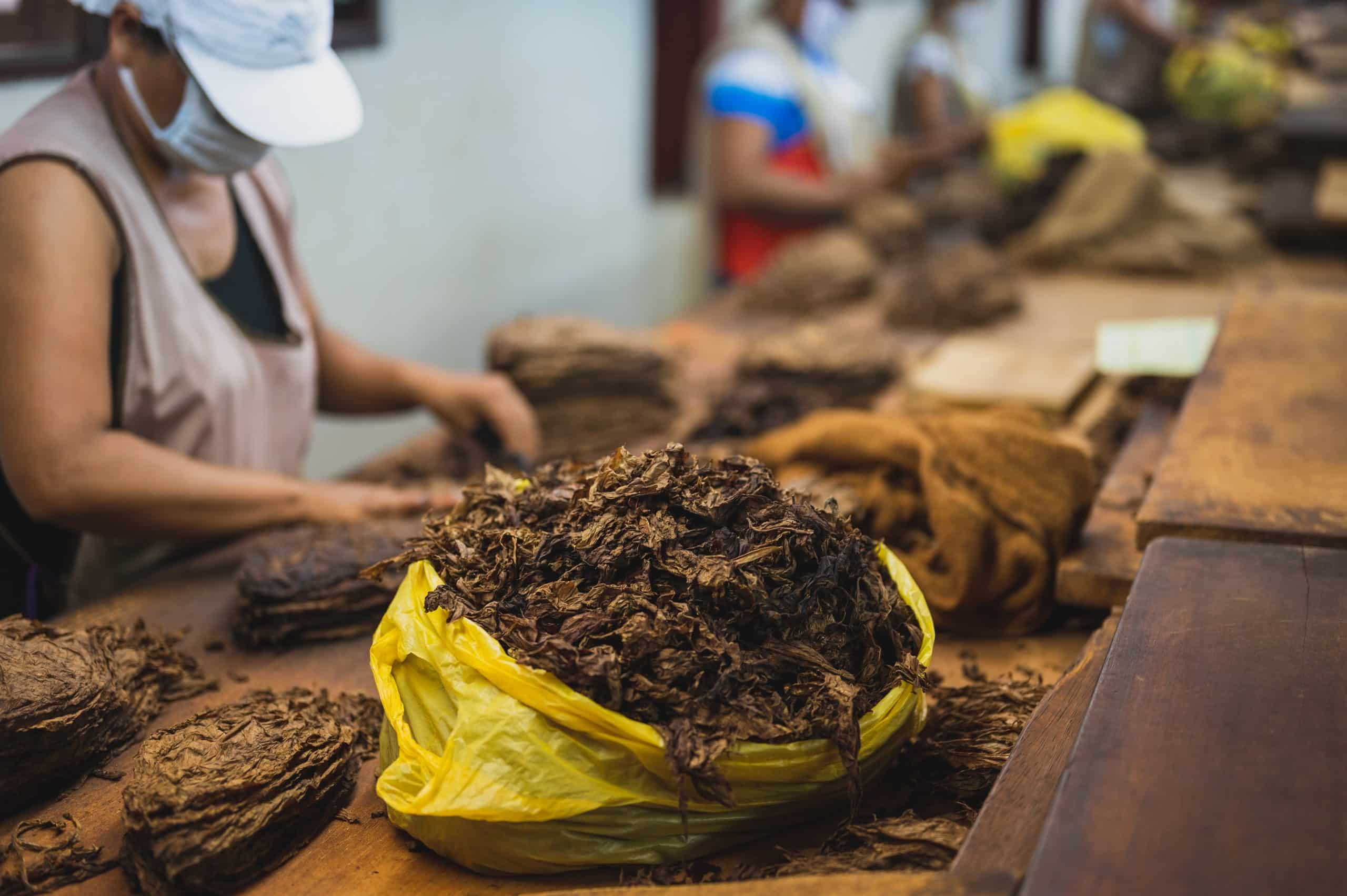
The sales of the cut tobacco in BiH again brings increased risk of smuggling and strengthening the black market, which the state needs to control all citizens, because, among other things, it develops sustainable domestic production and creates new jobs.
The recent IPSOS survey of 2025. year, on the representative sample of adult citizens, provides clear insight into the current situation – the black market is still present, the cut tobacco continues to receive the primacy of smuggled cigarettes. This season therefore bears a key challenge for the competent institutions.
“The sales tobacco redemption season in BiH also opens the issue of illegal trade, as a high level of activity is coming that as many as 94 percent of the consumer buy illegal tobacco,” says the economic analyst by Faruk Hadžić.
As it adds, such a market structure not only distorts competition, but also annually denies BiH budget for more than 420 million KM of public revenues. Therefore, Hadžić said, the fight against smuggling strategic economic priority with direct influence on the quality of life of citizens.
“At the same time, the experience of the surrounding countries shows that sustainable domestic production can be developed as a strategic culture with insured redemption and significant exports, which presents rural demographics and creates new jobs,” Hadžić emphasizes.
Such a model, he adds, opens the space for BiH to recognize the double importance of this branch and through reducing the presence in the black market and the development of legal production, which would simultaneize the budget and encourage economic growth in rural areas.
Sasa Grabovac, Executive Director of the RS Association of the RS SWOT, would, in order to create fair conditions for producers, in accordance with the legal provisions of this country, which is a part of the huge revenues and VAT redirect to better control of this market. “The decoration of the cut tobacco market is certainly necessary, and there are already prerequisites in financial terms. This will be created a base for an even better collection of budget revenues,” Grabovac explains.
Recall, a mild drop in illegal cigarettes is largely the result of reinforced shares of the competent agencies, primarily the State Investigation and Protection Agency (SIPA), the Indirect Taxation of BiH and BiH Border Police.
These institutions, through targeted controls, seizures and joint operations, managed to narrow the space for the action of criminal networks. Experts emphasize that continuity is crucial – any reduction in the intensity of these activities, regardless of the reasons, could very quickly annul the achieved results and lead to a new strengthening of the Black Market.
By the way, when it comes to the mentioned IPSOS research, it showed a slight decline in the presence of illegal cigarettes. Namely, in the market, a certain volume of such cigarettes is still present, but compared to the last year, a slight decline in consumption is recorded. The main channels remain markets and street vendors, with sales through social networks and the Internet.
The survey, however, was found that 94 percent of the tested consumers of the cut tobacco buy illegal products. So, it is concluded that the trend of consuming illegal cut tobacco is stable and still high.
Given such market circumstances, the continuation of the same trend is expected, because the absence of a significant organized redemption of legal tobacco directly encourages the strengthening of the black market.
According to this research, it is estimated that the total consumption of illegal cut tobacco was 2,062 tons, which is two percent more than a year ago, and almost 26 percent more than in 2020. year. Year. Thus, with growth compared to last year, everything indicates that we have great consumption of illegal cut tobacco in our market and that smugglers are still dominated in that segment.
When it comes to procurement channels, the research showed that about 50 percent of the consumer cut tobacco procures the markets, and the rest of the street sellers or friends and friends. These data unequivocally confirm that the cut tobacco remains a key challenge for the competent institutions and that the black market is still strong.
Unlike BiH, where the focus is exclusively control and the control of the black market, neighboring countries show a different approach, because they treat tobacco and as an important agricultural and export business branch.
In Croatia, it should be emphasized, tobacco, one of the strategic agricultural cultures, with a particular importance in Virovitica-Podravina County, where about 80 percent of domestic production are realized. During 2024. More than 6,000 tons of tobacco was produced, and more than 350 family farms are engaged in this labor intensive and profitable production with insured purchase.
The Deputy Prime Minister of Croatia and Minister of Agriculture, Forestry and Fisheries, David Vlajčić, recently held meetings with leading food and production companies. On that occasion, he said that tobacco preserves rural demographics and is an important export product.
“Only in the first half of this year, 7,000 tons were exported. The Ministry will continue to support this production and work together with the industry to modernize and resolve the challenges of the workforce,” Vlajčić stated,
This example clearly shows that a different approach can preset the agricultural tradition and ensure economic growth, and opens the question to consider similar models in the long run.
So, to conclude: the money I would lose because of the Black Market of Tobacco (more than 420 million KM per year), for example, would be able to build up a few regional hospitals and schools, which would reduce children’s allowance and pensions for the most vulnerable.
The same amount is sufficient to build new shares of auto-roads and fast roads, the modernization of railways, and investments in energy transition and reduction of air pollution, including renewable energy sources and better flood and fire defense systems. These examples show that the fight against smuggles is not only a matter of market regulation, but also a strategic economic priority with direct influence on the quality of life of citizens, write Independent newspapers.


