
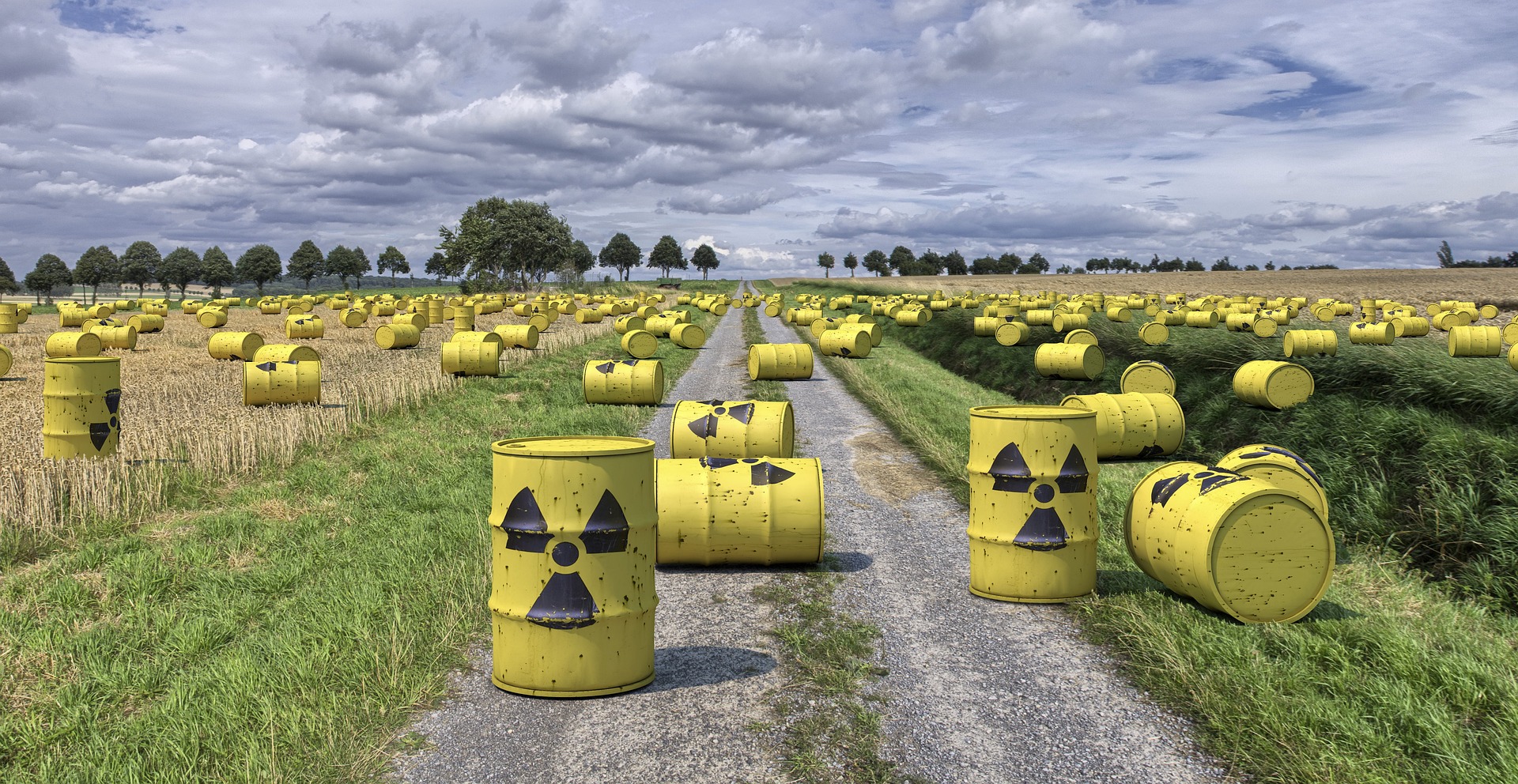
The case of Trgovska Gora, which has been going on for almost three decades, culminated in mid-December with the adoption of a law by which Croatia paves the way for the construction of a center for the disposal of radioactive waste right on the border with Bosnia and Herzegovina.
Guest NOISE podcast, activist Mario Crnković from Novi Grad, believes that this move does not represent the end of the process, but the beginning of a new, decisive phase of the struggle.
“The case of Trgovska Gora goes back 15, 20, maybe even more years, and it culminated on December 15 with the adoption of the law under emergency procedure on the disposal of radioactive waste. It is, in my opinion, an example of complete disregard for the future.”
Crnković reminds that the Croatian Parliament adopted the so-called lex specialis, which, despite the regular procedure and spatial planning documents, enables the construction of a center for radioactive waste, with Trgovska Gora being the only remaining location.
“The lex specialis was adopted under the emergency procedure – the law on the construction of a center for the disposal of radioactive waste. Trgovska Gora was targeted because it was the only location left.”
He reminds that in the late nineties, Croatia had several potential locations, but political decisions gradually eliminated all of them except the one on the border with Bosnia and Herzegovina.
“In the beginning, there were four locations – Psunj, Papuk, Moslavačka and Trgovska gora. Psunj and Papuk were thrown out by amendments in the Parliament, Moslavačka gora was removed in 1999, and only the location on the border with Bosnia and Herzegovina remained.”
Disputed law and skipped procedures
Crnković points out that the law is controversial from several angles – legal, democratic and ecological.
“That law is controversial because the citizens were not asked, no public hearings were held, no environmental impact study was done, and it was passed outside the spatial plan of the Republic of Croatia.”
From the point of view of Bosnia and Herzegovina, an additional problem is prejudicing the final solution, which, as he states, brings BiH to a fait accompli.
“If everything had gone according to the regular procedure, through spatial plans, Bosnia and Herzegovina would have had another chance to present its arguments. This is how we have the continuity of irresponsible politics.”
“This is not a period – this is a comma”
Although Croatia sees the adoption of the law as the end of the process, Crnković believes that it actually opens a new phase.
“This is not a dot on the ‘i’. This is a comma. The battle for Merchant Mountain is far from lost.”
He states that mistakes were made by both sides, but that this opens up space for further fighting at the international level.
“It was painful to watch how badly the processes in Bosnia and Herzegovina went, but at the same time Croatia also made serious mistakes. That’s why the coming months will be very interesting.”
ESPOO convention and international processes
Crnković reminds that BiH has already initiated proceedings before the Secretariat of the ESPOO Convention.
“Bosnia and Herzegovina opened the Trgovska gora case at the Secretariat of the ESPOO Convention. Opinions were sought from both Croatia and Bosnia and Herzegovina, and in the middle of next year the delegations will meet in Geneva.”
What will actually be delayed?
The public often uses the term “nuclear waste”, which, according to Crnković, creates confusion.
“It’s not about liquids that leak like a glass of water. We’re talking about low- and medium-level radioactive waste, mainly from the Krško nuclear power plant, but also institutional waste – medical, research, and possibly military.”
He warns that Croatia has not provided BiH with accurate data for decades.
“For 26 years, Bosnia and Herzegovina has not been provided with clear data on exactly what will be disposed of and in what way.”
Direct threat to the population
The location’s proximity to populated areas in Bosnia and Herzegovina is particularly problematic.
“That location is closer to the center of Novi Grad than to the center of the municipality of Dvor. We are talking about the direct threat of tens, even hundreds of thousands of people.”
Thousands of lawsuits as the next step
One of the most important parts of the conversation is about legal strategy and the possibility of mass lawsuits.
“One of the ways to raise one’s voice will be lawsuits. We are talking about several thousand civil lawsuits against the Republic of Croatia for endangering the right to life.”
Crnković emphasizes that citizens have the legal right to such a move, but that they must have the support of local communities.
“If a citizen wants to defend his right to life, you are obliged to enable and support him. It is not political, it is an elementary human right.”
According to his estimates, the number of lawsuits could be higher than originally expected.
“Based on what we know now, it’s realistic to expect at least two to three thousand lawsuits. That’s the bottom line.”
“A Matter of Life and Survival”
For Crnković, Trgovska gora is not only an ecological or legal issue, but a question of the survival of the entire region.
“The Trgovska Gora case is a matter of life and survival. This is a pure transfer of risk to Bosnia and Herzegovina.”
In the end, he says that the struggle does not depend only on institutions.
“Not everyone has to think about Trgovska Gora every day, but when the moment comes – be there. Be there when those lawsuits are due. Each of us bears part of the responsibility.”


