
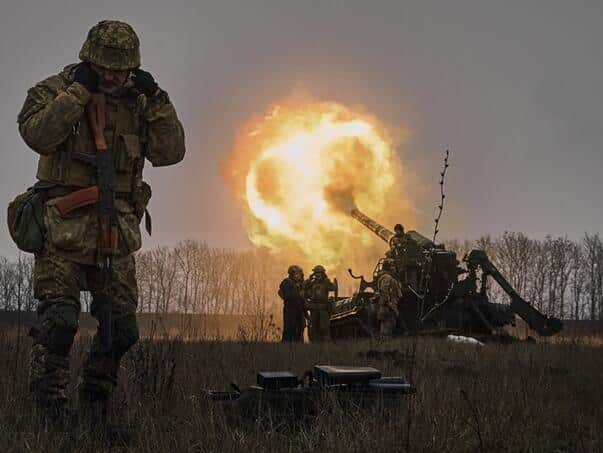
His name is among the increasing number of Russian men in the 50s, 60s, and even the 70s, which are fighting and gin on the first line. The composition of Russian forces has changed drastically – Kremlin relies on the so-called volunteers, men convinced to join the army with the promise of salaries and high bonuses.
Independent Russian MediaZon Research Portal, in cooperation with the BBC in Russian and other journalists, conducted a three-year analysis of Russian soldiers in Ukraine, transmits Index.
Published Full Database of Russian Soldiers
Yesterday, on the third anniversary of the war, Mediazona published his entire database for the first time – with nearly 100,000 names of Russian soldiers killed in Ukraine.
Separate research portal Istories has occurred to similar results, using artificial intelligence tools. They identified 104,000 killed soldiers. Mediazon and Western intelligence services estimate that the actual number of Russian victims is significantly higher.
The data show that in the first year of invasion, the majority of the dead consisted regular Russian army, including elite units that needed Kiev in a few days.
After partial mobilization of 300,000 reservists in the autumn 2022, mobilized men were increasingly emerging among the killers. By the beginning of 2023. Prisoners were mostly ginned from Russian prisons, as well as members of Wagner and other private military companies (PMCs).
But the third year of the war brought a new change – Moscow now filled its battales mainly to contractual soldiers, to avoid a new wave of mobilization, which would be unpopular among the population.
Different reasons to go to war
Russian authorities have achieved this by increasing bonuses and salaries, and older men seem more willing to go to war. The reasons are different – some have military experience from earlier Russian wars, others want to solve financial or legal problems, and they spend a lot of time with state propaganda on television.
“Typical ‘volunteer’ today, which is applying in Moscow for 2 million rubles ($ 23,000) comes to the military office with the entire family. Everyone knows what he does,” says sociologist Kirill Rogov.
“With that money, he will buy a flat for a son who just married and pay for schooling another son. He invests in the future of his family,” Social Jump, “Jobs in the Institute for Social Sciences in Vienna.
While the mobilized soldiers died in the middle 30’s, the average age of the contracting soldiers exceeded 40 years, according to MediaZone, which analyzed the age of more than 70,000 Russian soldiers.
More than 4,000 contracted soldiers who were killed were over 50 years, while among regular and mobilized soldiers in that age group were less than 500. Among prisoners recruited from prison, only 869 had over 50 years.
Increased amounts
In Ukraine, the average age of soldiers is 43 years. Although the minimum reception age was reduced from 27 to 25 years, Ukrainian authorities say they want to protect future generations, so further lowering is not a popular option.
The total amounts that Russian recruiting centers offer significantly depending on the region, but in recent years they have increased in recent years. For example, in Samara, this month is offered the largest sum so far – 4 million rubles ($ 45,500).
The recruiting office in that city stated that the soldier in the first year of the war could earn more than 7 million rubles. For comparison, the average price of a one-bedroom apartment in a new building in the Regional capital last year was 5.2 million rubles, according to the analysis of the Russian advertising platform.
At the same time, the average salary in the region at the end of last year was about 66,000 rubles per month, according to Gogov data, which follows official Russian statistics.
(Vijesti.ba)


