
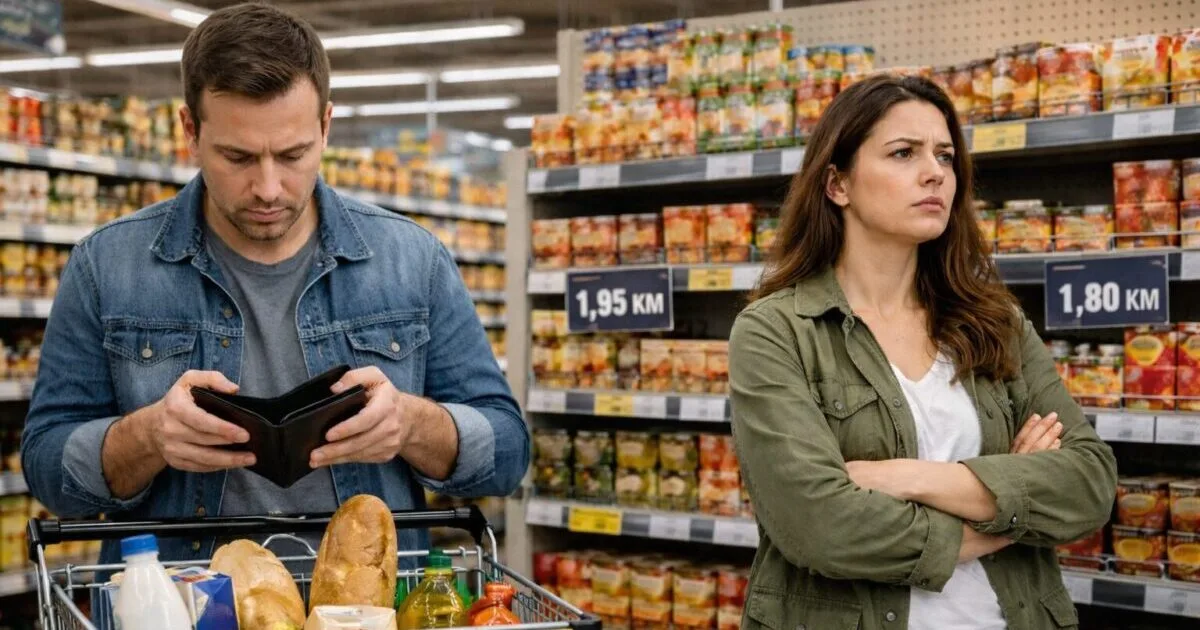
While citizens shorten their shopping lists and postpone vacation plans, another, invisible cost of the crisis is arriving – constant worry that increasingly damages mental health.
It has never been more difficult to fill the fridge, citizens say. The trade union consumer basket exceeded 3,290 marks. While the average wage can cover 50 percent of monthly expenses, the minimum wage only covers 31 percent. As much as 49 percent of total expenses go to food.
In the past, luxury was going on a trip, today it is a kilo of cherries, veal, cheese or going to a restaurant.
“Terrible, I can’t make any savings to go on vacation normally,” says one interviewee in Sarajevo.
Another interlocutor believes that everyday life has become extremely difficult and that he witnesses new price increases almost every day.
“Not at all, it’s hard to live, every day you see and hear that something has gone up in price. Today I’m on tomatoes and cucumbers, salad,” he says.
Some point out that families today have to put in much more effort just to maintain the standard they once had:
“We have to work twice as hard to afford what we had until now.”
Food prices continue to rise
As of 2022, prices have risen by about 22 percent, but basic food items by far more. Citizens are most surprised by the prices of fruits and vegetables, so a kilogram of peppers reaches 10 marks, while cherries cost between 10 and 15 marks. Due to expensive production and bad weather conditions, prices will be higher, farmers warn.
“There will definitely be an increase in prices because the complete sowing was done at drastically higher prices. The inputs that go into agriculture, from fuel, seeds, fertilizers and everything else, were 50 percent more expensive than last year, so it is logical that all this will be reflected in the higher price of the final product”, says Nedžad Bićo from the FBiH Farmers’ Association.
More and more citizens are reaching for loans
In the struggle with monthly expenses, citizens increasingly resort to loans. And then it becomes increasingly difficult for them to find a way out of that cycle of debt.
“Loans from banks can be obtained by citizens with regular incomes and who are not previously sufficiently indebted, because at a certain moment the banks will no longer grant you loans, so you can continue to borrow elsewhere. Most of them transfer to microcredit organizations, then there are other arrangements, so-called quick loans, all of which are even less favorable than bank loans, and then the indebtedness itself and the amount of monthly installments that must be repaid becomes more and more difficult to bear,” says Igor Gavran, an economic analyst.
The crisis is no longer only economic, but also psychological
When worrying about how to pay bills or buy basic groceries becomes a daily routine, it affects mental health, family relationships and quality of life. The economic crisis is thus no longer only a question of standards, but also of the psychological health of citizens.
“The moment when people start to lose peace, sleep, and hope because of prices, when partners start arguing over bills and not because of emotions, when young people abandon their families because of economic insecurity, when a pensioner chooses between medicine and food, which is increasingly common, or when a parent hides tears so that the child does not see it, it is no longer a statistic, it is a psychological crisis of a society. Mental health is not only damaged by great tragedies, sometimes it is slowly destroyed by daily worries that last for months and years”, points out Slađana Đakovic, psychologist.
There is no end in sight to the uncertainty
As a result of wild prices that hardly keep pace with income growth, citizens manage to make compromises. But their mental health is destroyed in the long run by everyday worries, experts say. And the end of that uncertainty is not in sight, he writes N1 BiH.


