A space that recalls the apocalyptic film set today is a laboratory in which the new Defense Defense is born – in which machines take over the most dangerous tasks from human shoulders.
On one side of the complex youth recruits 3. The assault brigades are waiting for the first orders, while the main side of the battle robots – the UGG (UNMANNED GOLUND Vehicles) are tested on the other. In a special building called “Kill House”, this elite unit trains operators and examines prototypes of autonomous and remote machines that could soon become a daily sight on the battlefields across the Ukraine.
Ukraine is currently led by a global race in the development and application of terrestrial robots. Spring has adopted ambitious announcements: as many as 15,000 UGs are planned to introduce into the combat system. Although they are still not in mass use, the pace of development reminds of last year’s expansion of air drones. In the background, there is a clear reason: the lack of manpower and the need for the defense of a number of Russian army. “We don’t have enough people to stop Russian waves,” he admits one of the manufacturers. “That’s why we send our zombies – robots – against their meat.”
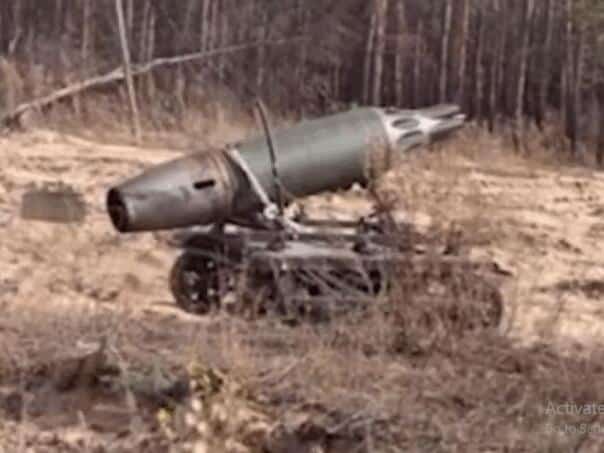
Another ukrainian ugv is modified for deploying rolls of concertina wire.
This ugv is a “vislyuk” (Вислюк, Little Donkey) that can carry 30kg.
These machines will save Ukrainian Lives.
1 / https://t.co/hzpy58t63r pic.twitter.com/9ud2wkaqan– Roy (@ GrandParoy2) May 6, 2025
Three basic purposes
In Ukraine currently operates about forty companies that develop about 200 UGV models. Most of them are private and robot for three basic purposes: logistics (load transport, wounded evacuation), engineering, demining, communications) and combat tasks (egruna launches or neutralization).
Many models are further modified immediately before sending to the field, notes the Economist. Cams, communication systems and electronic protection are most commonly added. Robots are thus becoming a key link in the so-called “Gray zone”, area of a dozen kilometers around the battlefield that is under constant supervision of drones.
“In some situations, they are already replacing groups of soldiers,” explains the instructor known as Stark, leading the informal UGB academy. His participants are trained to manage complex systems such as an Evacuation Dron Ardal or the Protudrone Platform Hyzhak, which uses artificial intelligence for air threats.
One of the strongest symbols of this new era is “Liut”, a robotized machine gun platform, first used in ambush during last year’s Ukrainian penetration towards the coat. According to his creator, the appearance of robot on the field was so surprised by Russian soldiers that they discovered their positions, which brought a key tactical advantage to Ukrainians.
Communications progress also provided changes in tactics. Before the operators had to be close to their vehicles, often walking to the first line, which was extremely risky. Today, thanks to systems such as starlink, they can manage vehicles from the safety of command centers. “One of us pilotes, another drinks Coca-Cola,” says one of the soldiers through laughter. But despite progress, experts remain realistic. “Land robots cannot be replaced by infantry,” Shura says, member 92. Brigade. “I can help, but the war still lead people.”
The biggest challenge in the mass introduction of the UGV lies in the communication infrastructure. StarLink has limits in woodland and mountainous areas, and the so-called Mesh networks – where robots exchange information with each other – easily collapsing if a key node is lost. In addition, enough trained operators still lack. “We have very few who have completed more missions and are still alive,” warns one of the engineers.
Ukrainian manufacturers are aware that Russia is likely to soon standardize and scaling similar technology, as has already done with air drones. However, they believe that temporal advantage can bring them a tactical benefit. “If robots take over and only 1% human tasks, it is already victory,” Vasyl concludes, the founder of one of the leading binds of the company.
(Vijesti.ba)