
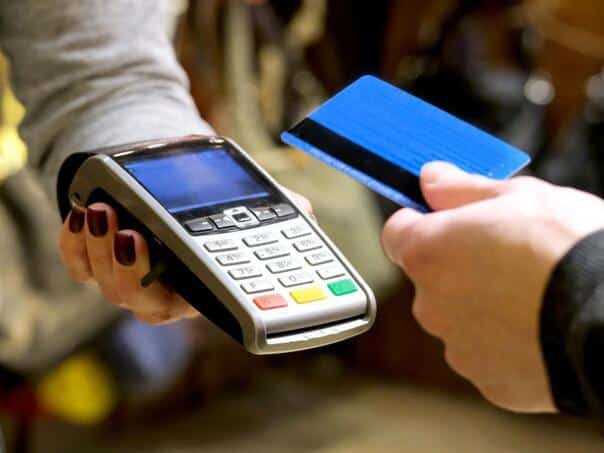
Pressing buttons or operating the screen is not only inconvenient, but also a place where germs can easily accumulate. The team from the University of British Columbia is therefore working on an alternative. Their approach is to control the card with simple hand movements, such as swiping or typing. These moves should make contactless payment simpler, more hygienic and more affordable, writes Smart Up News.
The principle is simple: with each transaction, the card and the terminal already exchange radio signals. The researchers harnessed those signals and added tiny coils to the device. This creates tiny changes in the magnetic field that make it possible to recognize if the card has been moved to the left or briefly touched. A computer program associates these changes with appropriate movements. As many as nine different gestures can be recognized – including a four-way wipe, a double tap and a short swipe. In tests, the system achieved an accuracy of more than 90%.
The most important aspect is not the movement itself, but the fact that no one has to touch the terminal. The card just moves over the antenna; the device “reads” patterns in the signal and recognizes movement. Shared keypress surfaces are no longer required, reducing the risk of microbial transmission. To select a tip or approve a transaction, just one gesture or double tap is enough.
Instead of pressing small buttons, simple hand movements are enough. This helps people with motor disabilities and makes it easier for the elderly to use as no complicated inputs are required. With the NFC system from the University of British Columbia, PIN codes could be replaced by gestures, making payments more hygienic.
Unlike numerical codes, one’s own movement is more difficult to track. Researchers show that gesture codes can serve as a second layer of security. Although there is concern that someone might be looking over their shoulder, in the event of a lost card, the person found will usually not know the gesture code. “Gesture interaction could also provide an additional level of security,” says doctoral student Bu Li.
The system recognizes nine gestures, including different wiping directions, short touches and scrolling. In tests, the recognition accuracy was around 92%, considering different people. Two gestures were a little harder to recognize (scroll up, free vertical movement), but labels or changing the position of the terminal can make it easier. Additional coils on the device, which enable recognition of directions, reduce the signal to a minimum.
The technology can be built into terminals for as little as $20 per device. Many devices already have enough computing power, and if necessary, there is a small and inexpensive upgrade. According to project manager Robert Xio, many terminals are already well equipped for this technology.
(Vijesti.ba)



Chat readers
Join the discussion