The Norwegian Fridtjof Nansen Institute, which deals with international politics, climate and security in the Arctic, organized a conference dedicated to the question of how realistic the American annexation of Greenland is and what consequences it would have.
The conference participants were not optimistic. The director of the institute, Iver Neumann, openly said that he considers Trump’s intention to be serious.
“Trump doesn’t have an iota of diplomatic skills in him. He thinks like a real estate magnate and is always looking for new people to skin,” Neumann said.
He added that the US president has no room to retreat after turning the Greenland issue into a global problem.
“The MAGA movement is looking for and expects a bully and a strong man as a leader. Trump has no way out. One should be prepared for the worst,” warned Neumann.
Although Greenland was primarily discussed at the conference, Svalbard is also mentioned more and more frequently in Norway, an archipelago in the Arctic Ocean over which Norway has sovereignty, but where Russia has a presence in the Barentsburg mining settlement. It is feared that the eventual US annexation of Greenland could open up space for Russia to increase pressure on the Norwegian Arctic territories.
“One should keep an eye on Svalbard.
At the end of March, Putin gave a speech in Murmansk where he, among other things, stated that Russia had no problems with American claims on Greenland, so Russia could get Svalbard in exchange, he said roughly. Norway is well aware of this.” https://t.co/txmSkg5wDi
— Jamming (@balticjam) January 13, 2026
The head of research at the Fridtjof Nansen Institute, Andreas Østhagen, said he did not believe Trump was directly interested in Svalbard, but cautioned against the broader security context.
“Svalbard is a time bomb that will not necessarily explode immediately, but it could explode if the situation in Greenland escalates. If the transatlantic security guarantee deteriorates further, that is, if it turns out that the US will not come to our aid, Europe will not have enough capacity to defend itself,” Østhagen told Norwegian Dagbladet.
In contrast to Norway, where the political and academic debate is currently taking place, in Denmark the fear of the American annexation of Greenland is much more pronounced. A recent meeting between Danish Foreign Minister Lars Løkke Rasmussen and Greenlandic Foreign Minister Vivian Motzfeldt with US officials in Washington brought further tensions.
The formation of a joint “working group” was agreed, but statements from the White House caused concern in Copenhagen. Karoline Leavitt’s spokeswoman stated that the task of the group would be a technical discussion about “the American takeover of Greenland”, which the Danish side strongly denied.
“We have not agreed on any technical working group that will consider how the US can occupy Greenland. The working group must investigate whether it is even possible to meet the American demands without violating Danish sovereignty,” Rasmussen told TV2.
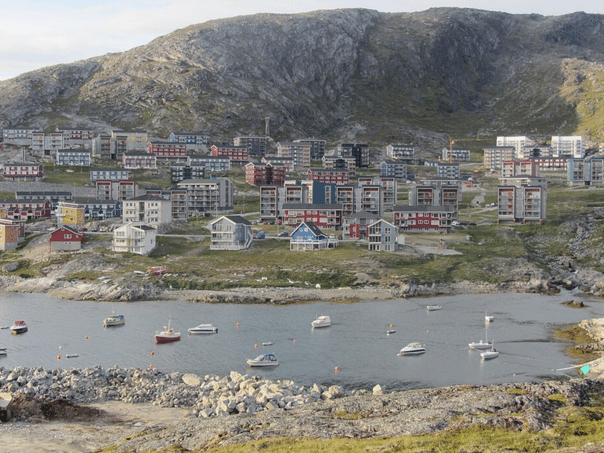
At the same time, a sense of fear and uncertainty is growing in Greenland. MP Aaja Chemnitz warned that the political crisis is already having serious social consequences.
“People are coming to work crying, children in schools are talking about annexation, elderly people can’t sleep. We are seeing signs of destabilization of Greenlandic society. It is creating an extreme amount of uncertainty,” Chemnitz said.
Messages from the Norwegian Fridtjof Nansen Institute’s conference further heighten concerns in Europe, as it increasingly appears that the Greenland issue is no longer just a diplomatic dispute, but a potential turning point for Arctic security and great power relations.
(Vijesti.ba)