
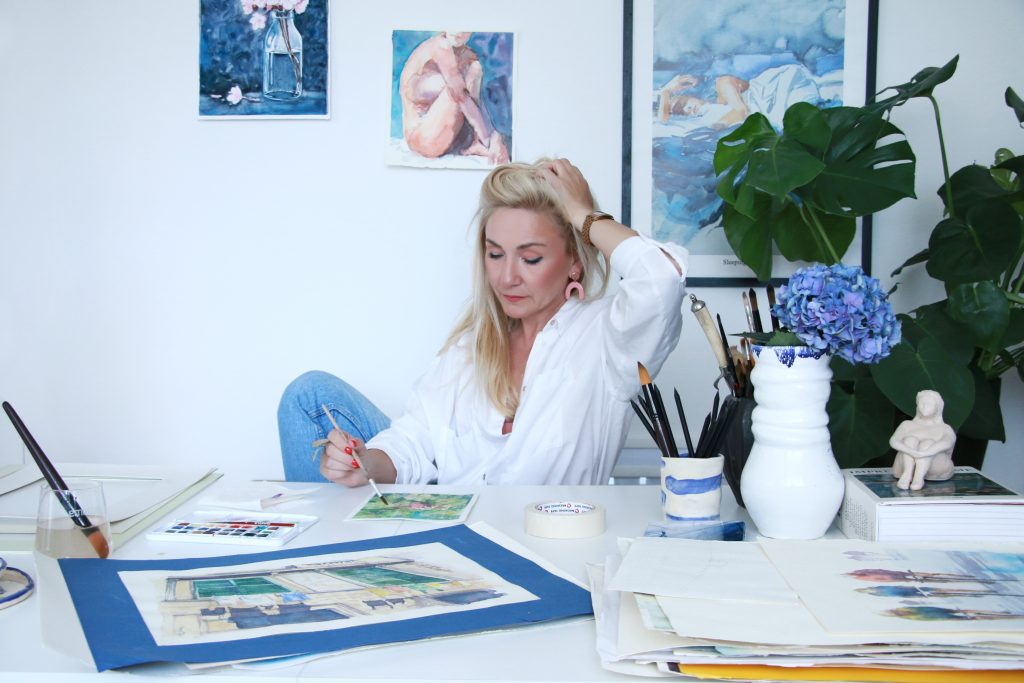
Few are those who manage to find an authentic balance between professional success and personal expression. My interlocutor, Mirsada Kadribašić, is just such a person – an artist whose watercolors bring freedom, but also a manager and marketing expert with an impressive career. Her works are not only an aesthetic experience, but also an invitation to think, connect and empathize. Through themes such as freedom, empowerment and beauty, she does not create windows into a frozen world, but also strong links – between feeling and message, between personal and socially important. In this conversation, Mirsada reveals what is attractive about watercolor as a technique, how travels and mountains shape her expression – but also how important it is to stay connected to ourselves in a world that often separates us from our own being. Her story is a reminder that creativity is not a luxury, but a necessity – and a space where we can all find our own freedom.
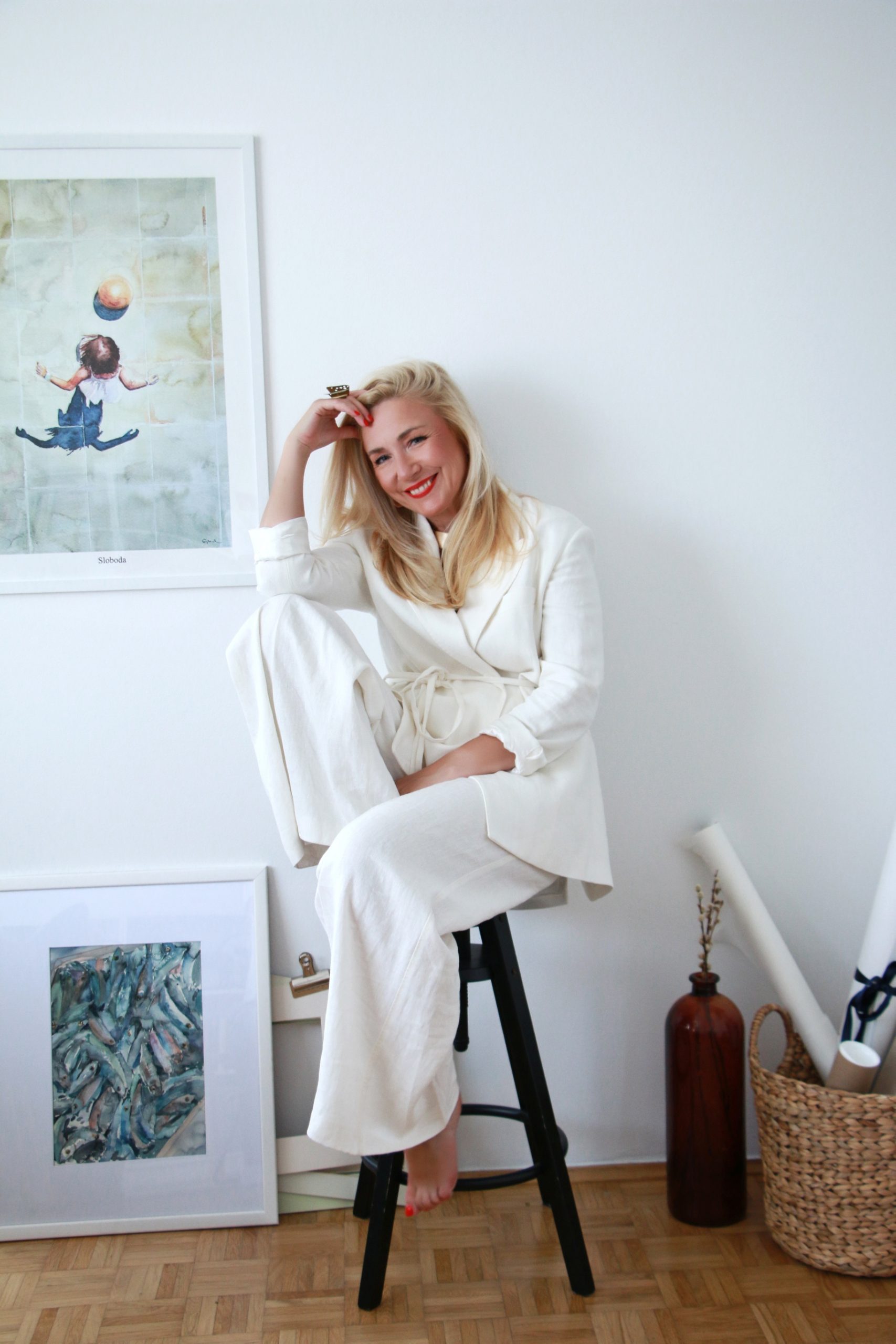
Watercolor is known as one of the most demanding painting techniques. What attracted you to that particular form, and not to a more “reliable” and predictable one? Where does your love for art come from?
Painting has been a silent need for me for a long time, and ten years ago that need became clear and serious. I started intensively dealing with watercolor – a technique that immediately attracted me because it is demanding, elusive and sincere. You can’t “calculate” it, you have to trust it and let yourself go. She taught me what we rarely have the opportunity to practice in business – patience, spontaneity and acceptance that things don’t always turn out exactly as we imagined.
Watercolor became my space of freedom. My balance. I am still dedicated to my work, but precisely thanks to painting, I can function more fully and authentically in both worlds.
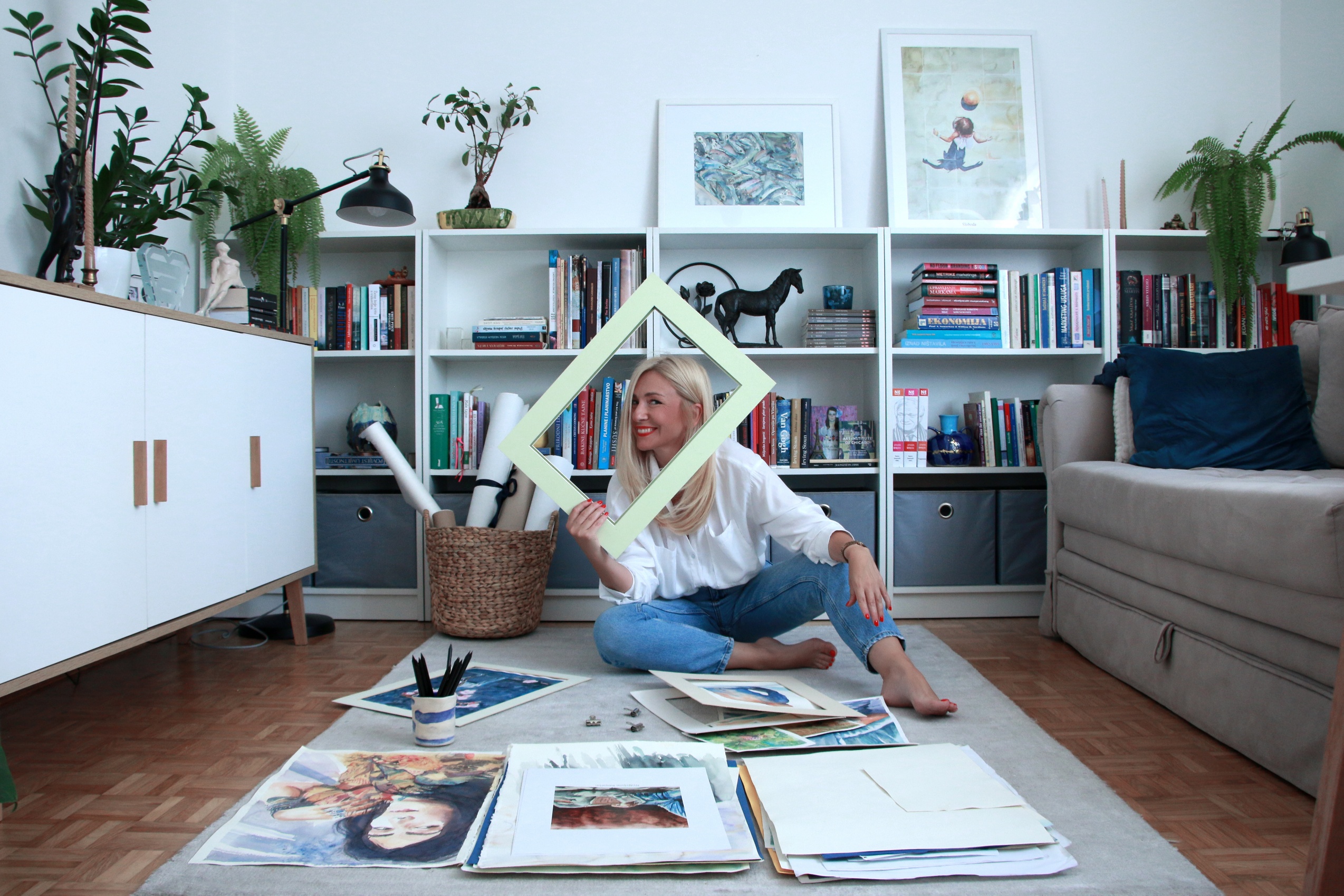
Your pictures are like postcards from the places you visit. How much does travel and hiking shape your artistic expression?
Travel has a huge influence on my artistic expression – not only because of the scenery, but because of the atmosphere of the cities, museums, galleries, architecture and meeting people. Every city has its own color, its own rhythm and light, and all of that is unconsciously transferred to paper. I like to wander the old streets, absorb the details of the facades, the shadows in the passages, the smells of the markets… Museums and galleries are places where not only the eye is filled, but also the soul – every encounter with someone’s work is a new spark. Inspiration often comes from small things like talking to local artists, the way the sun shines on the roofs of an old town.
Traveling and hiking are a source of not only inspiration, but also silence. When you walk for hours on a mountain or watch the light change over a valley, you realize how nature is the best teacher of composition, color and balance. Every picture I make is actually an experience – an emotion from a place that has been etched in my memory.
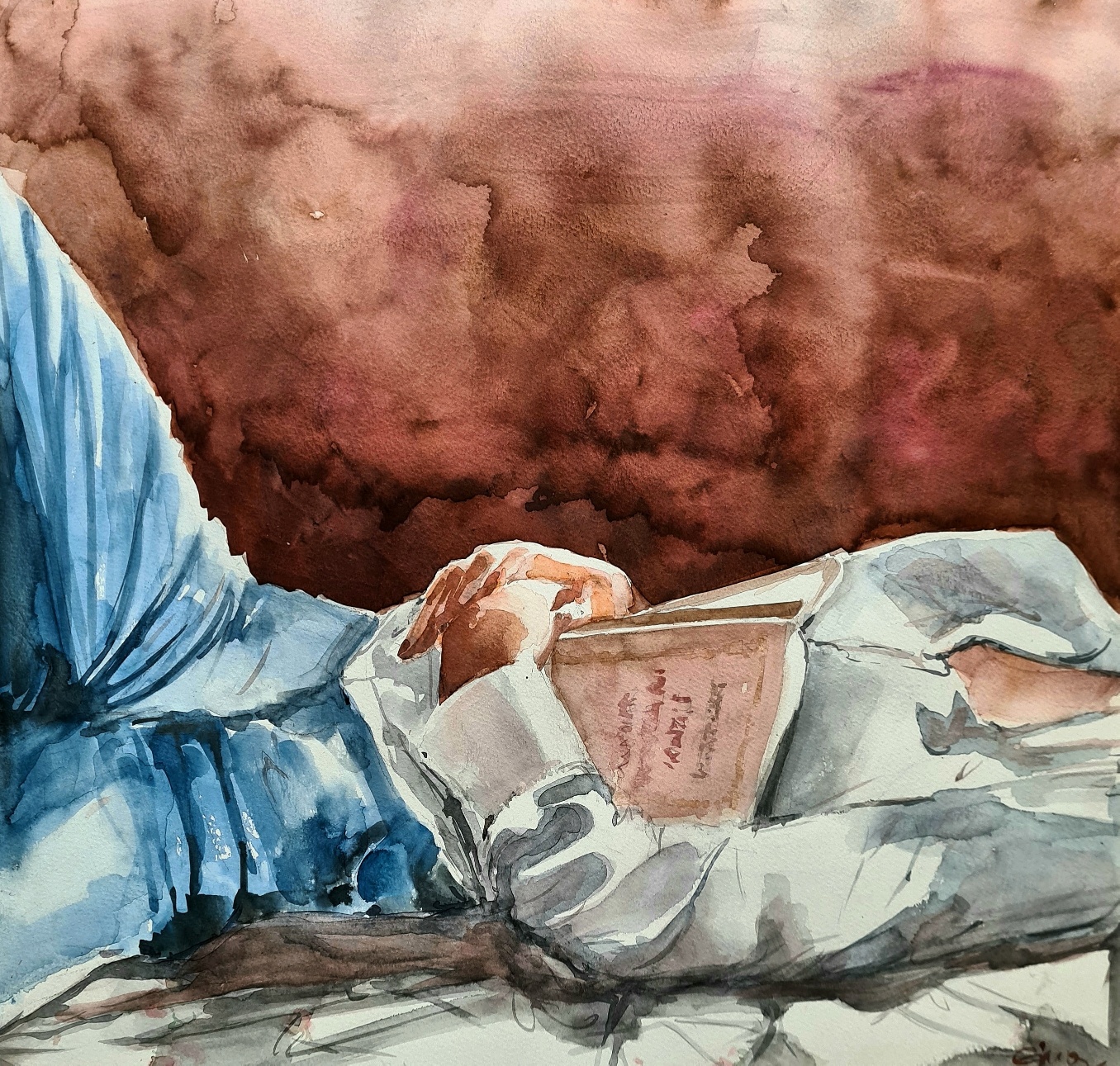
Watercolor does not tolerate haste, repairs, or control. How do you strike a balance between technique and freedom of expression?
It’s a constant dance between letting go and directing. Watercolor taught me that I cannot control everything – neither on paper nor in life. You have to come to terms with the fact that things won’t always turn out the way you envisioned. And the best pictures are precisely those that were created when I tried the least to control them. And that is a lesson that is very easily transferred to everyday life.
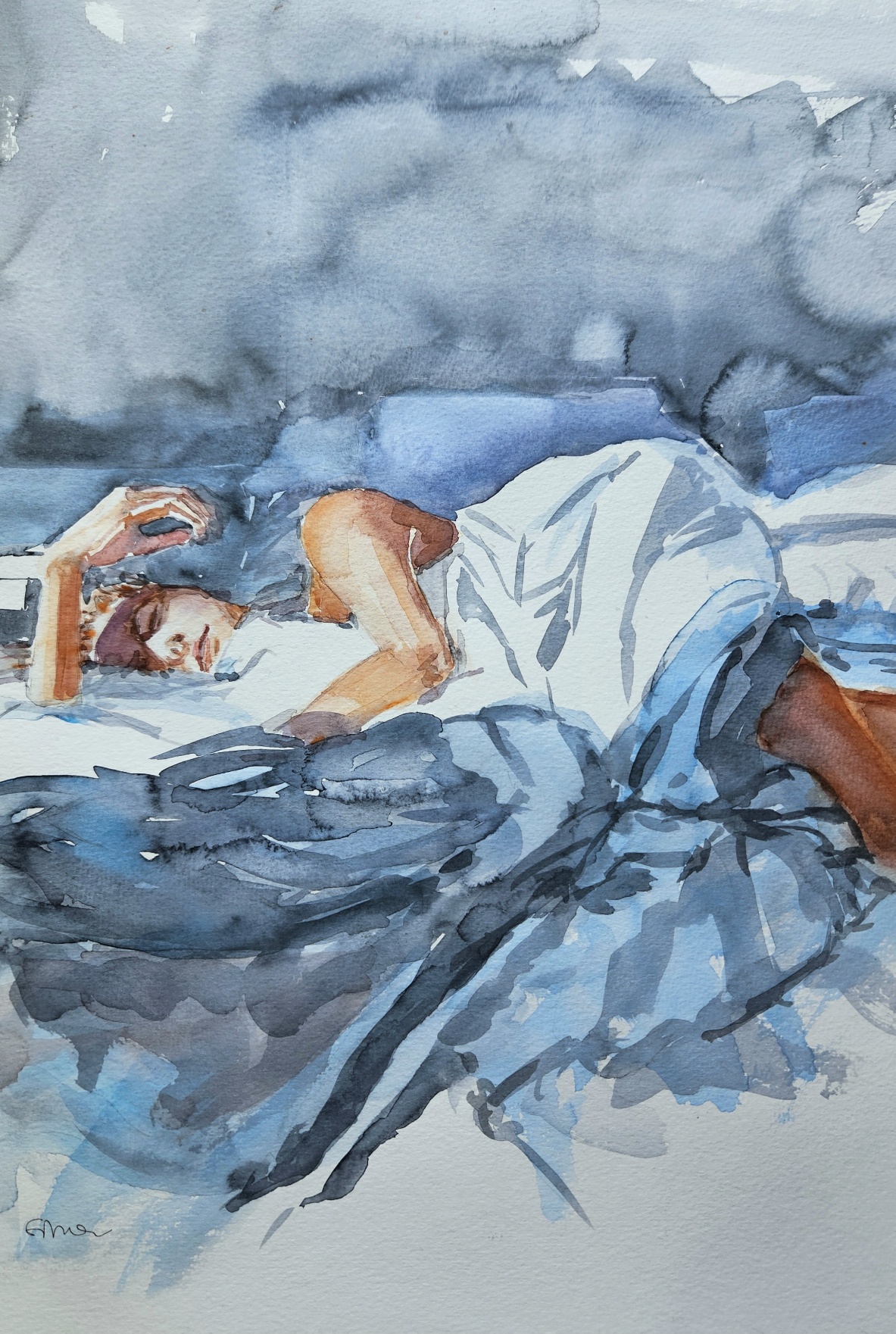
Your paintings often bring scenes from everyday life. What attracts you more: intimate moments of ordinary people or breathtaking landscapes?
Both inspire me – but at different times. Landscapes help me to connect with something bigger than myself, to feel peace. Intimate moments, on the other hand, tell stories about people, emotions, and closeness. Perhaps the key is precisely in balance – as in life.
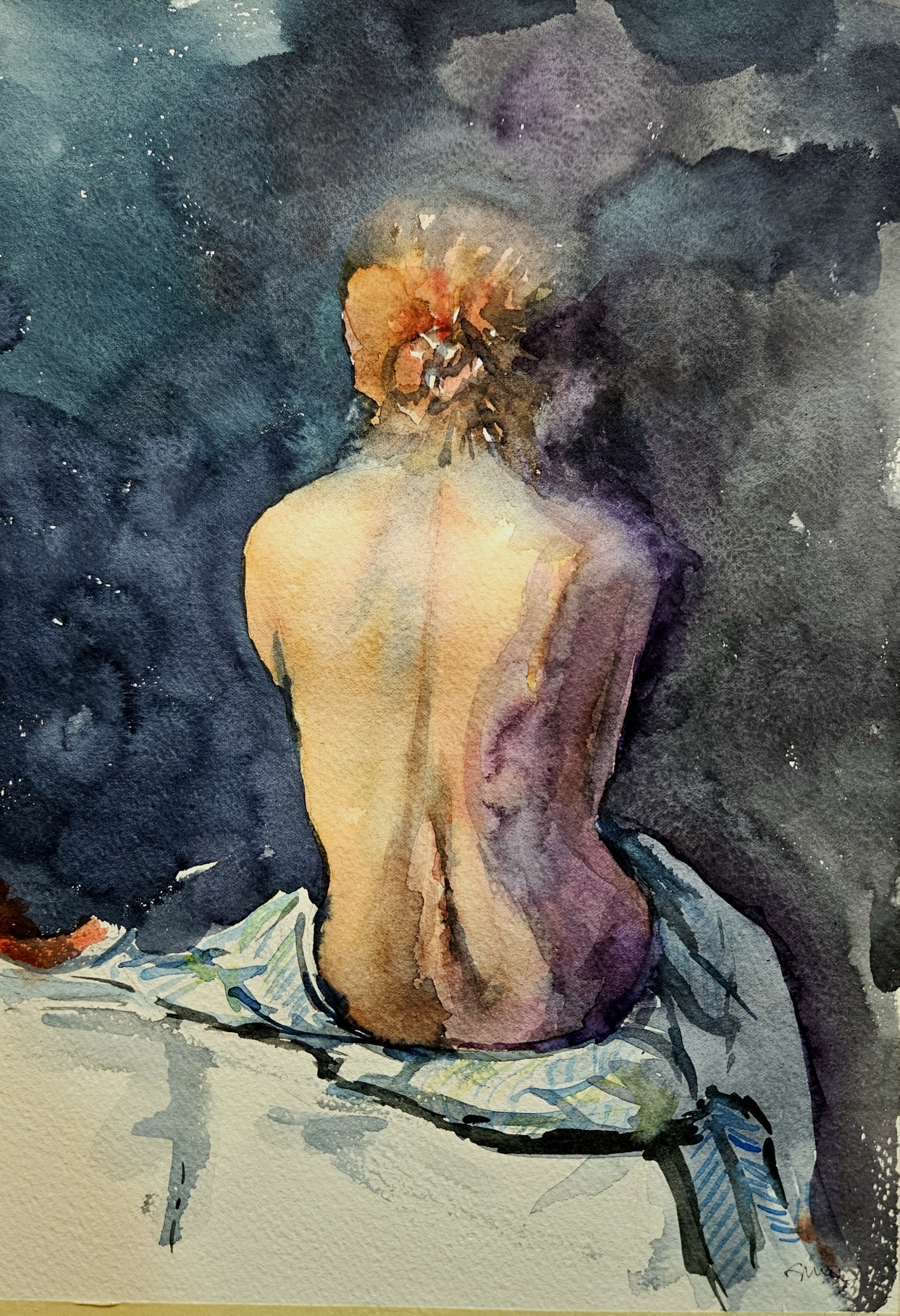
At a time when many are preoccupied with digital, you choose water and paper. what do you think why is there still a strong need for handmade, honest art?
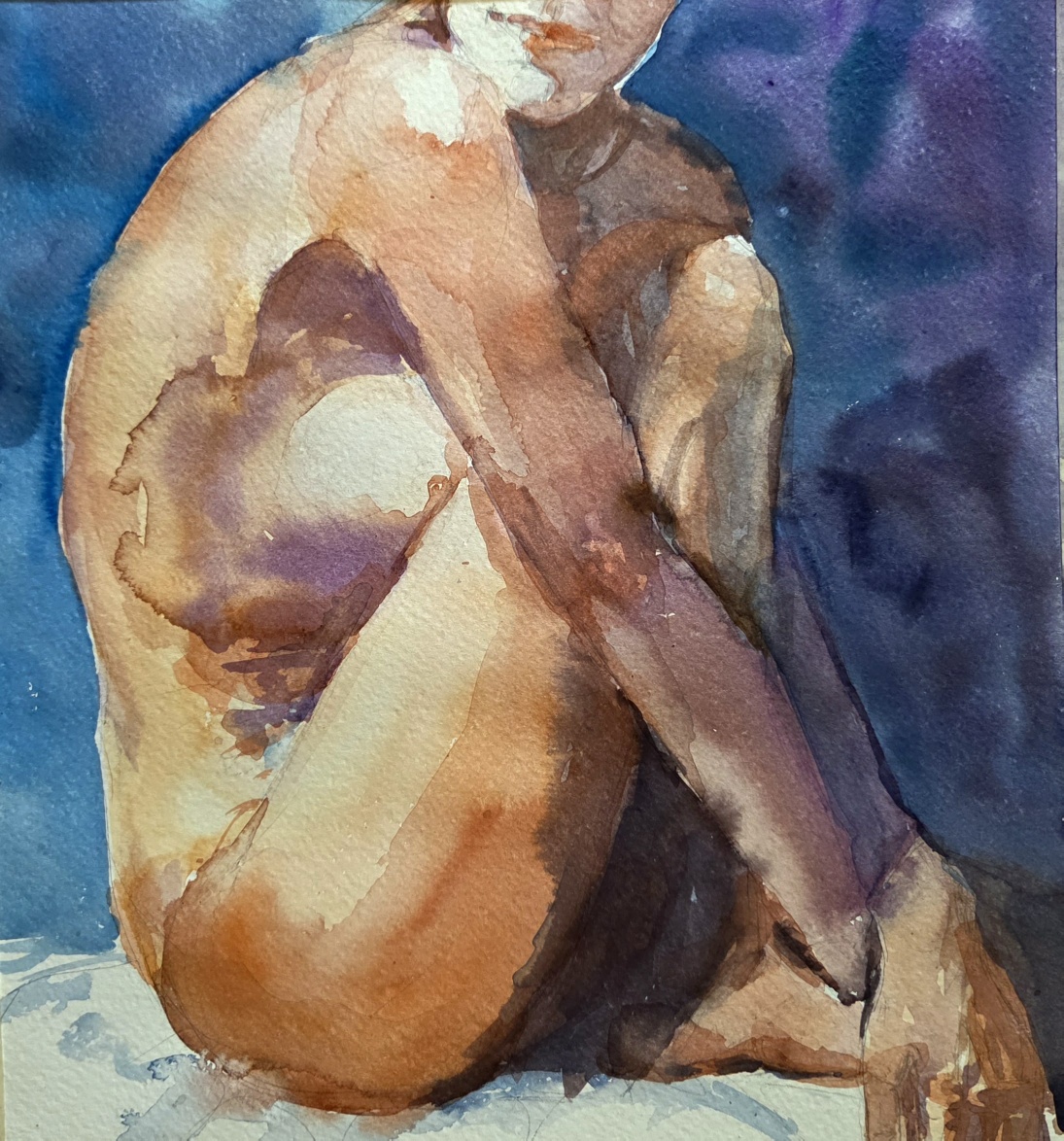
Because, above all, we are beings of touch. Hands are a frequent motif of my paintings – not by chance. They symbolize creation, connection with the world, with others, but also with oneself. That motive came from my own need to create with my hands, to feel the texture of the paper, the weight of the brush, the drop of water spilling. At the same time, it is also a kind of gratitude to my parents, grandfathers and mothers, who, through genetics, but also by example, passed on to me a love for everything done with hands – be it craft, garden, kitchen or art.
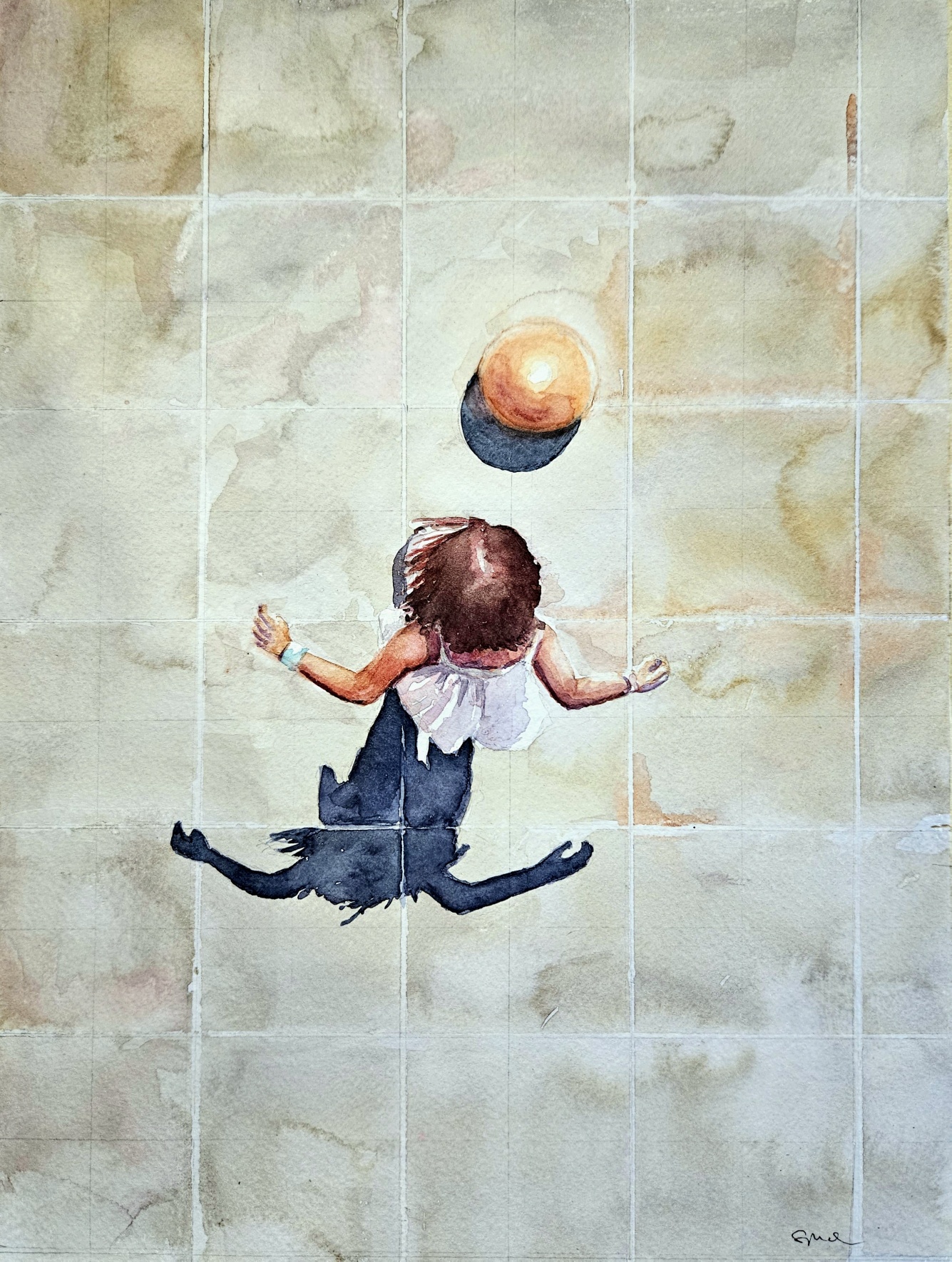
For me, creativity is a source of feminine energy, healing and health. Research shows that artistic expression—whether it’s painting, drawing, or making ornaments—directly contributes to reducing stress, boosting self-confidence, and maintaining mental health. Not only that, but 45 minutes of creating with your hands significantly reduces the level of stress hormones and brings a feeling of inner peace and satisfaction.
That’s why I think that handmade art reminds us of what is primal in us – of slowness, presence, warmth and truth. In a time that digitally “consumes” us too quickly, such a return to hands and creation becomes almost a therapeutic act.
Handmade art bears the mark of man, imperfections, emotions – that’s what makes it alive. I think it reminds us that we are not machines, but sentient beings.
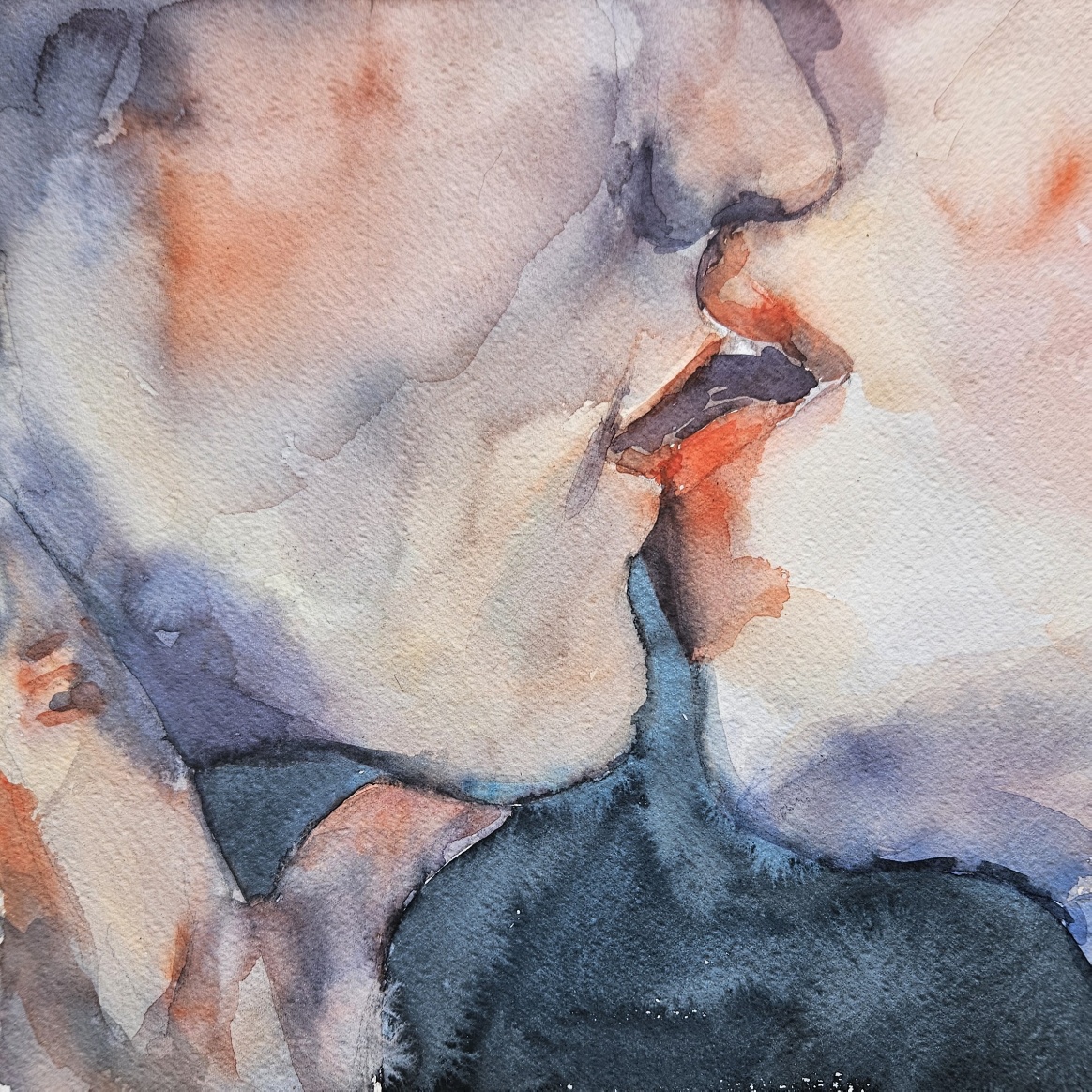
IIs there a color or combination of colors that you keep coming back to – your “personal palette”?
Blue. All shades of blue. It’s a color I always come back to – bright, gentle, deep, dark, dull… For me, blue brings silence, space, freedom and memory. It has both sky and water, and thoughts and emotions. Maybe because it is both calming and endless. It is my inner landscape, and that’s why it almost always creeps through my works, even when it’s not dominant, when it’s just a shadow.
Your creativity is evident in art, but also in the business world. Many do not know that behind your artistic side is also a strong professional career in marketing. How much does your experience in art help you in making decisions in marketing and business?
Great question – I was actually very, very happy to read it.
The truth is that I have devoted myself intensively to painting in the last ten years, while I have been building a career in business for much longer. But I wouldn’t choose between one and the other – on the contrary, today I feel that these two sides of me mutually strengthen each other. Since painting, I love my work more, I am more productive, creative and efficient.
My experience in art and marketing gave me a unique perspective: how to create messages that really reach people. I believe that successful marketing campaigns and impactful art have a lot in common – a deep understanding of emotion, empathy and the ability to connect with audiences on a meaningful level.
What motivates you the most in your work – and how do you keep your passion alive through your daily duties? What are your little rituals or habits that help you stay inspired and focused?
I find motivation in people. I like when work has meaning, when it causes a reaction. I maintain my passion by taking regular breaks – not from work, but for myself. Morning coffee on the balcony, short drawing, jotting down ideas – these are my little rituals that help me stay fresh.
Your works often carry strong messages and social engagement – how do you connect personal values, themes such as freedom and empowerment, and humanitarian engagement through art?
Art for me is never just aesthetics – it is important to me that each work, and the entire exhibition, have a message. To inspire, encourage people to think, connect, feel. Through my works and public appearances, I often talk about the topics of freedom, success and balance, because I believe that these are universal concepts, and yet each of us experiences them in our own way. My last exhibition was entitled “What is freedom to you?” and that very question was the trigger for introspective and emotional works. Freedom touches us all – but it is not the same for everyone. Through these works, I wanted to explore how we define, feel and live freedom, but also encourage reflection, understanding and empathy towards different life experiences. It is especially important to me that this exhibition also had a humanitarian character – it was held as part of the Women’s Days event under the auspices of Ladies In, and all proceeds from the sale of the work were donated to scholarships for children who need support the most (in cooperation with the Association Education Builds BiH – Jovan Divjak). I believe that freedom is not only in what we achieve for ourselves, but also in the ability to change the lives of others with our actions – and that is my true motivation.
As a woman in a dynamic industry, I faced many challenges – from proving myself to adapting to rapid changes. My career began in the area of purchasing and category management, where I gained a solid foundation of understanding the market and consumer behavior. The transition to communications and marketing was a challenge, but also a huge room for growth. I believe in constant learning, openness to new things and building bridges between different worlds. The recent Marketing Superstar 2024 award was a great recognition for exactly this ability to balance creative and business. I passionately support the empowerment of women – both in the arts and in careers. Recently, at the invitation of woman.com, I held an art workshop with the aim of conveying the message that true freedom begins within us, and that it continues when we help others achieve their dreams.
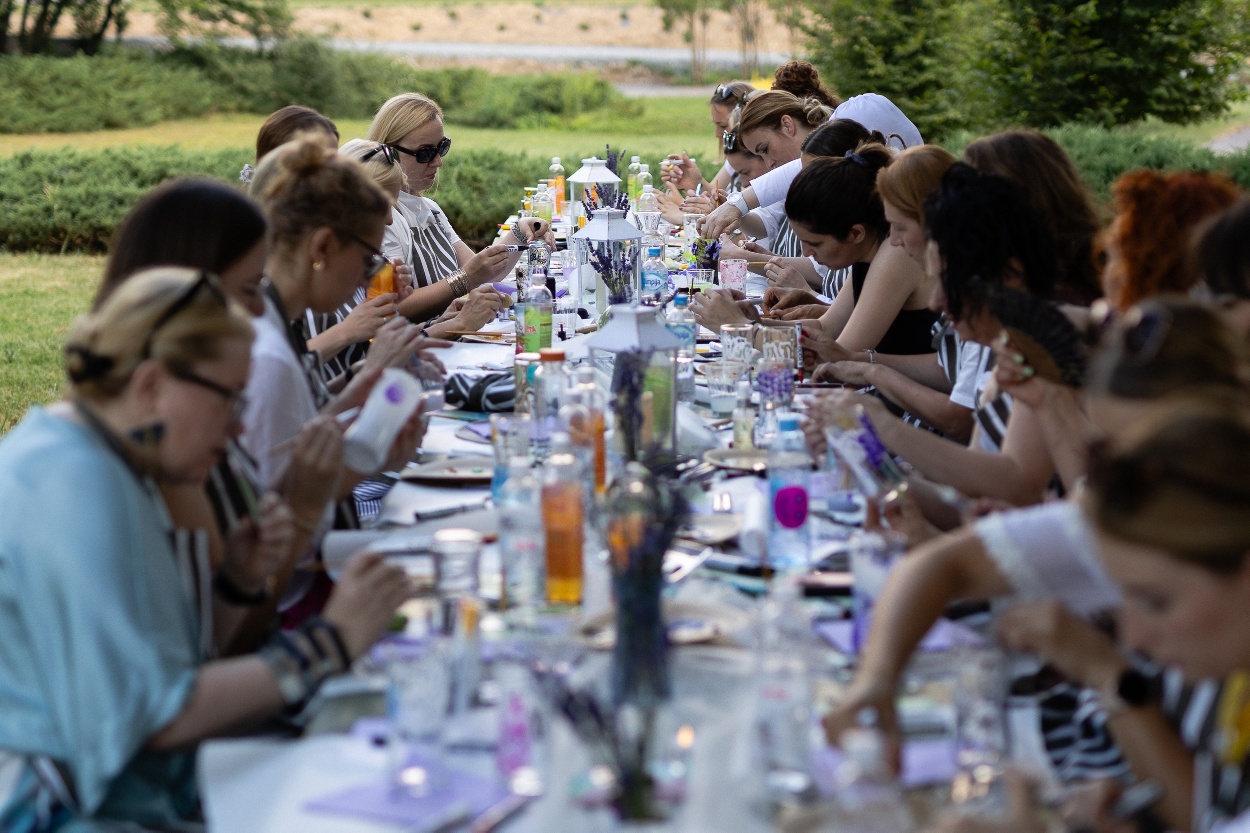
Woman.Comm art workshop


