
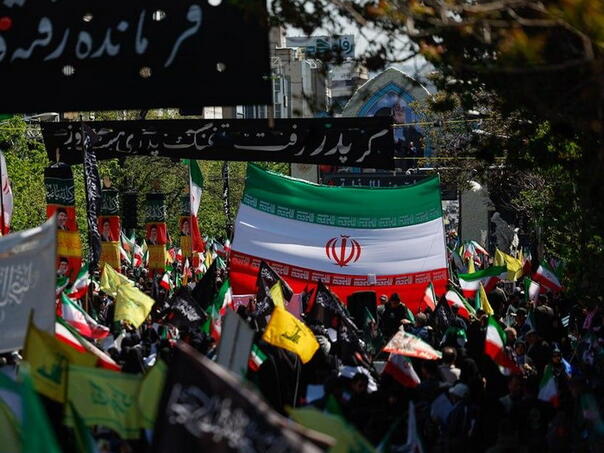
– The first and most important reason is military-strategic. Through the Hezbollah organization, Iran has built the most sophisticated proxy structure outside its borders. Hezbollah is not only a political actor in Lebanon, but a highly organized military force with significant missile and intelligence capabilities – says Mehović in an interview for Fena.
For Tehran, it represents a key instrument of deterrence towards Israel. The loss or weakening of that structure would mean a direct reduction in Iran’s ability to influence the security balance in the region.
The second layer refers to geography and the concept of the so-called “axis of resistance”. Lebanon is the final point of the land and logistics chain that connects Iran with the Mediterranean, via Iraq and Syria. That corridor enables the transfer of equipment, people and influence without the need for direct involvement of Iranian forces – Mehović points out.
In this sense, he adds, Lebanon is not a periphery, but the final node of a network that provides Iran with strategic depth. Its loss would mean a break in continuity and isolation of Iranian influence in the Levant.
The third reason is political and ideological. Hezbollah represents one of the most successful export models of the Iranian revolution. Its survival and strength send a message that Iran is not only a regional power, but also an ideological center that can shape political processes beyond its borders. A weakening of that model would have a domino effect on other networks and allies that Iran supports across the region.
In this context, Syria is also of particular importance, where Iran built a deep military-political presence and logistical infrastructure during the war. The return of influence in Syria, together with Hezbollah’s position in Lebanon, forms a unique strategic corridor of ideological and operational action.
The fourth aspect is Iran’s internal security. The loss of Lebanon or a serious defeat of Hezbollah would be perceived as a strategic failure that could destabilize the internal political balance in Iran itself. In systems where foreign policy successes are used to legitimize the government, such a blow has direct consequences for internal cohesion – emphasizes Mehović.
Lebanon also has a symbolic dimension for Iran. The presence in the Mediterranean and the possibility of direct influence on Israel’s borders represent confirmation of the status of a regional power. It is not only a question of military power, but also of prestige and the perception of factors that in Middle Eastern geopolitics often have the same weight as real capacities.
Due to all of the above, any escalation in Lebanon is not seen in Tehran as an isolated event, but as a potential blow to the very core of Iran’s regional strategy. This is precisely why Lebanon is not only an ally, but it is the line that Iran tries to maintain at all costs – security policy analyst Fikret Mehović concluded in an interview for Fena.
(Vijesti.ba / FENA)


