
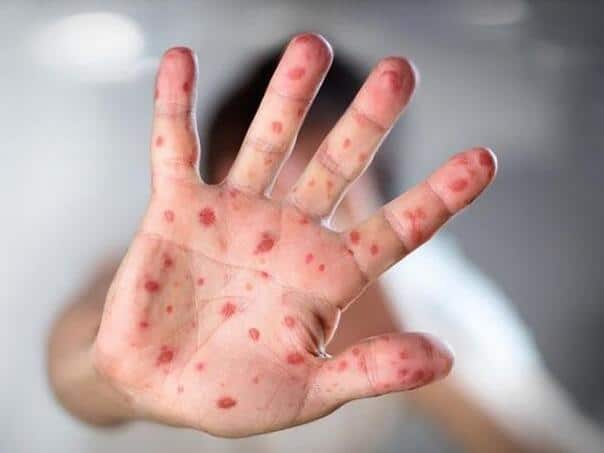
More than 40 percent reported cases in the European region covering 53 countries in Europe and Central Asia, children have made children under five, and more than half of the applicants required hospitalization. According to preliminary data and concluding from 6. in March 2025. year, a total of 38 deaths were recorded.
The number of cases of morbil in the European region was in decline since 1997. year, when about 216,000 were reported to the lowest number of 4,440 cases in 2016. years. However, 2018. and 2019. There was a re-growth, on 89,000 and 106,000 cases for these years. After the immunization rates during the Covid-19 pandemic, the number of cases reapplyed significantly in 2023. and 2024. Years. Vaccination rates in many countries have not yet reached levels from before pandemic, which increases the risk of the outbreak of new epidemics.
The European region was in 2024. year, a third of all cases of morbils globally. Only in 2023. year, 500,000 children across this region failed the first dose of vaccine against morbils, which is given in routine immunization programs.
Morbilas are one of the most common viruses that guess people. In addition to hospitalization and deaths caused by complications such as lung inflammation, encephalitis, diarrhea and dehydration, morbils can cause long-term health complications such as blindness. They can also weaken the immune system by “deleting” his memory about how to fight the infection, leaving survivors of morbils more susceptible to other diseases.
Vaccination is the best protection against this virus.
Less than 80 percent of children who meet vaccination in Bosnia and Herzegovina, Montenegro, North Macedonia and Romania have received the first dose of vaccine against morbils in 2023. year, which is far below the required ratio of 95 percent to maintain collective immunity. In the last five years or older, the first dose rate remained below 70 percent in Bosnia and Herzegovina and in Montenegro below 50 percent.
Romania reported the largest number of cases in the European region for 2024. year, 30,692, followed by Kazakhstan with 28,147 cases.
Morbile remain a significant global threat. In 2024. year around the world, 359,521 cases of morbil were reported. The transmission of viruses across borders and continents is regularly happening, and the epidemics of this high-grain disease will appear wherever the virus encounters ‘pockets’ of non-deficited or insufficiently vaccinated persons, especially children.
UNICEF and WHO / Europe cooperate with governments, with the support of partners such as the European Union and the global alliance for vaccines and immunization, to prevent and respond to morbila epidemics. And the involvement of communities, training of health workers, strengthening immunization programs and the disease surveillance system and by initiating the campaigns to compensate for missed immunization.
UNICEF and WHO / Europe are inviting governments in countries with active morbil epidemics to urgently strengthen the identification of cases, monitoring contacts and urgent vaccination campaigns. It is crucial that countries analyze the basic causes of these epidemics, eliminating weaknesses in their health systems and strategically use epidemiological data for identifying and closing immunization gaps. At the heart of all efforts, it must be working with indecisive parents and within marginalized communities, as well as resolving unequal access to vaccines.
The countries currently do not have the morbile epidemic should be prepared including identifying and resolving disadvantages in immunity, building and maintaining public confidence in vaccines, as well as maintaining strong health systems.
(Vijesti.ba / Fena)


