
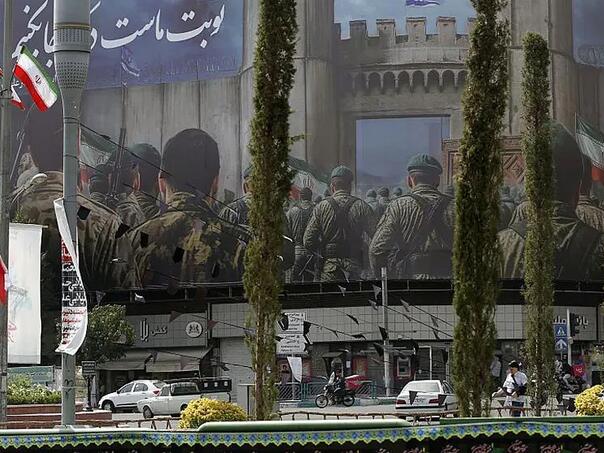
Authorities claim that it is necessary measures to preserve national security, but numerous observers and activists warn that it is an attempt to suffocate disagreement and enhanced control over the population, writes index.hr.
Infiltration of Israeli agents
According to the information BBC Persian, Iranian officials claim that Israeli no precedent agents infiltrate Iranian security structures. It is believed that the information was forwarded to Israel enabled a series of assassins to the high commanders of Iran revolutionary garde and scientists associated with the nuclear program.
Shaken in the scale and precision of these assassins, Iranian authorities have launched a wide action against all those suspected of cooperation with foreign intelligence services. During the 12-day conflict with Israel, three people were executed for espionage, while three others were executed immediately after the declared truce.
State television showed alleged recognitions of some of those arrested, which, as he claimed, acknowledged cooperation with Israeli Mossad. Meanwhile, hundreds of people were arrested across the country under the accusation of espionage. According to the Iranian news agency of Fars, the near revolutionary guard, from 13. June – when the Israeli attack on Iran began – more than 700 people were arrested.
Human rights activists express serious concerns about these events, reminding Iran often extorted recognitions and conducts unjust trials. It is fearful that the number of executions could further grow.
Pressure on the media
The Iranian Ministry of Intelligence claims that in the “tireless fight” against Western and Israeli intelligence networks, including CIA, Mossad and British MI6.
In addition to the wave of arrest, Iranian authorities have begun to send warning messages to citizens whose phone numbers are associated with Israeli sites on social networks. The messages are asked to leave those pages immediately or will be prosecuted.
The pressure is growing and on journalists working for Persian media outside the country, including BBC Persian, Iran International and Manoto TV. According to Iran International, the Iran Revolutionary Guard arrested the parents and brothers of one leader in Tehran to force her to resign the war with Israel. During organized calls that enabled security agents, the father warned her that the consequences could be even harder if he did not stop cooperation with television.
Similar threats and intimidations have also experienced BBC Persian journalists. Iranian services contacted their families, justifying possible measures against them “war condition”. The journalists marked as “Mohareb” – which means “enemy of God”, the charge, which is the death penalty after Iranian law.
Enhanced repression
Manoto TV also reported the threats to the families of their employees, some of whom face charges such as spy and “hostility towards God” – criminal offenses of death.
Observers believe that these measures are part of a broader intimidation campaign, not only towards activists and journalists, but also towards artists, writers and families of victims of previous protests. Special targets are those associated with protests from 2022. years, which were held under the slogan “Women, Life, Freedom”.
During these protests, hundreds of people were killed, and thousands were arrested. The members of the families of the families were arrested now. Most of the detainees were not accused of any specific criminal offense, and numerous cases are water without any transparent procedures.
Comparison with events after Iranian-Iraqi war
During the conflict with Israel, Iranian authorities seriously restricted Internet access. Although a truce has been declared, a complete connection has not yet been established. Access to social networks such as Instagram, telegrams, YouTube and Networks X has been blocked in Iran for years and is possible only via VPN service.
Human rights advocates are increasingly comparing current events with 1980s, when the authorities brutally calculated with the political opposition during the Iranian-Iraqi war. They especially reminded of mass executions from 1988. years, when thousands of political prisoners, many of whom have already served penalties, executed after secret trials before the so-called “Death Commissions”. Most victims were buried in unmarked mass graves.
There is a fear to Iran, after the international position was further weakened due to the war with Israel, again to move on the same path – through repression, closing and execution in an attempt to stifle each trace of rebellion.
(Vijesti.ba)


