
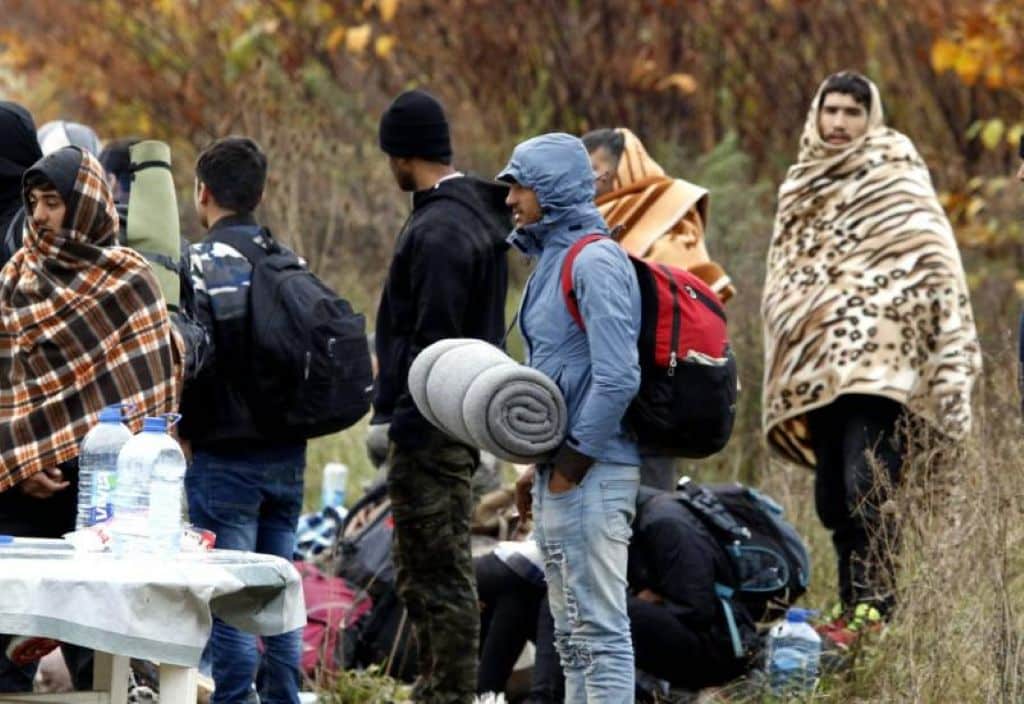
About 83 percent of illegal migrants entered the Western Balkans in the EU, the Latest data was entered through the Latest data on the International Migration International Organization, in the first ten months of last year.
About four percent of them went across the EU through BiH airport, and the largest transit points through BiH, according to this report, are Sarajevo, Bijeljina, Orašje, Banja Luka, Bihać and Velika Kladuša, writing Independent newspaper.
If they moved on the mainland, they were most often in BiH through Bratunac, Loznica and Bijeljina. The migrants stayed the longest in BiH, on average for 30 days, and the least in Albania, only six.
Through BiH, they most often moved on foot and then by bus, and even private cars. According to the data collected by OIM, on average, migrants were the border with the EU from BiH, tried to switch 3.3 times to every successful transition. In BiH, the most migrants were registered in 2023. years, when they were around 34,409, and at least 2021, half-less.
By the way, the Western Balkan route was in 2024. year represented a little more than a third of the EU, and Turkey and Greece are the two largest points in which migrants are organized to enter the Western Balkans.
Because Hungary closed his borders tightly, they decide to try in the EU in the EU, although almost a fifth in the EU, they tried to enter Hungary last year.
“Most migrants stated economic factors as the primary cause of country of origin, they showed that almost half stated the previous unemployment. In addition, half of the interviewed migrants reported a small percentage of migrants,” the report.
The fact that almost one fifth of migrants said that it experienced at least one form of violence, abuse and exploitation during the journey, and as the first three planned destinations, Germany, Italy and France.
According to their statements, the most violence have suffered in camps or in inaccessible terrains, and the most common needs have cited food and water.
Countries that have stated as destinations were the recommendations of families and friends, most often due to high standards and favorable socio-economic conditions.
Almost a third of migrants is Syrian, followed by Moroccans and Afghans, which consist of a fifth of the total number. Following Pakistan, Turkey, Nepal, Bangladesh, Iran, Egypt and Algeria.
Almost 40 percent of the migrants led to have only primary school from education, while about 30 percent possesses a high school degree or craft.
Half of them stated that in the country of origin could not find a job to eat family.
On the way, Pakistanis are holding on the longest, which in the journey is spending an average of 886 days, followed by Syrians with 792 days in the road and Afghani with 609 days in the road.