
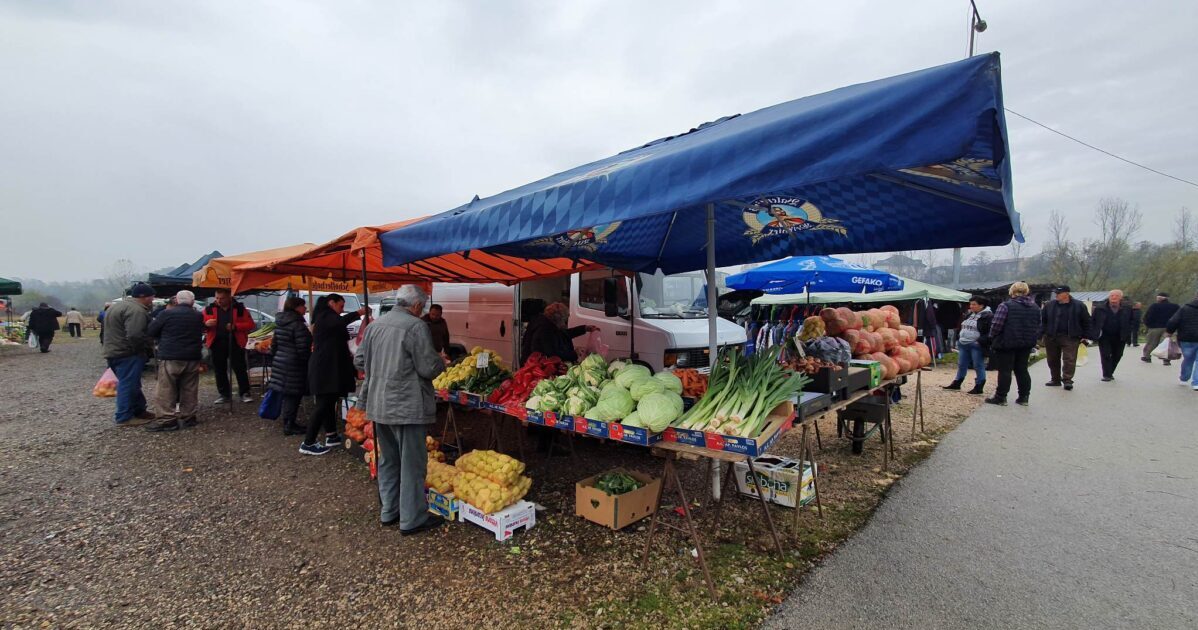
How to balance income and the needs of the household budget is a question that plagues a large number of citizens of Bosnia and Herzegovina every day. With the constant rise in prices and inflation, more and more families are facing financial difficulties, and according to estimates, almost 17 percent of the population today lives on the edge of poverty or is at risk of it.
For many citizens, the period from one salary or pension to the next looks more and more like a struggle for mere survival. Habits that were once a part of everyday life have now become a luxury. Among the first things that citizens give up are the purchase of clothing, travel and other expenses that do not belong to basic life needs.
The people of Zenica we talked to point out that nowadays they plan every purchase much more carefully and that they increasingly choose cheaper products in order to save money.
Retailers also confirm that consumer habits have changed significantly.
– If the cheese is 15 marks, customers ask for the one of 12 or 10 marks. They are looking for what is cheaper, and quality has become less important – says trader Nusreta Hečimović.
Merchant Vahidin Delić has similar experiences, stating that citizens buy smaller amounts of food and mostly what they can afford.
– At most, up to a kilogram of product is bought. From vegetables, they look for tomatoes, peppers and cucumbers, while from fruits, bananas and local seasonal fruits are mostly bought – Delić points out.
Experts warn that every sixth inhabitant of Bosnia and Herzegovina is poor or on the verge of poverty. Multi-member families, pensioners and low-income households are particularly at risk.
Professor Jasmin Halebić of the Faculty of Economics of the University of Zenica points out that even the smallest disturbance in the market can further worsen the position of such families.
– Any sudden increase in prices can push households with low incomes into poverty, which represents a big challenge for the organization of everyday life – emphasizes Halebić.
The consequences of economic problems are not only financial. Sociologist Sead Pašić warns that the rise in the cost of living also affects social relations, increases dissatisfaction and contributes to the feeling of alienation among people.
– Social and family ties weaken as financial pressures become greater. Children, education and daily needs require significant resources, which creates a feeling of helplessness and frustration in many people – believes Pašić.
Experts advise citizens to spend more rationally, carefully plan purchases, but also to focus more on domestic production. Some households are already choosing to grow their own food in order to reduce costs.
– Red meat and fish are more expensive than white meat and pasta, so many families adapt the menu to their capabilities. Some households try to meet part of their food needs with their own production – explains Halebić.
While citizens daily calculate what they can buy and what they have to give up, experts remind us that family togetherness, time spent in nature and other simple life values are often what bring the greatest satisfaction and cost nothing.