
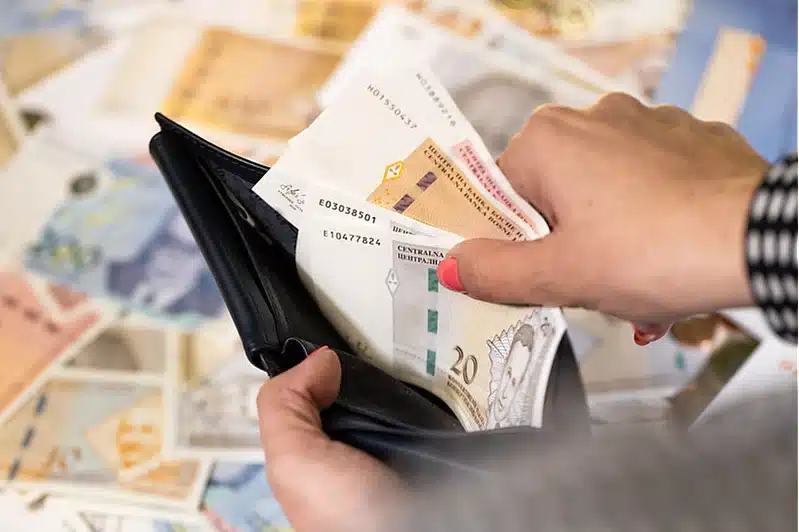
In the last six years, the citizens of Bosnia and Herzegovina have witnessed a continuous increase in prices, but also an increase in inequality.
While in January 2020, food accounted for 37 percent of the total basket consumption costs, five years later that share is as much as 45.8 percent, it says BHRT. In five years, the salary increased by 670 marks, and the value of the consumer basket by 919 KM. What do these statistics look like in everyday life?
Although the prices of fruits and vegetables in the markets these days show a slight decrease, they are still unattainable for many.
– Cucumbers are 7 KM, peppers were 10, now they are 7-8 depending on the type, tomatoes remain eight marks. A strawberry is 12, 14, 15 depending on the size and quality – says Olenija Trifković, a seller at the Banja Luka market.
In practice, this means either buying piecemeal or giving it up completely.
– People who live in our country are champions of low-income survival. We have come to a situation right now where some foods that were normal have now become a rarity.
Meat used to be bought by the kilogram, and now by the gram, and that speaks of the situation we are in at the moment – points out Dragan Jošić from the Consumer Protection Association Reaksija Banja Luka.
The actual cost of living far exceeds official figures. Because of this, the inhabitants of our country manage in different ways. Experts say – we haven’t seen the worst yet.
– We depend only on our ability to survive in this environment. The only way out for our citizens is to find a way to produce something or find another job – says economist Zoran Pavlović.
Another indicator reveals how much living standards have fallen – according to the so-called inflation calculator – one hundred euros from 2020 has a purchasing power of 125 today.