
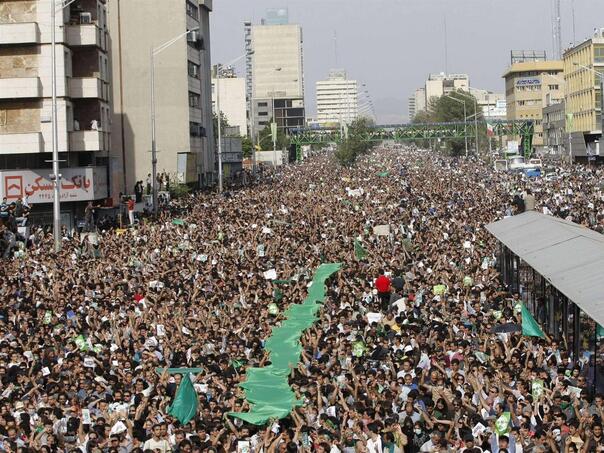
At least 16 people have been killed in a week of unrest in Iran, rights groups said on Sunday, as protests sparked by soaring inflation spread across the country, escalating into violent clashes between protesters and security forces.
Deaths and arrests have been reported over the past week, according to both state media and human rights organizations, although figures vary. Reuters could not independently confirm the figures.
These are the biggest protests in the last three years. Although they are smaller in scale compared to some earlier waves of unrest that shook the Islamic Republic, they come at a sensitive time, when the economy is in bad shape and international pressures are growing.
US President Donald Trump threatened to help protesters if they were exposed to violence, saying on Friday that the United States was “ready and on full alert”, without specifying what specific measures might be taken.
The statement prompted threats of retaliation against US forces in the region by senior Iranian officials. Supreme Leader Ali Khamenei said that Iran “will not give in to the enemy”.
The Kurdish human rights organization Hengaw said at least 17 people had been killed since the protests began. HRANA, a network of human rights activists, stated that at least 16 people were killed, while 582 people were arrested.
Iran’s police chief, Ahmad Reza Radan, told state media that security forces had targeted protest leaders over the past two days, saying “a large number of people have been detained.”
Police said 40 people were arrested in the capital Tehran alone for what they said were “false posts” about the protests aimed at distorting public opinion.
The fiercest clashes were recorded in the western parts of Iran, but there were also protests and clashes between demonstrators and the police in Tehran, in the central areas of the country and in the southern province of Baluchistan.
Since the beginning of the year, which began in March, Iran has been facing inflation of more than 36 percent, while the national currency, the rial, has lost about half its value against the US dollar, making life even more difficult for many.
International sanctions related to Iran’s nuclear program have been reimposed, authorities have faced problems with water and electricity supplies during the year, and global financial institutions are predicting a recession in 2026.
The authorities are trying to apply a two-pronged approach – acknowledging the economic crisis and offering dialogue with the protesters, while responding to stronger forms of resistance with the use of force.
Khamenei said on Saturday that the authorities were ready to talk to the protesters, but added that “rioters should be brought to order”.
Iran’s Vice President Mohammadreza Aref said on Sunday that the government recognizes the existence of numerous problems in the country, warning that individuals are trying to take advantage of the protests.
– We expect young people not to fall for the traps of the enemy – said Aref, according to state media.
(Vijesti.ba)


