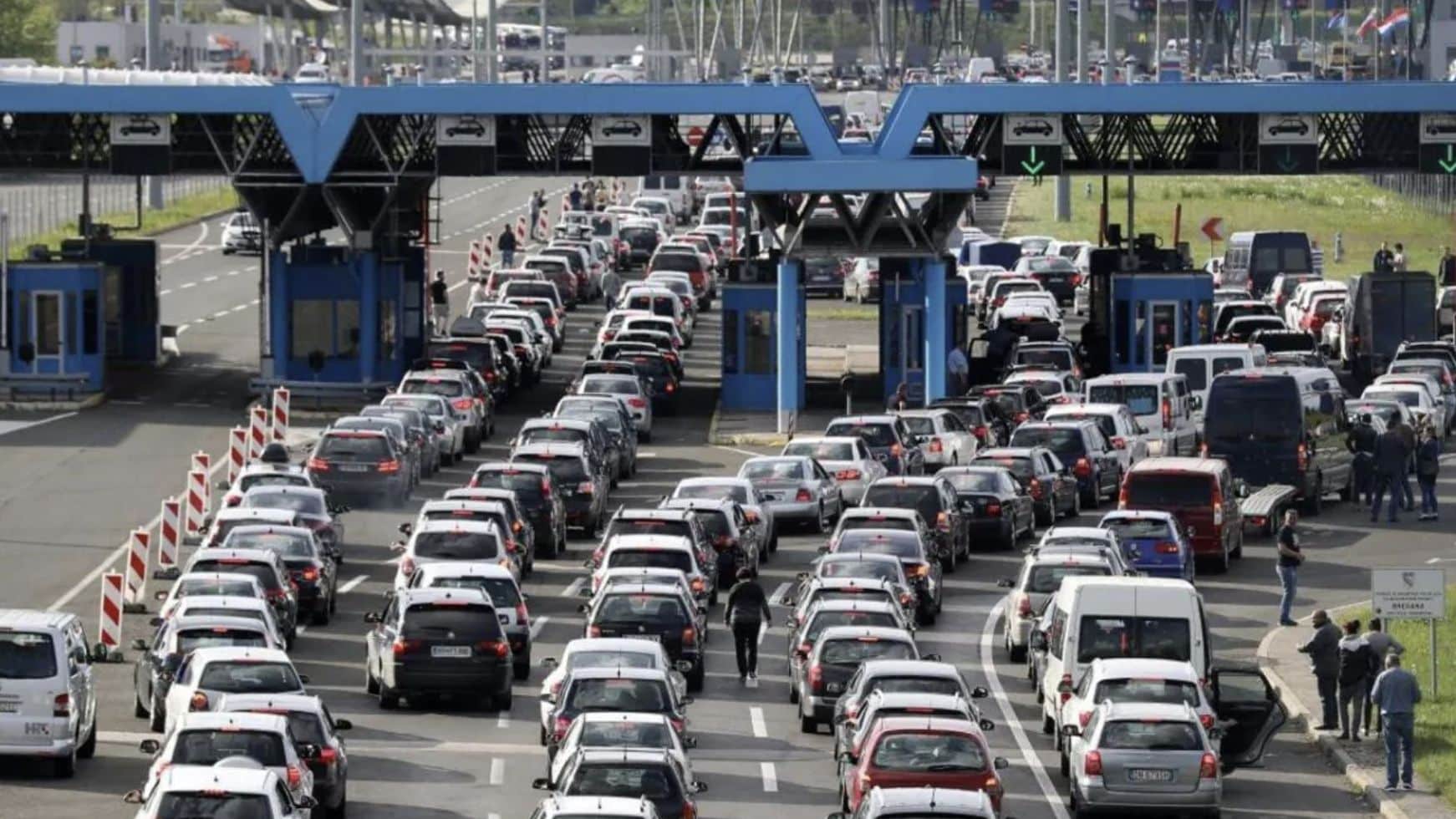
The system of entry and exit into the European Union (ESS) becomes fully operational from today, which means that manual stamping of passports is a thing of the past, and will be replaced by biometric scanning for citizens of countries outside the EU, including Bosnia and Herzegovina. Travelers entering the EU will thus have to leave fingerprints and a photograph upon arrival in the Schengen area. The system is implemented in 29 European countries, with the aim of tighter security and improved detection of overstaying.
EES contributes to the prevention of illegal migration and helps to protect the safety of everyone living in Europe or traveling to it, however, the very application of this system has caused chaos at the borders, huge crowds and long delays, which has resulted in passenger dissatisfaction, but also numerous problems for carriers and businessmen.
Problems for tourists and the diaspora
– All the border crossings near Bihać are clogged every day, people are getting more and more nervous, which will certainly affect people coming, but also the motivation for people to go outside BiH. This is especially noticeable when there are holidays in the countries of the European Union, and we know that Krajina has a very large diaspora that is extremely motivated to visit their hometown every day – said Mehmed Mahmutović, an employee of the Bihać Tourist Board for “Avaz”.
The vacation season is coming, and thus the tourist season is starting, and as we were told by the tourist board, most tourists after Croatia often choose Bosnia and Herzegovina as their vacation destination. All this together with the implementation of the new system creates an additional problem.
Those who make decisions need to become more concretely aware or come to the field to see for themselves the situation that is becoming chaotic. Waiting at the border for more than an hour is unbearable, and in recent days people have been waiting for five, eight, ten hours. That is really impossible – points out Mahmutović.
Problems for carriers
The introduction of the ESS system brings complete digital records of entries and exits, without the possibility of deviations, which will significantly affect the work of professional drivers. Without clear rules and uniform application at the borders, there is a risk of entry bans, fines and disruptions in transport, said Velibor Peulić from the BiH Logistics Consortium.
– The information about the alleged “resetting” of the driver’s stay from April 10, 2026 has not been officially confirmed and is creating serious confusion in the sector. The 90/180 rule is still valid, and any misinterpretation can mean entry bans and direct losses for carriers – said Peulić.
On the other hand, the Minister of Communications and Transport of Bosnia and Herzegovina, Edin Forto, proudly says that transporters can breathe a sigh of relief at least for a while.
– Now at this moment they can breathe, all days are reduced to zero, even those who had a certain number of days in the past six months. I believe that the European Commission did it in coordination with the Republic of Croatia, we persistently asked them to do it, also because of the upcoming vacations, in order to reduce the inevitable crowds. I am happy that it happened, but it is a temporary solution – said Forto.
Nevertheless, Peulić points out that Bosnia and Herzegovina has not received any specific protection mechanism, and even if we hypothetically assume that the data would be “zeroed”, although there is no official confirmation of this, the essential problem remains the same.
What do we need to know?
The system immediately throws out a warning if someone has exceeded the allowed 90 days within 180 days. Overstaying automatically means the risk of deportation and ban on entry into the EU. For non-compliance with the rules, the fines can be significant, and in some cases drastic amounts are mentioned. When entering for the first time, fingerprints and a photo of the face are taken, which are valid for three years. The ESS records the exact time and place of entry and exit, so the “zeroing” of the stay through neighboring countries can no longer be hidden, it says. Avaz.